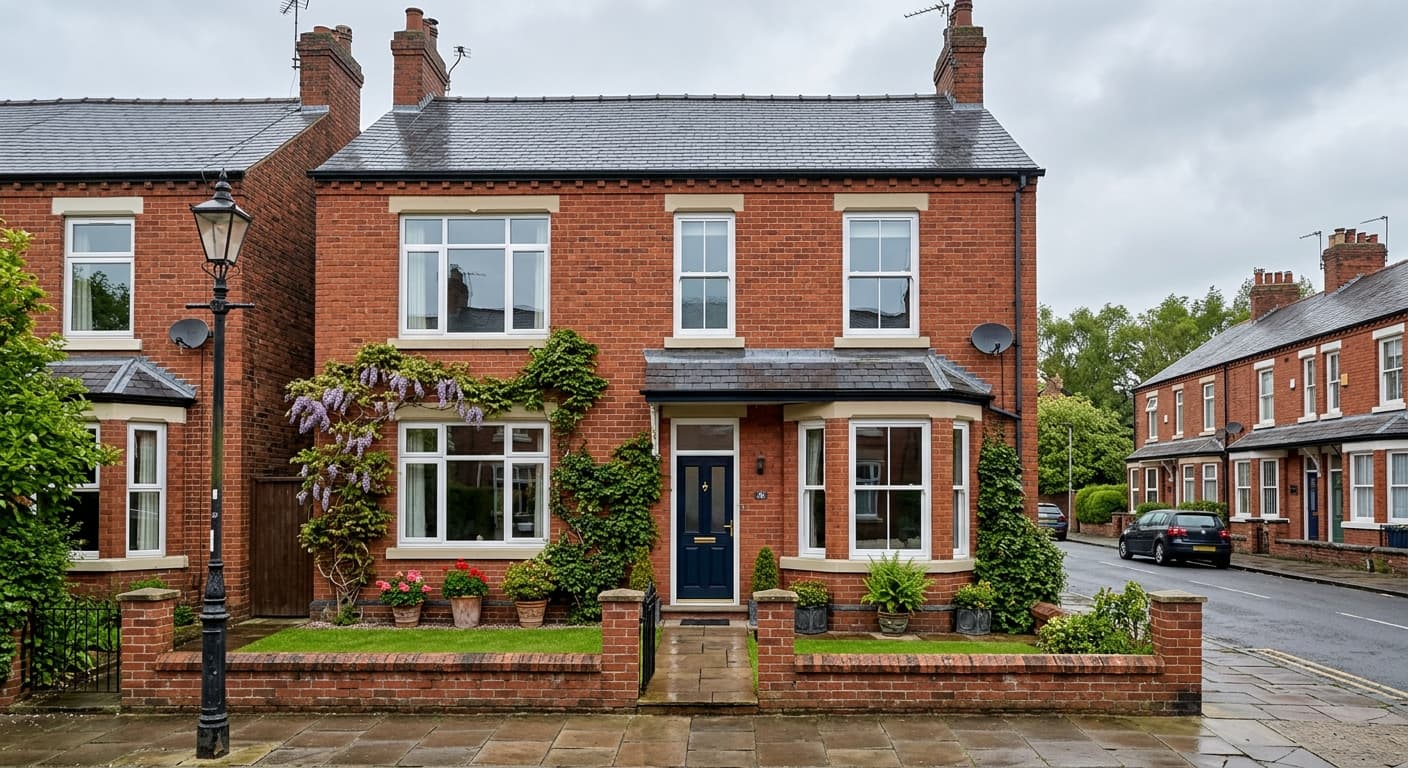
If your rental property has an EPC F rating, you are already in breach of the Minimum Energy Efficiency Standards. F-rated homes have been illegal to let in England and Wales since 1 April 2020. Councils can fine you up to £5,000, and a proposed rise to £30,000 is working through Parliament. This guide explains what an F rating means legally, what it costs to fix, and how to fund the work before enforcement catches up.
What Is an EPC F Rating?
An EPC F rating means the property scores between 21 and 38 on the Standard Assessment Procedure (SAP) scale. SAP runs from 1 (worst) to 100 (best), and the F band covers some of the least energy-efficient homes in England and Wales.
| EPC Band | SAP Score | Legal Status for Landlords |
|---|---|---|
| A | 92-100 | Compliant |
| B | 81-91 | Compliant |
| C | 69-80 | Compliant (proposed 2030 target) |
| D | 55-68 | Compliant until 2030 |
| E | 39-54 | Current minimum, compliant |
| F | 21-38 | Illegal to let without a registered exemption |
| G | 1-20 | Illegal to let without a registered exemption |
An F-rated property has typically one or more of the following: no loft insulation, solid or uninsulated cavity walls, a very old or inefficient boiler, or single-glazed windows throughout. These properties are the most exposed to enforcement action and the most in need of attention before 2030.
EPCGuide's analysis of 27.6 million EPC records shows that 49.6% of homes in England and Wales are currently below EPC C. F and G-rated properties are the most urgent subset of that figure: they are not just behind the 2030 target, they are already in breach of the law in force today.
Is It Legal to Rent Out an F-Rated Property?
No. The Minimum Energy Efficiency Standards (MEES) set the legal floor for private rented properties in England and Wales at band E. This has been in force since 1 April 2020 for all tenancies, new and existing alike. Letting an F or G-rated property without a valid registered exemption is a civil offence.
The only lawful route to continue renting an F-rated property is to register an exemption on the PRS Exemptions Register at gov.uk. Four main grounds exist:
- High-cost exemption: The cheapest qualifying improvement costs more than £3,500 including VAT. Valid for five years.
- Third-party consent: A freeholder, lender, or tenant refused consent for the works. Valid for five years or until consent is given.
- Devaluation: A chartered surveyor certifies the works would reduce the property's market value by 5% or more.
- Listed building: Improvement works would unacceptably alter the building's character or appearance.
An exemption is not a long-term solution. It does not make an F-rated property compliant -- it only defers the legal requirement. You must still improve the property or sell it before the exemption expires. See the full guide to applying for an EPC exemption for the step-by-step process.
What Are the Penalties for Renting an F-Rated Property?
Your local council can issue a civil penalty of up to £5,000 per property if you let it without a valid exemption. The penalty structure under current MEES regulations is:
- Up to £2,000 for breaches of 3 months or less
- Up to £4,000 for breaches between 3 and 12 months
- Up to £5,000 for breaches of 12 months or more
The breach is also recorded publicly on the PRS Exemptions Register for 18 months, visible to tenants and mortgage lenders. A council can issue a compliance notice at any time requiring documentary evidence of the property's EPC rating.
The government has proposed raising this ceiling to £30,000 per property from 1 October 2030, alongside the new band C requirement. This is not yet law. Parliament must pass primary legislation and lay a Statutory Instrument before it takes effect. But an F-rated landlord who takes no action between now and 2030 faces the full range of enforcement when it does. Read more about the proposed £30,000 fine and current enforcement process.
How to Get from F to E: The Minimum Legal Fix
The fastest route to compliance is to get the property from F to band E, reaching a SAP score of 39. For most F-rated properties, this requires one or two targeted measures rather than a full renovation.
| Improvement | Typical Cost | Typical SAP Uplift |
|---|---|---|
| Loft insulation (if absent or under 100mm) | £300-700 | +5-10 points |
| Cavity wall insulation (where walls are cavity type) | £600-1,500 | +5-15 points |
| Heating controls upgrade | £100-300 | +3-5 points |
| LED lighting throughout | £100-300 | +2-3 points |
| High-efficiency condensing boiler | £2,000-4,000 | +8-15 points |
Cost and SAP figures: Checkatrade and HomeEnergyCheck installer data 2026, EPCAdvisor 2026.
A property at SAP 30 (mid-F band) needs 9 more points to reach E. Loft insulation alone frequently achieves this if it is absent, at a cost well within the £3,500 high-cost exemption threshold. Most F-rated properties can reach band E for under £3,500, which also means the high-cost exemption does not apply: if the cheapest qualifying improvement costs less than £3,500, you are required to carry it out.
For a ranked view of all improvements by cost-per-SAP-point, see cheapest EPC improvements for landlords.
How to Get from F to C: The 2030 Route
Reaching band E fixes today's legal problem, but the government has proposed band C for all private rentals from 1 October 2030 (this is not yet law; an Act and Statutory Instrument are still required). For an F-rated property, reaching C means a SAP score of 69, requiring an uplift of 31 to 49 points from the F band.
For most F-rated properties, that gap is too large for a single measure. The most practical approach is:
- Fix the legal breach now: reach E with the cheapest available measures.
- Apply for ECO4 or BUS funding if your property or tenant qualifies.
- Plan the remaining upgrade to C in stages, targeting the highest SAP gain per pound spent.
A heat pump adds 15-25 SAP points and is covered by the Boiler Upgrade Scheme, making it one of the highest-impact single improvements available. The full guide to improving from E to C covers the second stage in detail once you have reached E.
Grants and Funding for F-Rated Properties
F-rated properties are among the most likely to qualify for government funding because they represent the worst-performing stock. Three schemes are currently open.
ECO4 (Energy Company Obligation, scheme 4)
ECO4 covers insulation, heating upgrades, and other efficiency measures. There is no set amount per property: the energy supplier decides how much to fund. Eligibility is tenant-gated: your tenant must receive certain qualifying benefits (Universal Credit, Housing Benefit, Pension Credit, and others) or be declared eligible by the local council under LA Flex. The scheme runs until 31 December 2026. If your tenant qualifies, act immediately: no equivalent scheme has been confirmed for 2027.
Boiler Upgrade Scheme (BUS)
The BUS pays £7,500 towards a heat pump installation. Landlords are eligible and the scheme is not means-tested. A heat pump typically adds enough SAP points to carry an F-rated property past band E and contribute significantly toward C. Apply through an MCS-certified heat pump installer.
Warm Homes Local Grant
The Warm Homes Local Grant operates through local councils and covers insulation and heating measures for low-income households and energy-inefficient properties. Contact your local authority to confirm whether your property and tenant qualify.
Sell or Upgrade? The F-Rating Decision
Some F-rated landlords are weighing whether to upgrade or exit the market. The sell or upgrade decision guide covers the full financial scenarios, but the key factors for F-rated properties are:
- If the cheapest compliant improvement costs less than £3,500: upgrade to E first, then assess the route to C.
- If ECO4 covers the majority of the cost: the improvement may be close to cost-neutral.
- If the property has solid walls, no cavity, and no access to grant funding: the cost of reaching C may exceed the gain in property value. The proposed £10,000 cost cap (not yet law) sets the maximum you would need to spend before a high-cost exemption applies in 2030.
An F-rating does not automatically mean a property is uneconomic to keep. But the combination of an existing legal breach and a 2030 deadline makes acting quickly important regardless of the final decision.
Frequently Asked Questions
Can I rent out my property if it has an F rating? No. F-rated properties have been illegal to let in England and Wales since 1 April 2020 under the Minimum Energy Efficiency Standards (SI 2015/962). The only lawful exceptions are registered exemptions on the PRS Exemptions Register: high-cost, third-party consent, devaluation, or listed building grounds.
How much does it cost to improve an F-rated property to band E? For most F-rated properties, reaching band E costs between £300 and £3,500 depending on what improvements are missing. If loft insulation is absent, it is typically the cheapest and most impactful starting point, costing £300-700 and adding 5-10 SAP points. A property at the low end of the F band (SAP 21-25) may need additional measures such as cavity wall insulation or a heating controls upgrade.
What happens if I keep renting an F-rated property? Your local council can fine you up to £5,000 per property and publish the breach publicly for 18 months. If the proposed 2030 changes become law, that ceiling rises to £30,000. A compliance notice can be issued at any point, and continued failure to comply after a notice is a separate offence.
Does ECO4 cover F-rated properties? Yes. Privately rented homes rated E, F or G can receive ECO4 measures, so an F-rated home meets the band rule. There is no set amount per property: the energy supplier decides how much to fund. Eligibility turns on whether your tenant receives qualifying benefits or is declared eligible by the local council. The scheme closes 31 December 2026.
How long does it take to improve from F to E? Simple measures such as loft insulation can be installed within days of a contractor booking and require no planning permission. Cavity wall insulation typically takes two to four hours. A boiler replacement takes one to two days. The full process from deciding to act to receiving an improved EPC certificate is usually two to six weeks.
Is an F-rated property worth keeping as a rental investment? It depends on upgrade cost relative to value and rental income. If ECO4 or BUS funding covers most of the cost, the investment case is usually positive. If the property has solid walls and no access to grant funding, the proposed £10,000 cost cap (not yet law) sets the maximum spend before a 2030 high-cost exemption would apply. The sell or upgrade guide provides a full financial framework for the decision.