Warm Homes: Local Grant - Complete Guide for Landlords
The council-run scheme with cost caps of £16,600 for energy performance and £16,600 for low carbon heating
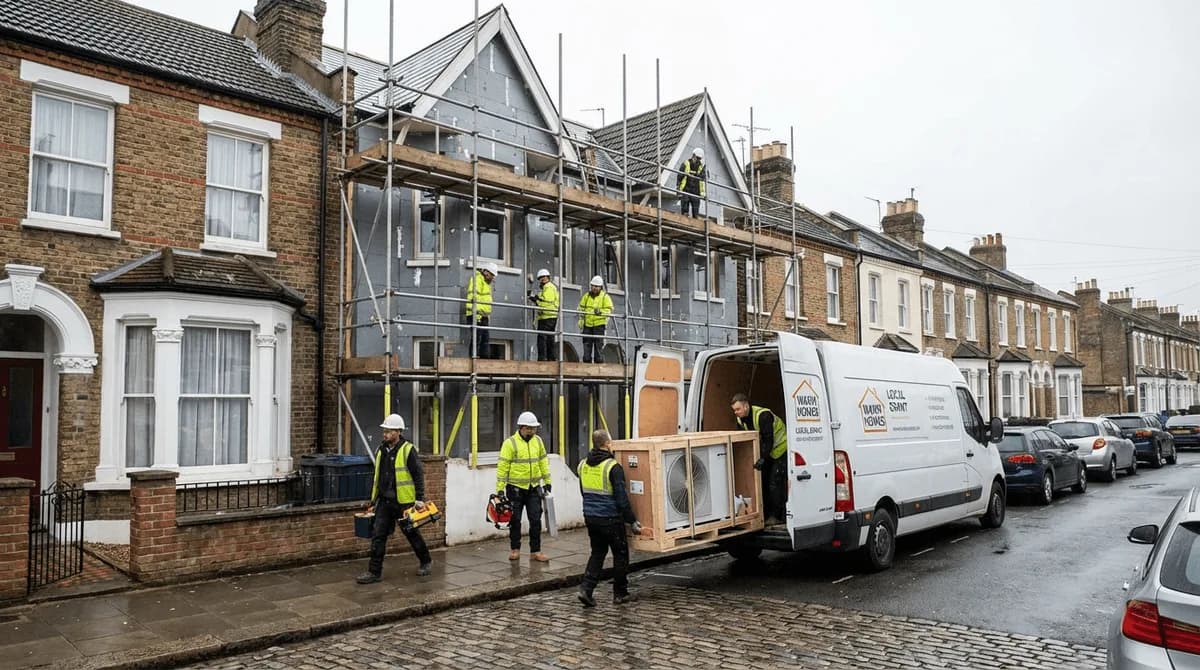
Delivered through councils in England since April 2025 as part of the government's Warm Homes Plan, the Warm Homes: Local Grant can fully fund upgrades to one qualifying rental property per landlord. The cost caps are £16,600 for energy performance and £16,600for low carbon heating, averaged across each council's project, covering insulation and low carbon heating.
Your council delivers the grant. Nearly all English councils were allocated funding, so check how yours takes applications and whether its funds remain. This guide covers the national framework, but local variations may apply.
This is one of several schemes open to landlords. Our guide to grants for landlords compares ECO4, the Boiler Upgrade Scheme and this grant in one place.
Scheme Overview
The Warm Homes: Local Grant is part of the government's Warm Homes Plan, published in January 2026. It succeeds the Local Authority Delivery and Home Upgrade Grant schemes, with £500 million allocated for April 2025 to March 2028.
The scheme has two main components:
Energy Performance Package
Cost cap £16,600
Covers insulation (loft, cavity, solid wall, floor), draught proofing, and other fabric improvements to reduce heat loss and improve EPC rating.
Low Carbon Heating Package
Cost cap £16,600
Covers heat pump installation (air source, ground source), high heat retention storage heaters and biomass boilers, plus the wet central heating work, such as radiators, that a new system needs.
Funding Amounts
The funding structure differs depending on whether it is your first qualifying property or additional properties in your portfolio.
Warm Homes: Local Grant Funding Structure
| Improvement | Low Estimate | High Estimate |
|---|---|---|
| First property - Energy Performance100% funded. No landlord contribution required. | £0 | £16,600 |
| First property - Low Carbon Heating100% funded. No landlord contribution required. | £0 | £16,600 |
| Additional properties - Energy PerformanceUp to 50% funded. Landlord pays remaining 50%. | £0 | £8,300 |
| Additional properties - Low Carbon HeatingUp to 50% funded. Landlord pays remaining 50%. | £0 | £8,300 |
Figures are cost caps that each council must meet on average by project closure. Actual funding depends on property needs and local authority allocation.
Important: First Property Definition
"First property" means the first property you upgrade through this specific scheme, not your first rental property overall. If you own multiple properties, the first one you apply for gets 100% funding, while subsequent applications require 50% contribution. DESNZ checks this centrally, using the owners named in the title deeds, so it applies across every council.
Strategy tip: Apply for your most expensive-to-upgrade property first to maximise the benefit of 100% funding.
Eligibility Requirements
To qualify for the Warm Homes: Local Grant, your property and tenant must meet certain criteria. A tenant qualifies through any one of three routes: living in an eligible postcode area (IMD income decile 1 or 2), receiving a specified means-tested benefit, or a gross household income of £36,000 or less (or the equivalised after-housing-costs level).
Property Requirements
- EPC rating of D, E, F or G (F and G rentals need a registered MEES exemption first)
- Property in England (separate schemes for Wales, Scotland)
- Privately rented (not social housing)
- In a participating local authority area
Tenant Requirements
- Meets one of three routes: eligible postcode, a specified means-tested benefit, or household income below £36,000 gross
- Councils verify eligibility with robust checks. Self-declaration is not accepted
Tenant Income Threshold
The £36,000 gross household income threshold is one of three routes. A tenant who lives in an eligible postcode area, or who receives a specified means-tested benefit, does not need to meet the income test.
Understanding the Income Threshold
- Gross household income: Total income before tax for all adults in the household combined, except adults in full-time education.
- £36,000 covers many tenants: A couple each earning £18,000 qualifies. A single person earning £35,000 qualifies.
- Benefits are optional: A tenant who is not on benefits can still qualify through the postcode or income route.
- Evidence required: Councils must carry out robust checks and cannot accept self-declaration. Ask your council what evidence it accepts.
What Is Covered
The Warm Homes: Local Grant covers a comprehensive range of energy efficiency measures, split into the Energy Performance package and the Low Carbon Heating package.
Energy Performance Package (cost cap £16,600)
- Cavity wall insulation
- Internal solid wall insulation
- External solid wall insulation
- Loft insulation
- Room-in-roof insulation
- Floor insulation
- Draught proofing
- Window and door upgrades (where needed for insulation)
- Smart heating controls
- Solar thermal panels (price-limited)
Low Carbon Heating Package (cost cap £16,600)
- Air source heat pump
- Ground source heat pump
- High heat retention storage heaters
- Radiator upgrades (when needed for heat pump)
- Biomass boilers
- Hybrid heat pumps (homes heated by mains gas only)
How to Apply
The Warm Homes: Local Grant is administered through local authorities, not directly through central government. The application process varies by council, but generally follows this structure.
Application Process
- 1Check your local authority is participating
Nearly all English councils were allocated funding. Check your council's website or contact them directly to confirm how it takes applications.
- 2Confirm eligibility
Check EPC rating (D to G, with a registered exemption for F and G rentals) and which route your tenant meets: eligible postcode, a specified benefit, or household income under £36,000.
- 3Submit application through council
Complete your council's application, plus the landlord declaration form, with the evidence your council asks for.
- 4Property assessment
Council-appointed assessor visits property to determine suitable measures.
- 5Receive improvement plan
Council provides recommended measures and funding allocation.
- 6Works carried out
Council-approved installers complete the work. Quality checked on completion.
Participating Councils
Councils were allocated funding in 2025, after an expression of interest window that closed on 1 December 2024. DESNZ says 74 projects involving 271 local authorities, over 97% of eligible local authorities in England, were allocated funding. Each council sets its own timescale for accepting applications.
Finding Your Local Scheme
Councils run their own application routes, so check yours directly. To check your area:
- 1. Visit your local council website and search for "Warm Homes Local Grant" or "energy efficiency grants"
- 2. Call your council's housing or environmental health department
- 3. Check the GOV.UK Warm Homes: Local Grant page, which lists the eligible postcodes
- 4. Contact your local Citizens Advice for guidance
Greater Manchester
In March 2026 Mayor Andy Burnham announced a dedicated Warm Homes Local Grant pathway for landlords signed up to the Good Landlord Charter. That makes Greater Manchester one of the easier areas to get funded in right now. Contact your council (Manchester City, Salford, Stockport and the rest) or go through the Good Landlord Charter portal at gmgoodlandlord.org.uk.
London
The Mayor of London runs a Warmer Homes programme that draws on Warm Homes Local Grant funding. London landlords should check with their borough council first, or start at london.gov.uk.
Landlord Obligations
Accepting Warm Homes: Local Grant funding comes with certain obligations that landlords must agree to. These are designed to ensure the improvements benefit tenants rather than simply increasing property value at public expense.
Comparison with ECO4
Both the Warm Homes: Local Grant and ECO4 can fund similar improvements. Here is how they compare:
| Feature | Warm Homes: Local Grant | ECO4 |
|---|---|---|
| Maximum funding | Cost caps of £16,600 + £16,600 per home, averaged across a project | No per-home funding cap in Ofgem's guidance |
| Tenant requirement | Eligible postcode, specified benefit, or household income under £36,000 | Qualifying benefit, or declared eligible by the council (LA Flex) |
| EPC requirement | D to G (F and G rentals need a registered exemption) | E, F or G (rentals) |
| Low carbon heating | Yes, cost cap £16,600 | Yes, where renewable heating is part of a qualifying rental package |
| Rent restriction | Declaration not to raise rent as a direct result of the upgrades | No rent condition in Ofgem's delivery guidance |
| Application route | Local authority | ECO installer or LA Flex |
| Availability | Delivered by councils in England, to 31 March 2028 | Great Britain; ends 31 December 2026 |
Your Next Steps
- 1
Check if your council participates
Contact your local authority to confirm they are delivering the Warm Homes: Local Grant.
- 2
Discuss with your tenant
Explain the scheme benefits and check whether they qualify: an eligible postcode, a specified benefit, or household income under £36,000.
- 3
Check your EPC
Confirm your property is rated D to G (F and G rentals need a registered exemption). Get a new EPC if needed.
- 4
Apply through your council
Submit application with required documentation and await assessment.
Sources
Related Articles
Boiler Upgrade Scheme
Up to £7,500 towards heat pump installation (£9,000 for oil or LPG homes off the gas grid, until March 2027).