D to C EPC Upgrade Costs: The Good News for Landlords
Most D-rated properties can reach EPC C for under £3,000. Here's exactly what to expect.
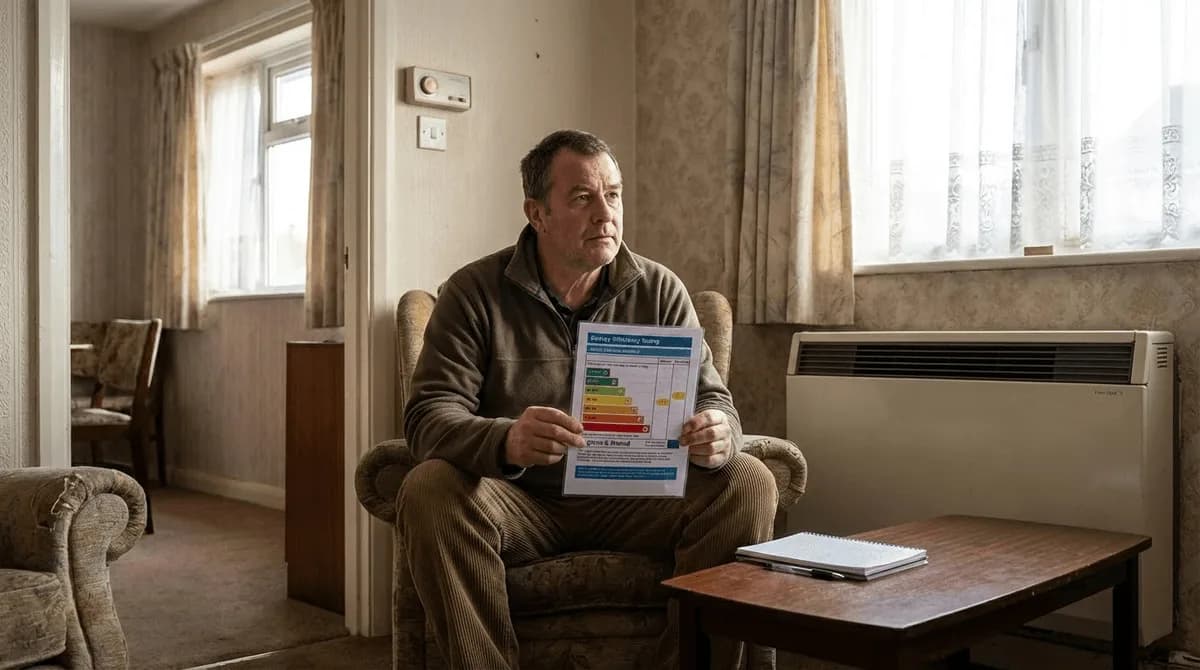
If your rental property currently has an EPC rating of D, you are in a relatively good position: band D is legal to let today, because the minimum in force is E. D-rated properties also need only modest improvements to reach C, usually well within either version of the cost cap, £3,500 today or the £10,000 proposed for 2030.
The jump from D to C is one of the most common upgrade paths for landlords, and the good news is that it is usually straightforward. Most D-rated properties can reach C with just two or three targeted improvements, keeping costs manageable and avoiding the need for major structural work.
What a D Rating Actually Means
A D rating covers EPC scores from 55 to 68 points. EPCGuide's analysis of 27.6 million EPC certificates covering 19.7 million homes shows band D accounts for 39.4% of privately rented homes in England and Wales. These properties meet the band E minimum in force, but fall short of the C standard government has proposed for all tenancies from 1 October 2030.
Typical D-Rated Property Profile
- Built between 1950s-1980s
- Usually has cavity walls (often unfilled)
- Double glazed (at least partially)
- Some loft insulation (but often thin)
- Gas central heating with older boiler
Why D is a Good Starting Point
- Only need 1 to 14 more points for C
- Low-hanging fruit improvements available
- Rarely requires expensive solid wall work
- Usually well within cost cap
How Many Points Do You Need?
The minimum score for a C rating is 69 points. If your property currently scores in the D band, here is how many points you need to gain:
Most Cost-Effective Upgrades for D to C
For D-rated properties, certain improvements offer exceptional value. These are the upgrades you should consider first:
Best Value Improvements for D to C
| Improvement | Low Estimate | High Estimate |
|---|---|---|
| Cavity wall insulation+8 to 12 EPC points. Best value if walls are unfilled. | £800 | £1,500 |
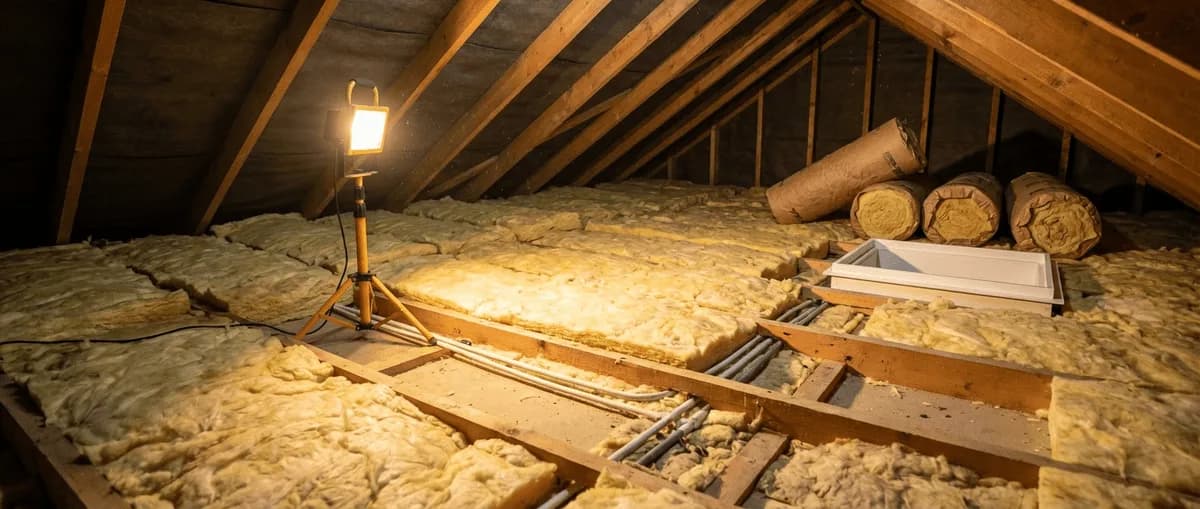
| Loft insulation top-up (to 300mm)+4 to 8 EPC points. Inexpensive, high impact. | £400 | £600 |
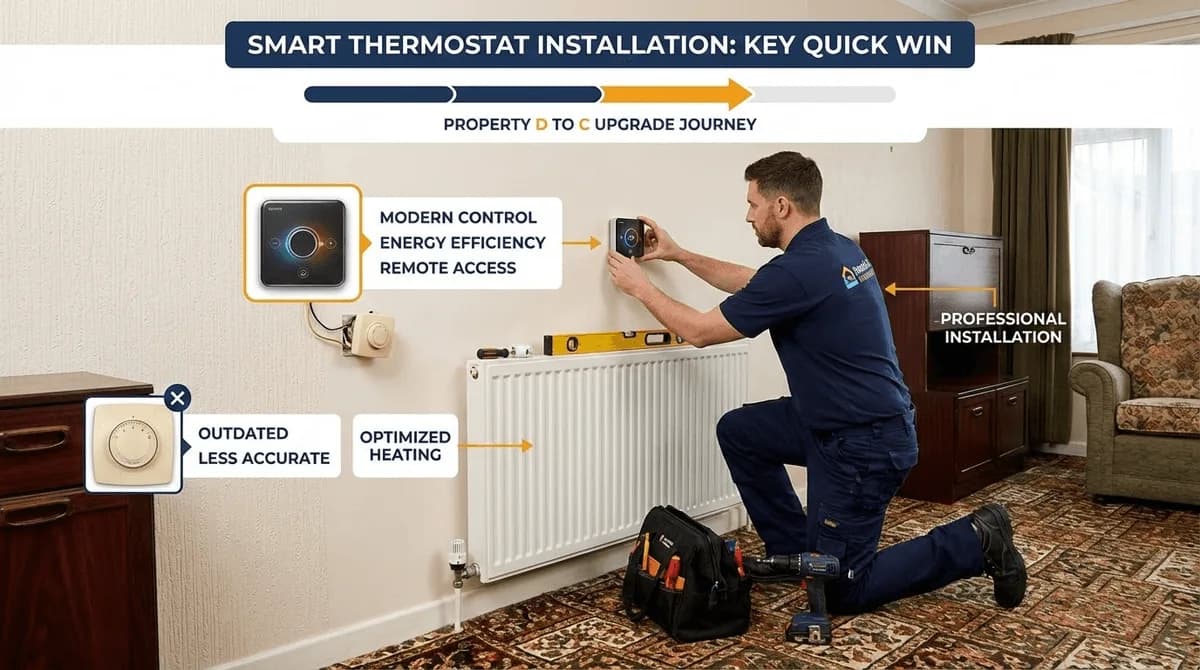
| Smart heating controls+2 to 4 EPC points. Quick win, easy install. | £200 | £400 |
| Draught proofing+2 to 4 EPC points. Low cost, noticeable impact. | £200 | £400 |
| LED lighting upgrade+1 to 2 EPC points. DIY possible. | £100 | £200 |
| Hot water cylinder jacket+1 to 2 EPC points. If you have a cylinder. | £20 | £50 |
Points gained are estimates and vary by property. A professional EPC assessment will confirm actual improvements.
Typical Upgrade Scenarios
Here are three realistic scenarios showing what D to C upgrades look like in practice, including costs and expected outcomes.
Scenario 1: 1970s Semi with Unfilled Cavity Walls
Property Details
- 3-bedroom semi-detached
- Built 1972
- Current EPC: D (score 58)
- Cavity walls (unfilled)
- Some loft insulation (100mm)
- Double glazed
- 10-year-old gas boiler
Recommended Improvements
- Cavity wall insulation: £1,000 (+10 points)
- Loft insulation top-up: £500 (+5 points)
- Smart heating controls: £300 (+3 points)
Scenario 2: 1980s House with Partial Upgrades Already Done
Property Details
- 3-bedroom detached
- Built 1985
- Current EPC: D (score 62)
- Cavity walls (already insulated)
- Loft insulation (150mm)
- Full double glazing
- Old combi boiler (15+ years)
Recommended Improvements
- Loft insulation top-up: £500 (+4 points)
- Smart heating controls: £300 (+3 points)
- Draught proofing: £300 (+2 points)
Scenario 3: Harder Case - Easy Wins Already Done
Property Details
- 2-bedroom end terrace
- Built 1965
- Current EPC: D (score 56)
- Cavity walls (already insulated)
- Loft fully insulated (300mm)
- Full double glazing
- 8-year-old gas boiler (efficient)
Recommended Improvements
- Smart heating controls: £300 (+3 points)
- Draught proofing: £300 (+2 points)
- LED lighting: £150 (+2 points)
- Floor insulation: £1,000 (+3 points)
- TRVs on radiators: £200 (+1 point)
Note: This property is borderline. If the measures above don't quite reach C, the next option would be a new boiler (around £3,000, our estimate), which may be enough to reach C but is not guaranteed, and significantly increases total cost.
Common Mistakes to Avoid
Grants & Funding for D to C Upgrades
Several government schemes can significantly reduce or even eliminate the cost of upgrading from D to C. The government impact assessment for its proposals estimates the average spend per property to meet the proposed standard at £5,400. That is a modelled average, not a quote for any one property, and grants may reduce your out-of-pocket costs.
ECO4 Scheme
Free or heavily subsidised insulation and heating upgrades. For private rentals, the home must have an initial rating of E, F or G and the tenant must receive a qualifying benefit or be declared eligible by the council, so a D-rated rental does not qualify. The scheme ends on 31 December 2026.
ECO4 Landlord Guide →Boiler Upgrade Scheme
£7,500 towards air source heat pump installation. Worth considering if your boiler is old and you need the extra points. The grant can cover a good part of the installation cost.
BUS Guide for Landlords →Warm Homes: Local Grant
England only, delivered through local authorities for low-income households. Cost caps are £16,600 for energy efficiency and £16,600 for low-carbon heating, averaged across a project. A landlord's first property can be fully funded if the tenant qualifies; further properties need a 50% landlord contribution. Rentals rated F or G need a registered exemption.
Warm Homes Guide →Frequently Asked Questions
How much does it cost to upgrade from EPC D to C?
Most D-rated properties can reach EPC C for £1,000 to £3,000. The exact cost depends on your current score, wall type, and which improvements have already been done. The government impact assessment for its proposals estimates the average spend per property to meet the proposed standard at £5,400. That is a modelled average, not a quote for any one property.
What is the cheapest way to go from EPC D to C?
The cheapest route is usually cavity wall insulation (£800-£1,500 for 8-12 points) if your walls are unfilled, combined with a loft insulation top-up (£400-£600 for 4-8 points). Properties with unfilled cavity walls can sometimes reach C with a single improvement.
Can I get grants to help with D to C EPC upgrades?
Yes. ECO4 provides free or subsidised insulation and heating upgrades for eligible properties. Private rentals must be rated E, F or G, so a D-rated rental does not qualify, and ECO4 ends on 31 December 2026. The Boiler Upgrade Scheme offers £7,500 towards heat pump installation. The Warm Homes: Local Grant (England only) has cost caps of £16,600 for energy efficiency and £16,600 for low-carbon heating, averaged across a project, for low-income households. Check eligibility as criteria vary by scheme.
When do landlords need EPC C by?
They do not need EPC C at all yet. The legal minimum in England and Wales is band E, so a D-rated property can be let today. Government has proposed 1 October 2030 as a single date for every tenancy in scope, with no earlier date for new tenancies, and a £10,000 cost cap limiting what a landlord has to spend. That package needs an Act of Parliament and a statutory instrument before it binds anyone, and neither has been made.
What if my D-rated property has already had the easy upgrades done?
If cavity walls are filled and loft insulation is already at 300mm, focus on smart heating controls (£200-£400, +2-4 points), draught proofing (£200-£400, +2-4 points), LED lighting (£100-£200, +1-2 points), and floor insulation (£800-£1,200, +2-4 points). A combination of these smaller measures can still bridge the gap.
Does the deadline apply to me if I already have tenants?
It would, if it becomes law. The proposed 1 October 2030 date covers every tenancy in scope, whether it started before or after that date. Earlier proposals would have brought new tenancies into scope from 2028, but government dropped that in its January 2026 response, so sitting tenants and new lets would share one date. Nothing changes for existing tenancies until the legislation is made.
How many EPC points do I need to go from D to C?
The D band spans scores 55-68, and C starts at 69. So you need between 1 and 14 additional points depending on your current score. Check your EPC certificate for the exact numerical score, not just the letter grade.
Your Next Steps
- 1
Find your exact EPC score
Check your existing EPC certificate or search the EPC register. Note the numerical score, not just the letter grade.
- 2
Check your wall construction
Determine if you have cavity or solid walls, and whether cavity walls are already insulated.
- 3
Use our calculator
Get a personalised estimate based on your property details and current EPC.
- 4
Get quotes for targeted improvements
Based on your gap to C, obtain quotes only for the improvements you actually need.
Sources
Related Articles
Complete Upgrade Cost Guide
Comprehensive breakdown of all improvement costs by type and property.
Cost Cap and Exemptions
When the cap applies and how exemptions work: £3,500 in force, £10,000 proposed.
1970s-1980s Property Guide
Specific upgrade strategies for properties built in this era.