E to C EPC Upgrade: The Biggest Challenge for UK Landlords
Why E-rated properties require the largest investment and how to plan your upgrade strategically
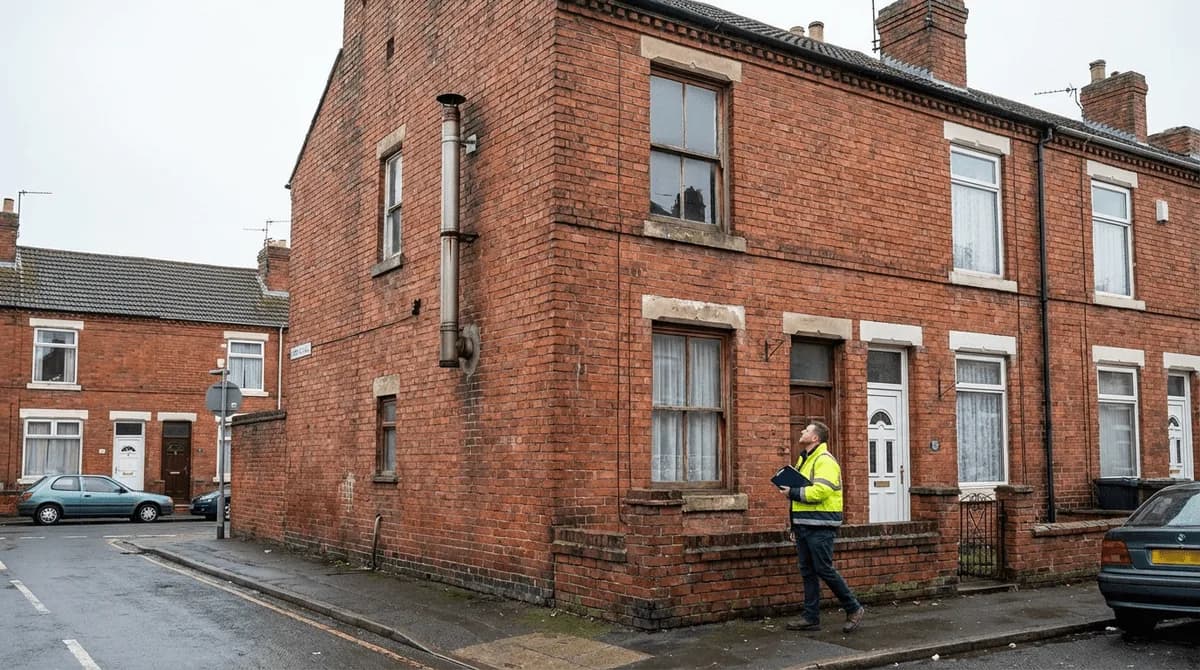
If your rental property currently has an EPC rating of E, you face the most significant upgrade challenge among properties that are currently legal to let. The jump from E to C requires gaining 15-30 EPC points, which often means substantial investment in insulation, heating, or both.
The good news is that with careful planning, many E-rated properties can reach C for £5,000 to £15,000. Properties with solid walls may face higher costs, but the cost cap provides a safety net: £3,500 including VAT under the rules in force, and £10,000under the government's proposals for 2030. This guide breaks down realistic costs by property type and shows you the most cost-effective pathways.
Why E to C is the Biggest Jump for Most Properties
Properties rated E face a unique challenge compared to D-rated properties. While D to C typically requires 1-13 points (often achievable with quick wins), E to C requires a minimum of 15 points and often 25 or more. This crosses a critical threshold where low-cost measures alone are rarely sufficient.
Why E-Rated Properties Struggle
- Often have solid walls (no easy cavity fill option)
- Typically older properties with poor original insulation
- May have single glazing or poor-quality double glazing
- Heating systems often older and less efficient
The Good News
- Many E properties have unfilled cavity walls (big easy win)
- Cost cap exemption provides spending limit protection
- ECO4 and other grants can significantly reduce costs
- Each improvement has larger impact on E properties
Typical E-Rated Property Profiles
E-rated properties typically fall into specific categories. Understanding your property type helps predict both the likely cost and the best improvement strategy.
Pre-1919 Victorian/Edwardian
Solid brick walls, single glazed sash windows, uninsulated loft, suspended timber floors. Often scores 35-45 EPC points.
Typical upgrade cost: £8,000 - £20,000
1930s-1960s with Unfilled Cavities
Cavity walls never insulated, thin loft insulation, old boiler. Often scores 42-52 EPC points. Usually the easiest E properties to upgrade.
Typical upgrade cost: £3,000 - £8,000
Converted Flats
Often in Victorian houses, limited improvement options due to shared structure, may have electric heating. Often scores 38-50 EPC points.
Typical upgrade cost: £3,000 - £10,000
Electrically Heated Properties
Any age property with electric storage heaters or panel heaters. Electric heating inherently scores poorly on EPC. Often 40-52 points.
Typical upgrade cost: £4,000 - £12,000
E to C Costs by Property Type
Total Investment to Reach EPC C from E Rating
| Improvement | Low Estimate | High Estimate |
|---|---|---|
| Victorian Terrace (solid walls)Wall insulation often essential. Cost cap exemption likely. | £8,000 | £20,000 |
| 1930s-1950s Semi (unfilled cavity)Cavity fill + loft + controls often sufficient. | £3,000 | £8,000 |
| 1960s-1970s Property (unfilled cavity)Similar to 1930s-50s. Often easier due to simpler construction. | £2,500 | £6,000 |
| Purpose-Built FlatLimited options but usually quicker wins available. | £2,000 | £6,000 |
| Converted Flat (Victorian building)Shared walls/floors limit options. May need heating upgrade. | £3,000 | £12,000 |
| Electrically Heated PropertyConsider heat pump if feasible. BUS grant can help. | £4,000 | £12,000 |
Costs assume starting EPC of 42-50 (mid E rating). Lower starting points will cost more.
Victorian Terrace Approach
Challenge Profile
Victorian terraces typically start at 35-45 EPC points and have solid walls. The lack of a cavity means wall insulation costs £8,000 to £14,000 for internal, or £10,000 to £20,000 for external.
Recommended Approach
- Complete all quick wins first (loft, draughts, controls, LEDs)
- Assess whether partial wall insulation is viable (e.g., just the front bay)
- Consider a heating upgrade if boiler is old
- Track spending carefully against the cost cap, £3,500 today and £10,000 proposed
- If approaching cap without reaching C, register exemption
1960s Property Approach
Opportunity Profile
1960s properties with unfilled cavity walls represent the best E-rated upgrade opportunity. Cavity wall insulation alone can provide 8-12 points at just £800 to £1,500.
Typical Upgrade Package
- Cavity wall insulation: £1,200 (+10 points)
- Loft insulation top-up: £500 (+6 points)
- Smart heating controls: £300 (+3 points)
- Draught proofing: £300 (+3 points)
- Total: £2,300 for approximately +22 points
Flat Approach
Constraint Profile
Flats have limited improvement options because walls, floors, and ceilings are often shared with other units. Focus on improvements within your control.
Available Options
- Heating system upgrade - Often the biggest single opportunity
- Window upgrades - If you have external walls with windows
- Smart controls - Always applicable
- Lighting - Quick win, small but worthwhile
- Top-floor flat loft - If you have loft access, insulate it
- Ground-floor flat - Underfloor insulation may be possible
Cost-Effective Improvement Pathways
The order in which you complete improvements matters. Start with the highest points-per-pound options and work down. Here is the recommended sequence for E-rated properties:
Cavity Wall Insulation (if applicable)
£800 - £1,500 for 8-12 points. Check first as this is the single best value improvement.
Loft Insulation
£400 - £600 for 4-8 points. Top up to 300mm minimum.
Draught Proofing + Smart Controls + LEDs
Combined £500 - £800 for 5-8 points. Complete as a package.
Boiler Upgrade (if old)
£2,500 - £4,000 for 5-10 points. Worthwhile if boiler is 15+ years old.
Wall Insulation (if needed)
Internal £8,000 - £14,000 for 10-15 points. Only if still short after above measures.
When Cost Cap Exemption Likely Applies
The cost cap matters most for E-rated properties with solid walls. Under the rules in force it is £3,500 including VAT, and government has proposed £10,000 alongside the EPC C standard planned for 2030. Spend up to the cap on all relevant recommended improvements, and if the property still falls short you can register a cost cap exemption.
Likely Cost Cap Scenarios for E-Rated Properties
- Victorian/Edwardian solid wall property: Internal wall insulation (£10,000+) plus other measures typically exceeds cap. Exemption likely.
- Property requiring external wall insulation: At £10,000-£20,000, quickly exceeds cap. Exemption highly likely.
- Electric heating property: If heat pump (£10,000+) is the only viable path, exemption may apply even with BUS grant.
Regional Cost Variations
Labour and material costs vary significantly across the UK. The figures in this guide are UK averages. Apply these multipliers for your region:
Higher Cost Regions
- London+25% to +35%
- South East England+15% to +25%
- South West England+5% to +15%
Lower Cost Regions
- North East England-10% to -20%
- Wales-5% to -15%
- Yorkshire-5% to -15%
Real-World Case Studies
Case Study 1: 1960s Semi with Unfilled Cavity
Property Details
- 3-bedroom semi-detached, Birmingham
- Built 1965
- Starting EPC: E (score 46)
- Cavity walls (unfilled)
- Loft insulation: 100mm
- 25-year-old gas boiler
Improvements Made
- Cavity wall insulation: £1,100 (+11 points)
- Loft top-up to 300mm: £480 (+6 points)
- New A-rated boiler: £3,200 (+8 points)
- Smart controls: £280 (+3 points)
Case Study 2: Victorian Terrace (Cost Cap Exemption)
Property Details
- 2-bedroom mid-terrace, Bristol
- Built 1890
- Starting EPC: E (score 42)
- Solid brick walls (9 inches)
- No loft insulation
- 15-year-old gas boiler
Improvements Made
- Loft insulation (full): £650 (+7 points)
- Draught proofing: £350 (+3 points)
- Smart controls + TRVs: £420 (+4 points)
- LED lighting: £140 (+2 points)
- Internal wall insulation (front bay): £4,800 (+6 points)
- New condensing boiler: £3,400 (+7 points)
Result: Despite £9,760 investment, property reached only D (67 points), which is compliant under the standard in force. Full internal wall insulation would cost an additional £6,000+, taking the total past the £10,000 cap government has proposed for the EPC C standard, the point at which a cost cap exemption would be available.
Case Study 3: Ground-Floor Flat with Electric Heating
Property Details
- 2-bedroom ground-floor flat, Manchester
- Built 1970 (purpose-built block)
- Starting EPC: E (score 48)
- Electric storage heaters
- Double glazed
- Some loft space above (shared)
Improvements Made
- Air source heat pump: £11,000 (-£7,500 BUS grant)
- Underfloor insulation: £1,200 (+3 points)
- Smart controls: £300 (+3 points)
- LED lighting: £120 (+2 points)
Net cost after grant: £5,120
Grants & Funding for E-Rated Properties
E-rated properties are in the sweet spot for government funding: too low a rating to let legally in future, but still legally lettable now. Several schemes can significantly reduce what you pay out of pocket.
ECO4 Scheme (Potentially Free)
ECO4 prioritises properties rated E, F, and G. If your tenant receives a qualifying benefit (Universal Credit, Housing Benefit, Pension Credit, or similar), you may get cavity wall insulation, loft insulation, and even a boiler replacement at no cost to you or your tenant.
- ✓ Free cavity wall insulation (saves £1,200+)
- ✓ Free loft insulation or top-up (saves £500+)
- ✓ Subsidised boiler replacement for some properties
Boiler Upgrade Scheme (BUS)
If your E-rated property has electric heating, replacing with an air source heat pump can gain 10–30 EPC points in one step. The BUS grant reduces the cost significantly.
- ✓ Air source heat pump: £7,500 grant
- ✓ Ground source heat pump: £7,500 grant
- ✓ Available for landlords (not means-tested)
Warm Homes: Local Grant (up to £30,000)
For low-income owner-occupiers and private renters, the Warm Homes: Local Grant covers up to £30,000 per property (up to £15,000 for energy-efficiency measures plus up to £15,000 for low-carbon heating) for a wide range of improvements. Delivered by local authorities, availability varies by area.
- ✓ Covers insulation, heating, windows, doors
- ✓ Up to £15,000 for renters in owner-occupied homes
- ✓ Means-tested (tenant income threshold applies)
Your Next Steps
- 1
Confirm your exact EPC score
A score of 39 needs 30 points; a score of 54 needs only 15. The difference is thousands of pounds.
- 2
Check your wall construction
Solid walls vs unfilled cavity walls makes a £5,000+ difference in total cost.
- 3
Check ECO4 eligibility
If your tenant receives qualifying benefits, you may get free cavity wall and loft insulation.
- 4
Use our calculator
Get a personalised estimate based on your specific property details.
Frequently Asked Questions
How much does it cost to upgrade from EPC E to C?↓
Can I get the EPC E to C upgrade for free?↓
What is the cheapest way to improve an E-rated property?↓
When do E-rated properties need to reach EPC C?↓
Can I claim a cost cap exemption for an E-rated property?↓
Does my property qualify for ECO4 as an E-rated rental?↓
What if my E-rated property has solid walls and can't reach C within the cost cap?↓
Sources
Related Articles
D to C Upgrade Costs
Simpler upgrade path for D-rated properties. Most need just £1,000–£3,000.
Cheapest EPC Improvements
Ranked by cost per EPC point. Find the best-value improvements for your property.
ECO4 for Landlords
Could your tenant qualify for free insulation and heating upgrades? ECO4 explained.
Boiler Upgrade Scheme
£7,500 grant for heat pumps. Ideal for electrically-heated E-rated properties.
Warm Homes: Local Grant
Up to £30,000 per property for insulation, heating and windows. Available in most local areas.
Cost Cap & Exemptions
When you can stop spending and register a MEES exemption: £3,500 today, £10,000 proposed.