Converted Flat EPC Upgrade Guide
Everything landlords need to know about bringing converted flats up to EPC C standard
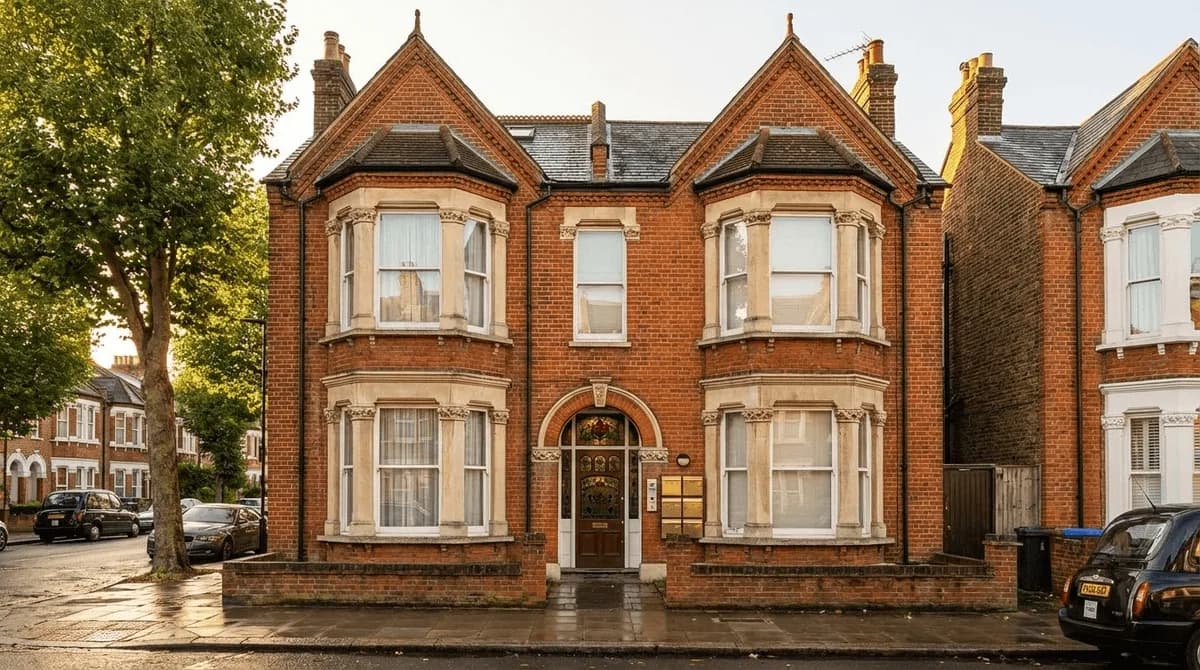
Converted flats, where a larger house has been divided into multiple separate dwellings, present unique challenges for EPC improvements. Unlike purpose-built flats, converted properties often retain the original building fabric while adding complexity through leasehold arrangements and shared building elements.
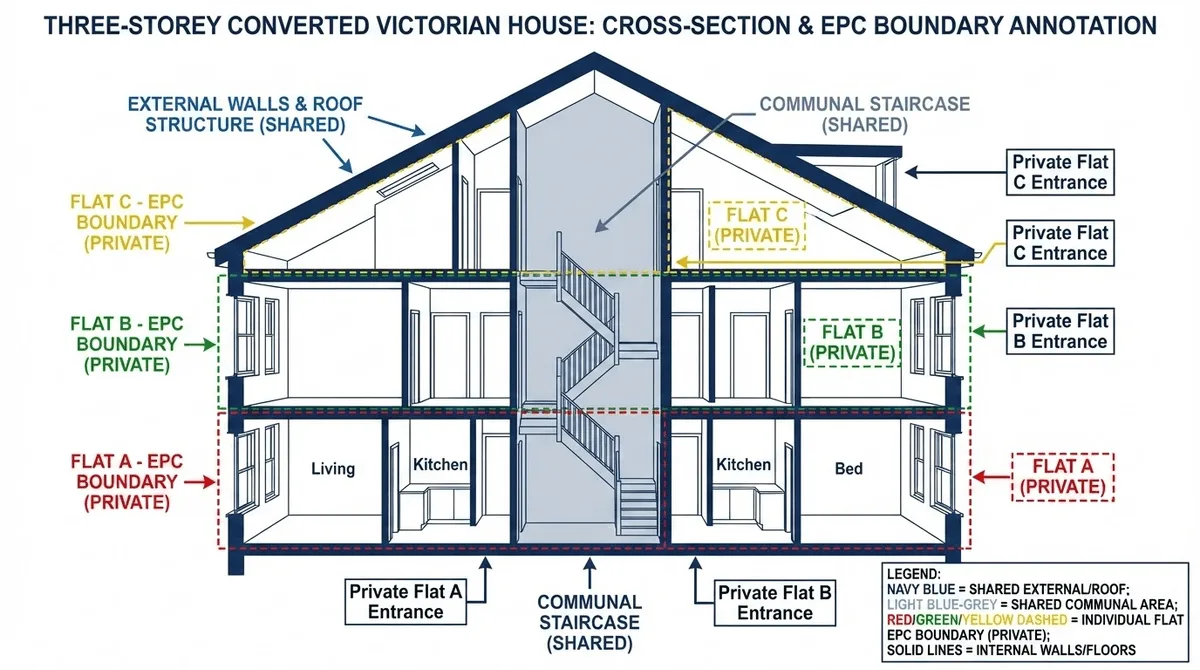
Each flat requires its own individual EPC, but the ability to make improvements is often limited by what you can change within your demise. Shared walls, roofs, and communal areas may be outside your control, requiring freeholder consent or agreement from other leaseholders for building-wide improvements. For a fuller guide to working around these barriers, including the third-party consent exemption, see our EPC for leasehold flats landlord guide.
Property Characteristics
Converted flats inherit the construction characteristics of the original building, which is typically Victorian, Edwardian, or inter-war. The conversion process adds its own complexities, with varying quality of works and different ownership structures.
Original Building Fabric
- -Usually Victorian/Edwardian solid brick walls
- -Or inter-war cavity wall construction
- -Original single-glazed sash or casement windows
- -Solid floors at ground level, suspended timber above
Conversion Features
- -Subdivided rooms creating smaller units
- -Individual heating systems per flat
- -Shared entrance, hallways, and stairs
- -Party walls between flats (often uninsulated)
Leasehold Structure
- -Individual leases for each flat
- -Freeholder owns building structure
- -Demise typically excludes external walls and roof
- -Service charges for communal maintenance
Shared Elements
- -External walls (usually freeholder responsibility)
- -Roof (affects top floor flats significantly)
- -Windows (may be defined in lease)
- -Communal heating (if applicable)
Common EPC Challenges
1. Limited Control Over Building Fabric
Your lease likely defines your demise as the internal surfaces only. The structure, including external walls, windows, and roof, typically remains the freeholder's responsibility. You cannot unilaterally insulate or alter these elements.
2. Party Wall Constraints
Walls shared with neighbouring flats are party walls. Adding insulation to party walls may require Party Wall Act notices and consent from affected neighbours. The cost-benefit is often poor as these walls separate heated spaces.
3. Individual EPC, Shared Building
Your flat has its own EPC, but its rating is significantly affected by elements you cannot control. A ground floor flat loses heat through the floor, a top floor flat through the roof, and middle flats may benefit from neighbours' heating.
4. Conservation Area and Listed Building Issues
Many converted properties are in conservation areas or are listed buildings, adding planning restrictions to the ownership complications. Changes to windows or external appearance may be refused regardless of freeholder consent.
5. Cost Sharing Disputes
Building-wide improvements like external wall insulation benefit all flats but the cost is typically shared via service charges. Getting agreement from all leaseholders and the freeholder can be extremely difficult, especially for discretionary improvements.
Recommended Upgrades
For converted flats, focus on improvements within your demise that do not require freeholder consent. Where consent is needed, factor in the time and potential cost of obtaining it.
Priority Order for Maximum Impact
Converted Flat Upgrade Costs and EPC Impact
| Improvement | Low Estimate | High Estimate |
|---|---|---|
| Condensing Boiler (if own system)Within demise, no consent needed. 5-10 EPC points. | £2,500 | £4,000 |
| Smart Heating Controls + TRVsWithin demise. 2-4 EPC points. | £200 | £450 |
| Secondary GlazingPer window. Usually no consent needed. 3-6 EPC points total. | £150 | £350 |
| Internal Wall Insulation (external walls)Within demise, but reduces room size. 8-12 EPC points. | £4,000 | £8,000 |
| LED Lighting ThroughoutSimple upgrade. 1-2 EPC points. | £80 | £150 |
| Draught ProofingWindows, doors. 1-3 EPC points. | £100 | £250 |
| Double Glazing (if consent obtained)Requires consent. 5-8 EPC points. | £2,500 | £5,000 |
| Underfloor Insulation (ground floor)Ground floor flats only. 3-5 EPC points. | £1,000 | £2,500 |
| Estimated Total | £10,530 | £20,700 |
Costs vary significantly by flat size and what consents are obtainable. Secondary glazing and internal insulation can be installed without freeholder consent in most cases.
Cost Estimates
The cost to reach EPC C in a converted flat varies enormously depending on starting point, what consents are obtainable, and which improvements are feasible within your specific circumstances.
Within-Demise Only
£4,000 - £8,000
Improvements not requiring consent: boiler, heating controls, secondary glazing, internal insulation if affordable.
With Consents Obtained
£8,000 - £15,000
If freeholder agrees to window replacement and/or external insulation is possible.
Cost Cap Threshold
£3,500
The cap in force today, including VAT. Government has proposed raising it to £10,000, but that is not yet law. Consent issues stop many converted flats improving at all, which is what makes an exemption relevant here.
Special Considerations
Freeholder Consent
For improvements requiring freeholder consent:
- Make requests in writing with full specifications
- Allow reasonable time for response (typically 28 days)
- If refused, request written reasons
- Keep copies of all correspondence
- Consider mediation if consent is unreasonably withheld
Under the Landlord and Tenant Act 1927, consent for improvements cannot be unreasonably withheld in most cases, but this may not apply to all lease types.
Multiple Leaseholder Issues
Building-wide improvements like external wall insulation or roof insulation typically require agreement from all leaseholders as costs are shared through service charges. Common challenges include:
- Different priorities - owner-occupiers may want improvements that landlords resist due to cost
- Unequal benefit - roof insulation mainly benefits top floor flats but costs are shared
- Absent freeholders - some are difficult to trace or unresponsive
- Lease variations - may be needed for major works
Building Regulations
Even improvements within your demise may require Building Regulations approval:
- Window replacement - must meet thermal and safety standards (Part L and K)
- Heating system changes - boiler installation requires notification
- Internal wall insulation - may affect fire compartmentation (Part B)
- Electrical work - Part P requirements for kitchens and bathrooms
Use registered installers who can self-certify their work, or apply for Building Control approval before starting.
Creative Solutions
Given the constraints of converted flats, creative approaches are often needed to maximise EPC improvements within the limits of what is possible.
Alternative Solutions for Converted Flats
| Feature | Secondary GlazingRecommended | Internal Wall Insulation | Infrared Heating Panels |
|---|---|---|---|
| Typical Cost | 150-350 per window | 80-120 per m2 | 300-600 per panel |
| Consent Required | Usually not required | Usually not required | Not required |
| EPC Impact | 3-6 points total | 8-12 points | Variable |
| Disruption | Minimal | High (room by room) | Low |
| Best For | Conservation areas, listed buildings | Solid wall buildings where external not possible | Flats without gas supply |
Secondary glazing is often the most practical solution for converted flats, combining good EPC improvement with minimal disruption and consent requirements.
Secondary Glazing
Installing secondary glazing on the inside of existing windows typically does not require freeholder consent as it does not alter the external appearance. Modern slimline units can achieve U-values approaching double glazing while preserving original windows. This is particularly valuable in conservation areas where window replacement is restricted.
Partial Internal Wall Insulation
If full internal wall insulation is too expensive or disruptive, consider insulating only the coldest walls (typically north-facing or the most exposed). This delivers much of the benefit at reduced cost, particularly if combined with targeted heating improvements.
Heating System Optimisation
Even if you cannot improve the building fabric, optimising the heating system can yield EPC points. A new condensing boiler, smart controls, TRVs on all radiators, and proper system balancing can add 8-12 points without any consent requirements.
Example Upgrade Pathway
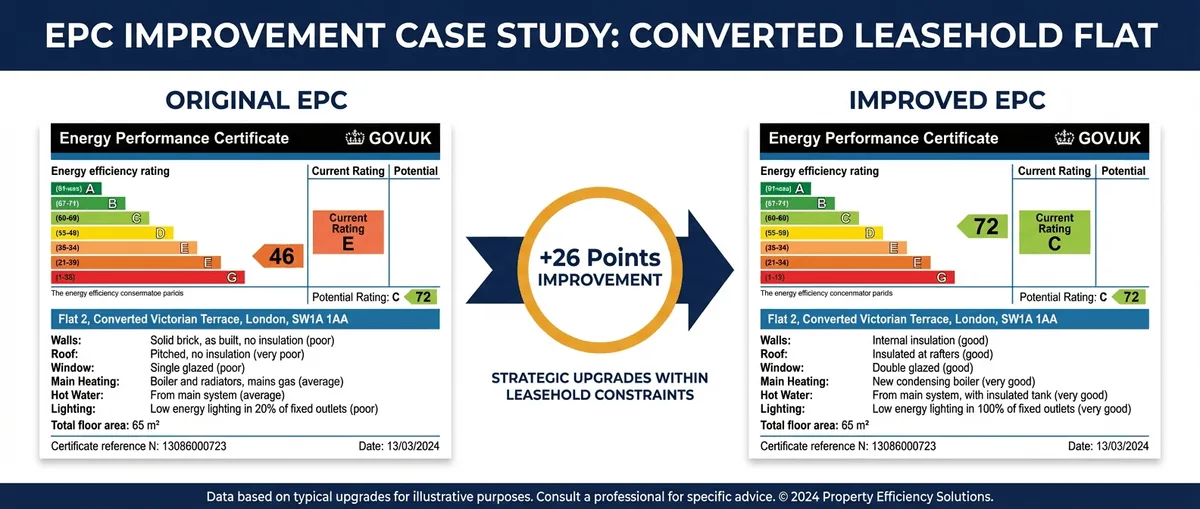
Here is a realistic example of how a 2-bedroom converted flat in a Victorian building might approach EPC improvements:
Case Study: 2-Bed First Floor Flat, Victorian Conversion, Bristol
Starting
E46 points
Target
C69 points
Next Steps
1. Review Your Lease
Carefully check what is included in your demise and what alterations require consent. This determines your upgrade options.
Get free leasehold advice (LEASE)2. Get Your Current EPC
If you do not have a recent EPC, commission one to understand your starting point and what improvements are recommended.
Check your EPC on GOV.UK3. Calculate Your Costs
Use our calculator to get a personalised estimate based on your specific property details and available options.
Use the Cost Calculator4. Contact Your Freeholder
If you want to pursue improvements requiring consent, start the dialogue with your freeholder early. Written requests are best.
Leasehold rights guidance