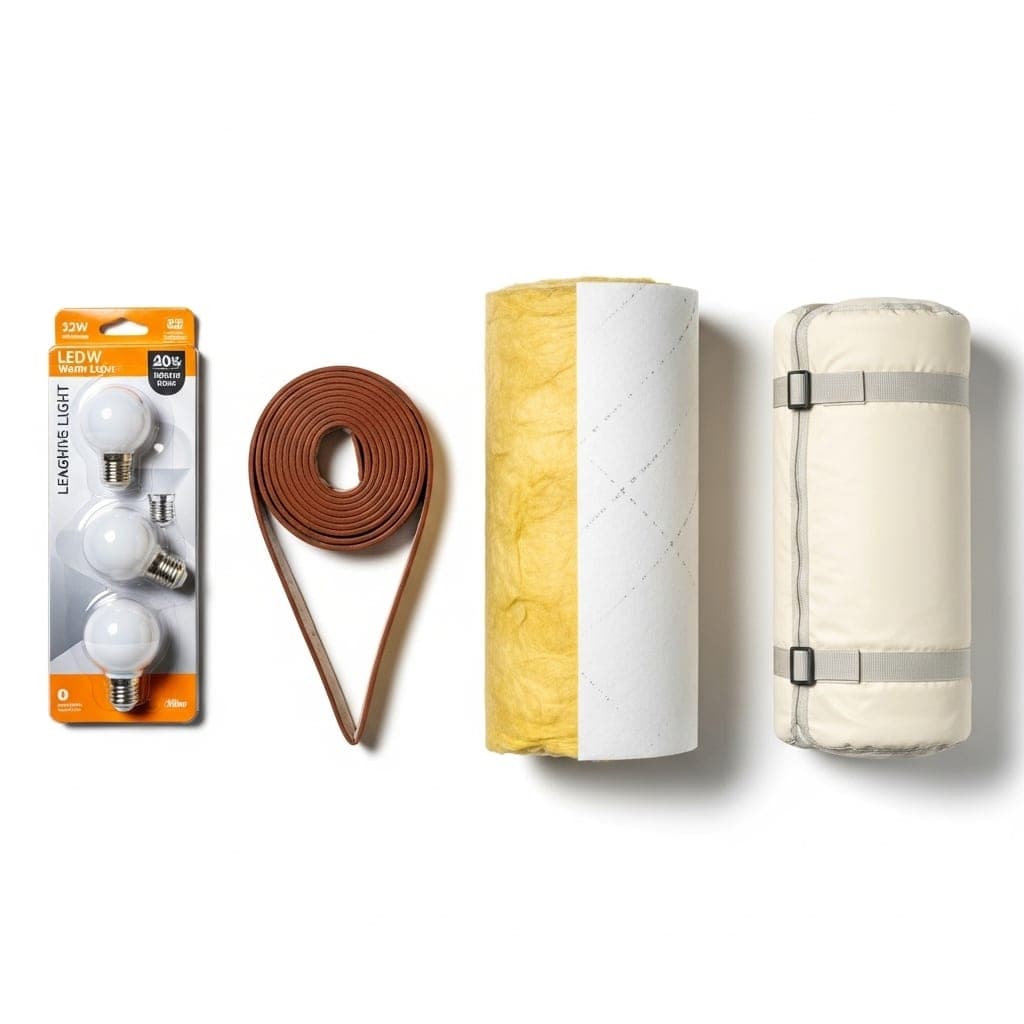
The cheapest way to improve your EPC rating is a hot water cylinder jacket: £15, fitted in ten minutes, worth up to 3 SAP points. That is roughly £8 per point. LED lighting comes second at around £30 per point. Both are DIY jobs, and both are worth doing before you phone a single installer.
Most guides rank EPC improvements by total price. That is the wrong metric. A £500 upgrade that gains 15 points is far better value than a £300 upgrade that gains 2. What matters is cost per SAP point: the amount you spend for each point added to your certificate. Get that ordering right and a band D property with cavity walls and an accessible loft can often reach C without touching the expensive measures at all.
The pattern we see again and again is landlords skipping the cheap wins and jumping straight to a boiler or new windows. This guide fixes that. Every common measure is ranked by cost per point, with typical payback, so you can spend the least to gain the most.
How is the cheapest EPC improvement calculated?
Cost per point is simple: divide the installed cost by the number of SAP points the measure adds. A £15 cylinder jacket gaining 2 points is £7.50 per point. A £6,000 window job gaining 8 points is £750 per point. Same certificate, wildly different value.
Two things to hold in mind before you read the ranking.
First, point gains are indicative. The SAP methodology looks at your whole property, so the same measure scores differently on a 1900s solid-walled terrace than on a 1990s semi. Your current EPC recommendations list is calibrated to your actual building. Read it first.
Second, the EPC is not purely additive. Insulate the loft and the heating controls matter slightly less, because there is less heat to control. The interactions are small, but they are why you plan a package rather than chasing single measures.
The full cost-per-point ranking
This table ranks common EPC improvements by cost per SAP point. Costs reflect 2026 installed prices for a typical 3-bed mid-terrace. Point gains are drawn from Energy Saving Trust and GOV.UK figures. Payback is rough, based on the annual bill saving the measure typically produces, and it is the tenant who sees most of that saving unless bills are included in the rent.
| # | |||||
|---|---|---|---|---|---|
| 1 | Hot water cylinder jacket | £15–25 | 1–3 | ~£8/point | Under 1 year |
| 2 | LED lighting swap | £100–300 | 3–8 | ~£30/point | 1–2 years |
| 3 | Loft insulation top-up (to 270mm) | £300–600 | 5–15 | ~£40/point | 2–4 years |
| 4 | Draught-proofing | £100–400 | 2–5 | ~£55/point | 2–3 years |
| 5 | Smart heating controls | £200–500 | 3–8 | ~£55/point | 3–5 years |
| 6 | Cavity wall insulation | £500–1,500 | 10–20 | ~£65/point | 3–5 years |
| 7 | Solid floor insulation | £1,000–3,000 | 5–10 | ~£250/point | 10+ years |
| 8 | Heat pump (before grant) | £8,000–15,000 | 15–40 | ~£350/point | 10+ years |
| 9 | External wall insulation | £5,000–15,000 | 15–30 | ~£400/point | 15+ years |
| 10 | Double glazing | £3,000–8,000 | 5–10 | ~£650/point | 15+ years |
Tap any column heading to re-sort. Point gains vary by property type, existing measures, and SAP methodology. Costs reflect 2026 installed prices for a typical 3-bed mid-terrace.
Point gains vary by property type, existing measures, and SAP methodology. The first six measures each cost under £1,500 and, combined, can add 24 to 59 SAP points. Band D runs from 55 to 68 and band C starts at 69, so a D-rated property needs anywhere from 1 to 14 points depending on where it sits in the band. That is why the bottom half of this table is often unnecessary. Read your own score first.
Quick wins under £100
Before you budget for anything, there are three measures a competent landlord can do in a weekend for under £100 total. None needs an installer, none needs certification, and all three feed straight into the SAP calculation.
Hot water cylinder jacket (£15–25)
If your property has a hot water cylinder without a factory-fitted jacket, wrap it in an 80mm British Standard jacket. Ten minutes, one strap of insulation, up to 3 points. Combi boilers heat on demand and have no cylinder, so this does not apply to them. But where there is an unlagged cylinder, this is the single best-value point on the certificate. Cost per point: about £8. Nothing beats it.
LED lighting swap (£30–60 DIY)
The SAP calculation scores the percentage of fixed lighting outlets using low-energy bulbs. If your property still runs halogen downlights or incandescent fittings, swapping every fixed light to LED moves you toward 100% low-energy. GU10 LED replacements for halogen spots are £2–4 each; a full 3-bed swap comes in under £60 if you do it yourself, or £100–300 if a sparky handles awkward fittings. Only fixed lighting counts. Plug-in lamps do nothing for the score.
DIY draught-proofing (£20–40)
Foam and brush strips for doors, letterboxes, the loft hatch and window edges cost pennies per metre. Sealing the obvious leaks (front and back doors, the loft hatch, any unused chimney) is worth 2 or 3 points on a leaky property and takes an afternoon. Professional draught-proofing of sash windows costs more and appears in the next section.
All three quick wins together: under £100, potentially 5 to 8 SAP points. For a property sitting one or two points below band C, that can be the whole job.
Which cheap upgrades get you from D to C?
EPCGuide's analysis of 29.2 million EPC records shows 49.6% of homes in England and Wales sit below band C. The average SAP score across those certificates is 63. Band C starts at 69. So the typical below-C property is a band D that needs somewhere between 1 and 14 points, and the median D-rated rental needs about 9.
That gap is almost always closeable for under £1,500. Here is the package that clears it for most properties. For a full cost breakdown by measure, see our guide on how to improve EPC from D to C.
The three-upgrade formula
For a typical D-rated home with cavity walls and an accessible loft:
- Loft insulation top-up to 270mm: £300–600, 5–15 points
- Heating controls upgrade: £200–500, 3–8 points
- LED lighting swap: £100–300, 3–8 points
Combined cost: £600–1,400. Combined gain: 11–31 points. That is enough for the majority of D-rated properties. The ones it does not cover are usually solid-walled homes (pre-1920s) where fabric upgrades are pricier.
Add the fourth measure below and the package covers most of what is left.
When cavity wall insulation changes the maths
If your walls have an unfilled cavity, cavity wall insulation (£500–1,500, 10–20 points) is often the single highest-impact measure you can buy. At roughly £65 per point it can jump a whole band on its own. Homes built from the 1930s to the 1990s almost always have cavities; pre-1920 homes almost never do. Book a free cavity survey to confirm before committing, and always use a TrustMark installer, because badly injected cavity fill causes damp.
Run your own combination through the EPC cost calculator and check the return through the ROI calculator before you spend. For a fuller cost picture by upgrade type, see how much an EPC assessment costs and the wider costs hub.
Want to know exactly which upgrades your property needs to reach EPC C, with costs and a timeline? Get your costed EPC C Action Plan (£29). In your inbox within the hour, then refined by a real person over the next 48.
How should I sequence upgrades for the proposed 2030 standard?
The minimum band you must meet to let a property in England and Wales today is E, and has been since 1 April 2020. A band D is legal to let. EPC C is a proposed target for the private rented sector from 1 October 2030, covering every tenancy. An earlier 2028 date for new tenancies was floated at consultation and then dropped in the government's response of 21 January 2026, so there is only one date to plan around. It is not law: government has to pass an Act and then lay a statutory instrument amending the 2015 Regulations, and neither has happened. Treat it as direction of travel. The sensible response is not to panic-spend now, but to sequence the work so each pound does the most.
The order matters for two reasons: cheap points first protects your budget, and fabric before heat stops you oversizing a boiler or heat pump for a building you are about to insulate.
Step 1: the cheap wins (any time)
Cylinder jacket, LED lighting, DIY draught-proofing. Under £100, no installer, no reason to wait. Do these the week you read your EPC.
Step 2: fabric, insulate before you heat
Loft top-up, then cavity wall insulation if you have a cavity. Insulation is cheaper per point than any heating upgrade and it reduces the heat demand, so anything you install afterwards can be smaller and cheaper. Never buy a new boiler or heat pump before the fabric is sorted.
Step 3: controls and heating
Smart heating controls (£200–500) are cheap and quick. Only look at boiler or heat pump replacement after fabric and controls, and only if the certificate still falls short. If a heat pump is on the cards, the grant maths in the next section changes everything.
Step 4: reassess, then decide on the expensive stuff
Book a fresh EPC after steps 1 to 3 (£60–120). Many landlords find they have already crossed into band C and never need the five-figure measures. If you are still short, you now know the exact gap and can target the cheapest remaining measure rather than guessing.
Predict the outcome before you start with the EPC predictor. It estimates your new SAP score from the measures you select, so you avoid spending £2,000 only to land one point short.
What does it cost to move between EPC bands?
The total cost to reach band C depends on where you are starting from. These ranges are for a typical 3-bed mid-terrace using the cheapest available combination of measures. Costs draw on the measure costs throughout this guide and Energy Saving Trust figures.
| Starting band | SAP score range | Points needed for C | Typical cheapest route | Approximate cost |
|---|---|---|---|---|
| Band D | 55-68 | 1-14 points | Cylinder jacket + LEDs + heating controls | £100-2,500 |
| Band E | 39-54 | 15-30 points | Loft insulation + cavity fill + controls | £1,500-5,000 |
| Band F | 21-38 | 31-48 points | Fabric package + solid or external wall insulation | £3,000-10,000 |
| Band G | 1-20 | 49+ points | Full retrofit; ECO4 or Warm Homes Plan funding essential | £5,000-15,000+ |
Band D is the most common starting point: roughly half of below-C rental properties are D-rated. The three-upgrade formula covers most of them. F and G-rated properties almost always qualify for ECO4 or local authority grant funding, which can drop the out-of-pocket cost to near zero.
Worst-value EPC measures to avoid
Some measures have poor cost-per-point ratios. These are the worst-value EPC upgrades for landlords: do them only when there is a separate reason, not to chase points.
Double glazing (~£650 per point)
The worst value on the list. £3,000–8,000 for a full house, 5–10 points, so roughly £650 per point, about 80 times the cost of a cylinder jacket. Replace windows when they are genuinely at end of life, not as an EPC play. Secondary glazing (£100–300 per window) is a cheaper interim fix, useful in listed buildings where replacement is restricted.
Solar panels (great for bills, modest for EPC)
Solar PV cuts energy bills but its SAP impact is moderate: 5–10 points for a 3–4kW system at £5,000–8,000, so £600–800 per point. Worth it for the bill saving on a south-facing roof, poor value if you are buying it purely for the certificate.
Over-specifying insulation
270mm is the loft insulation threshold SAP rewards. Going to 400mm gains nothing extra. Likewise, topping up a partially filled cavity may score less than you expect. Check your EPC recommendations before ordering more than you need.
How do grants change the ranking?
Government grants can slash the effective cost per point on the expensive measures, sometimes pulling a bottom-of-table upgrade near the top.
Boiler Upgrade Scheme
The Boiler Upgrade Scheme puts £7,500 toward an air source heat pump. On an £8,000–15,000 install that drops your cost to £500–7,500, moving the effective cost per point from about £350 to as low as £18. If your property suits a heat pump, the grant makes it one of the best-value upgrades going. The April 2026 amendment extended funding to 2030, from a previous end date of March 2028. Check current terms on GOV.UK.
Under the rules in force, grant funding does not use up your £3,500 cap, and if it covers the full cost the cap does not apply. A £7,500 grant reduces what you have to put in rather than eating your allowance. Under the proposed £10,000 cap, Boiler Upgrade Scheme money would not count, but other third-party funding such as ECO4 or a local grant could.
ECO4 and successor schemes
ECO4 can fully fund insulation and heating upgrades where the tenant receives qualifying means-tested benefits, dropping the cost per point to zero for loft, cavity, solid wall and boiler measures. It runs to December 2026, with a successor scheme announced but not yet detailed. Full eligibility is in our ECO4 grants landlord guide.
Local and regional grants
Some councils offer £5,000–10,000 toward insulation and heating with a 33–50% landlord contribution. Availability is patchy and postcode-dependent. Check what applies to you on the landlord grants page before paying full price for anything.
Common mistakes landlords make
Starting with the most expensive upgrade. Jumping to a boiler or new windows before the cheap wins is the classic error. Work the ranking top to bottom.
Skipping a fresh EPC. Your certificate lists the exact measures the assessor recommends for your property. Working from generic advice wastes money. Check your rating free at the GOV.UK EPC register.
Wrong order. Insulate before you upgrade heating, or you will oversize the boiler for a building you are about to make warmer.
Forgetting the reassessment. Improvements only count when a new assessment records them. Budget £60–120 for the reassessment after works.
Assuming one measure is enough. A single upgrade rarely moves a full band. Plan a package of two to four measures, not one fix.
DIY vs professional installation
| Improvement | DIY possible? | Certification needed? |
|---|---|---|
| Hot water cylinder jacket | Yes | No |
| LED lighting | Yes | No (unless new wiring) |
| Draught-proofing | Yes (doors, windows) | No |
| Loft insulation top-up | Yes (if accessible) | No, TrustMark recommended |
| Smart heating controls | Partially | Gas Safe for boiler wiring |
| Cavity wall insulation | No | TrustMark + guarantee scheme |
| Floor insulation | Sometimes | Building regs may apply |
| Double glazing | No | FENSA or CERTASS |
| Wall insulation | No | TrustMark + PAS 2030 |
| Heat pump | No | MCS certified installer |
If you plan to claim ECO4 or the Boiler Upgrade Scheme, the installer must be TrustMark registered and PAS 2030/2035 certified. DIY work does not qualify for grant funding and may not be recognised by the assessor.
How results vary by property type
Solid-walled Victorian terraces are the hardest to improve: no cavity to fill, single-glazed sash windows, suspended timber floors. The cheap wins still apply, but reaching band C often needs internal or external wall insulation at £4,000–15,000, where grants matter most. See the Victorian terrace guide for the full picture.
By contrast, a 1930s semi is the sweet spot: cavity walls, an accessible loft, a simple heating system. The three-upgrade formula plus cavity fill usually moves it from D to C for under £2,500, sometimes under £1,000. Post-2000 flats often already have insulation and glazing, so a D rating there is usually about old controls or lighting, which the quick wins fix cheaply.
Frequently asked questions
What is the cheapest single improvement to boost an EPC rating? A hot water cylinder jacket is the cheapest, costing £15–25 and gaining 1–3 SAP points, roughly £8 per point. LED lighting is second at around £30 per point. Both are DIY jobs that take under an hour.
Can I improve my EPC rating for under £100? Yes. A cylinder jacket, an LED lighting swap and DIY draught-proofing together cost under £100 and can add 5 to 8 SAP points. For a property sitting one or two points below band C, that can be enough on its own, with no installer required.
How much does it cost to go from EPC D to C? Typically £600–2,500 depending on property type. Homes with cavity walls and an accessible loft often reach C for under £1,500 using loft insulation, heating controls and LED lighting. Solid-walled Victorian properties cost more, usually £3,000–8,000 without grant funding.
In what order should I upgrade for the proposed 2030 standard? Cheap wins first (cylinder jacket, LEDs, draught-proofing), then fabric (loft and cavity insulation), then heating controls, and only then expensive measures like a heat pump. Always insulate before upgrading heat so you do not oversize the system, and reassess after the cheap and fabric measures before committing to anything costing thousands.
Which EPC improvements give the most points? Cavity wall insulation (10–20 points), heat pumps (15–40 points) and external wall insulation (15–30 points) give the most points per installation, but they are also the most expensive. On a cost-per-point basis, cylinder jackets, LED lighting and loft insulation top-ups deliver better value.
Is it worth getting a heat pump just for EPC points? Without a grant, a heat pump costs £8,000–15,000 at roughly £350 per point, which is poor value versus insulation. With the £7,500 Boiler Upgrade Scheme grant, the effective cost drops to £500–7,500 and the cost per point can fall to about £18, making it one of the best-value options. If your property qualifies for the grant, it is worth it; if not, exhaust cheaper measures first.
Do I need a professional for every EPC improvement? No. Cylinder jackets, LED lighting, draught-proofing and basic loft top-ups can be DIY. Cavity wall insulation, external wall insulation, heat pumps and window replacements need certified installers. Any work claimed under a government grant must be done by a TrustMark-registered, PAS 2030-certified installer.
How often should I get a new EPC assessment? An EPC is valid for 10 years, but you should get a fresh one after completing improvement works so the certificate reflects the higher SAP score. Reassessments cost £60–120 depending on property size and location.
Costs reflect 2026 installed prices and are cross-referenced with figures from the Energy Saving Trust and GOV.UK. Point gains and payback vary by construction type, location and existing measures. Check your own EPC recommendations before spending.