1960s-1970s House EPC Upgrade Guide
Everything landlords need to know about bringing 1960s and 1970s properties up to EPC C standard
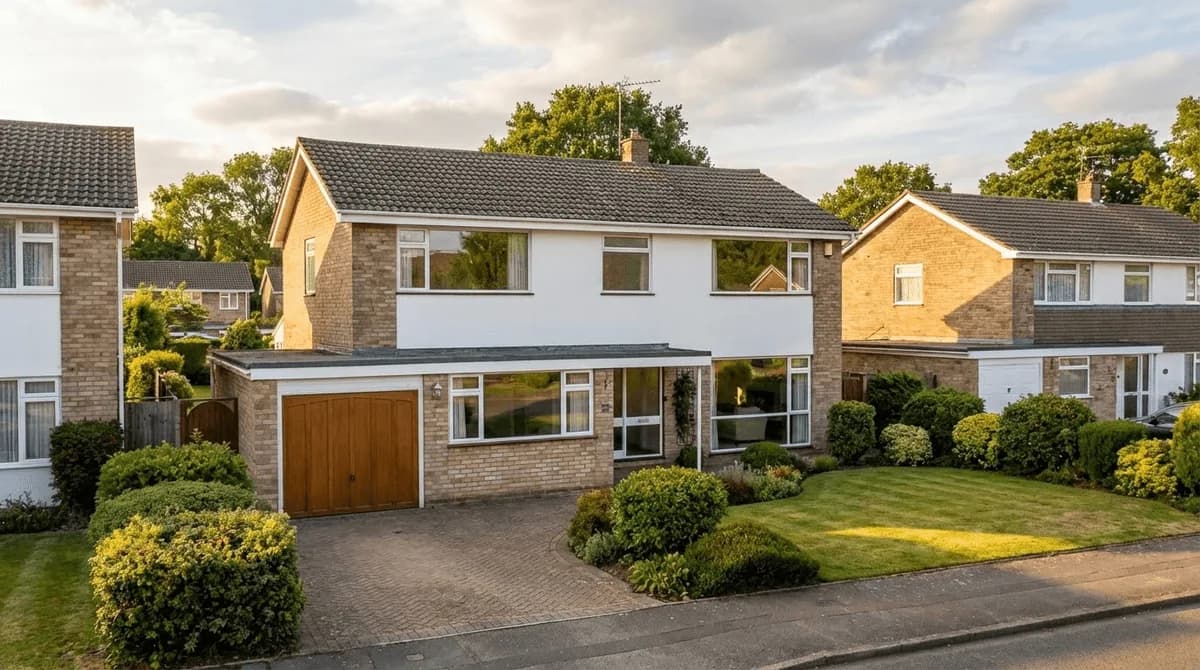
Houses built in the 1960s and 1970s sit in the older half of the English housing stock, and age remains the strongest single predictor of efficiency. Analysis by EDF and property data platform Sprift found that 13.9 million homes in England and Wales, 55% of those holding a valid EPC, meet only the insulation standards of the 1976 Building Regulations or earlier. That makes this era prime territory for improvement work. Our EPC map shows how your local authority's housing stock compares with the national picture.
The good news for landlords is that these properties typically have cavity walls, making them much easier and cheaper to insulate than older solid-wall homes. Many 1960s-1970s houses can reach EPC C for between £3,000 and £8,000 on indicative figures. The top of that range sits above the £3,500 cost cap in force today and below the £10,000 cap government has proposed for 2030, which is not yet law. Before you budget for anything, it helps to check where a 1960s or 1970s build lands on the current scale so you know how many points you are actually chasing.
Letting one of these houses? Our guide to EPC rules for landlords sets out the minimum band you need today and what government has proposed for 2030.
Property Characteristics
Properties from this era were built during a period of significant housing expansion, often using standardised construction methods. Understanding these characteristics helps identify the most effective improvement strategies.
Wall Construction
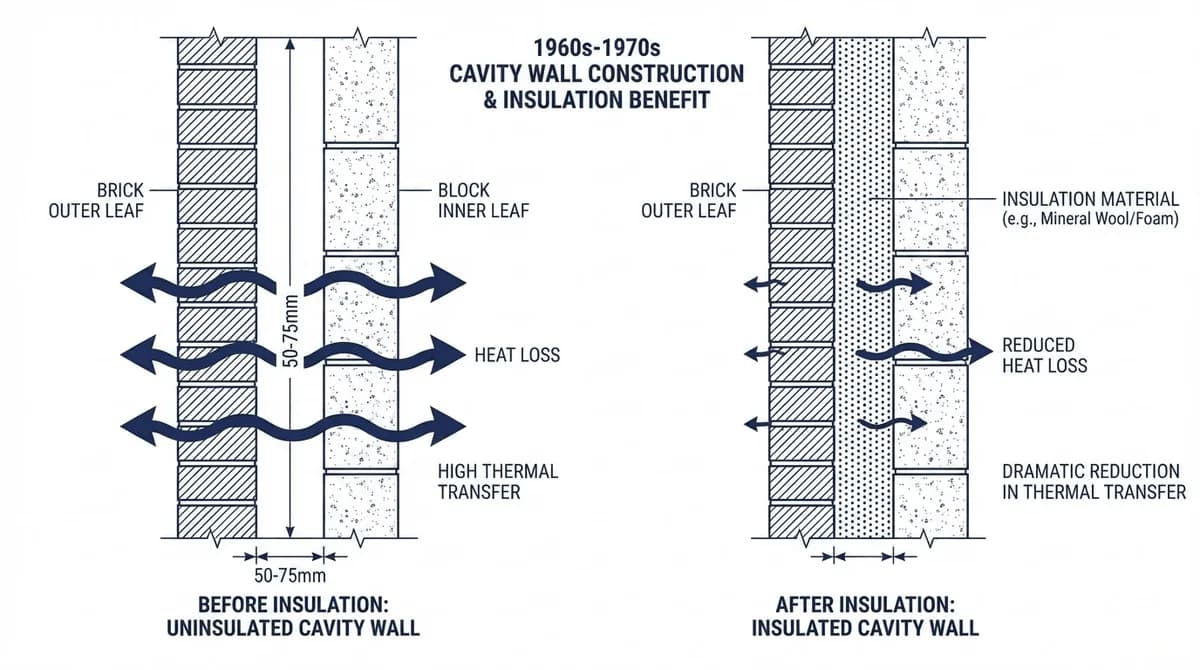
- -Cavity walls with 50-75mm gap between leaves
- -Brick outer leaf with block inner leaf
- -Often unfilled or with early-generation insulation
- -U-value typically 1.5-1.6 W/m2K uninsulated
Common Features
- -Standard ceiling heights (2.4m typical)
- -Original single-glazed metal or wooden windows
- -Concrete ground floors (solid or suspended)
- -Low-pitched or flat roofs with accessible loft space
Heating Systems
- -Gas central heating (if upgraded from original)
- -Some properties still have storage heaters
- -Boilers typically 15-25 years old if not replaced
- -Minimal heating controls on older systems
Insulation Status
- -Loft insulation often present but inadequate (25-100mm)
- -Cavity walls may be unfilled or have failed insulation
- -Minimal floor insulation
- -Hot water cylinder often uninsulated or poorly insulated
Common EPC Challenges
1. Partial or Failed Cavity Wall Insulation
Many properties from this era have had cavity wall insulation retrofitted since. Unfortunately, early materials like urea-formaldehyde foam (UF foam) can shrink, crack, or degrade over time, reducing effectiveness and potentially causing damp problems.
2. Outdated Boilers and Controls
Properties that have not had heating upgrades may still have non-condensing boilers with efficiencies of 60-70%, compared to 90%+ for modern systems. Basic controls without room thermostats or TRVs further reduce efficiency.
3. Inadequate Loft Insulation
While most properties have some loft insulation, the depth is typically only 25-100mm, well below the recommended 270mm. This is often one of the easiest and cheapest improvements to make.
4. Single Glazing Remains
Original metal-framed windows with single glazing are still common, particularly on rear elevations or in properties that have had partial window replacements. These can have U-values of 5.0 W/m2K or worse.
5. Poor Air Tightness
Construction standards of the era meant significant gaps around windows, doors, and service penetrations. While better than Victorian properties, draughtproofing is still beneficial.
Recommended Upgrades
The excellent news for landlords with 1960s-1970s properties is that cavity wall insulation offers a quick, cost-effective route to significant EPC improvements. Combined with other measures, many properties can reach EPC C for a modest investment.
Priority Order for Maximum Impact
1960s-1970s House Upgrade Costs and EPC Impact
| Improvement | Low Estimate | High Estimate |
|---|---|---|
| Cavity Wall InsulationIf walls are suitable. Major impact: 8-12 EPC points. | £450 | £1,500 |
| Loft Insulation (top-up to 270mm)Quick win if accessible. 4-8 EPC points. | £300 | £500 |
| Condensing Boiler UpgradeIf boiler is 15+ years old. 5-10 EPC points. | £2,500 | £4,000 |
| Smart Heating Controls + TRVsRoom-by-room control. 2-4 EPC points. | £200 | £450 |
| Double Glazing (if single-glazed)Significant improvement. 5-10 EPC points. | £3,000 | £6,000 |
| Hot Water Cylinder InsulationIf cylinder jacket is poor/absent. 1-2 EPC points. | £20 | £50 |
| LED Lighting ThroughoutSimple upgrade. 1-2 EPC points. | £100 | £200 |
| Draught ProofingWindows, doors, loft hatch. 1-3 EPC points. | £150 | £300 |
| Estimated Total | £6,720 | £13,000 |
Costs are indicative and vary by region, property size, and specification. Always obtain multiple quotes. The total adds every measure for comparison; most houses need only some of them.
Cost Estimates
The total cost to reach EPC C for a 1960s-1970s house is typically much lower than for older properties. Many landlords can reach EPC C without spending up to the £10,000 cap government has proposed, though some routes pass the £3,500 cap in force today.
Starting at D (55-60 points)
£3,000 - £5,000
Properties close to the threshold may only need cavity wall insulation, loft top-up, and improved heating controls to reach C.
Starting at E or bottom of D (50-55 points)
£5,000 - £8,000
May require boiler upgrade and possibly partial double glazing in addition to insulation improvements.
Cost Cap Threshold
£3,500
The cap in force today, including VAT. £10,000 is proposed, not yet law. Many 1960s-1970s properties reach C for less than the proposed figure, but the upper end of the ranges on this page passes the cap in force today.
Special Considerations
Failed Cavity Wall Insulation
If you suspect failed cavity wall insulation, arrange a professional inspection. Options include:
- Borescope inspection through small drilled holes
- Thermal imaging to identify cold spots
- Full cavity extraction and replacement with modern materials
If the original installation came with a CIGA (Cavity Insulation Guarantee Agency) 25-year guarantee, ask CIGA and the installer whether the fault is covered before you pay for remediation.
System-Built Properties
Some properties from the post-war decades were built using non-traditional methods, including various prefabricated systems. These may have different insulation requirements:
- BISF houses - steel-framed with metal cladding
- Wimpey No-Fines - concrete construction without cavities
- Airey houses - precast concrete columns with panels
- Cornish Unit - concrete panel construction
These property types often cannot have standard cavity wall insulation and may require specialist assessment and solutions.
Example Upgrade Pathway
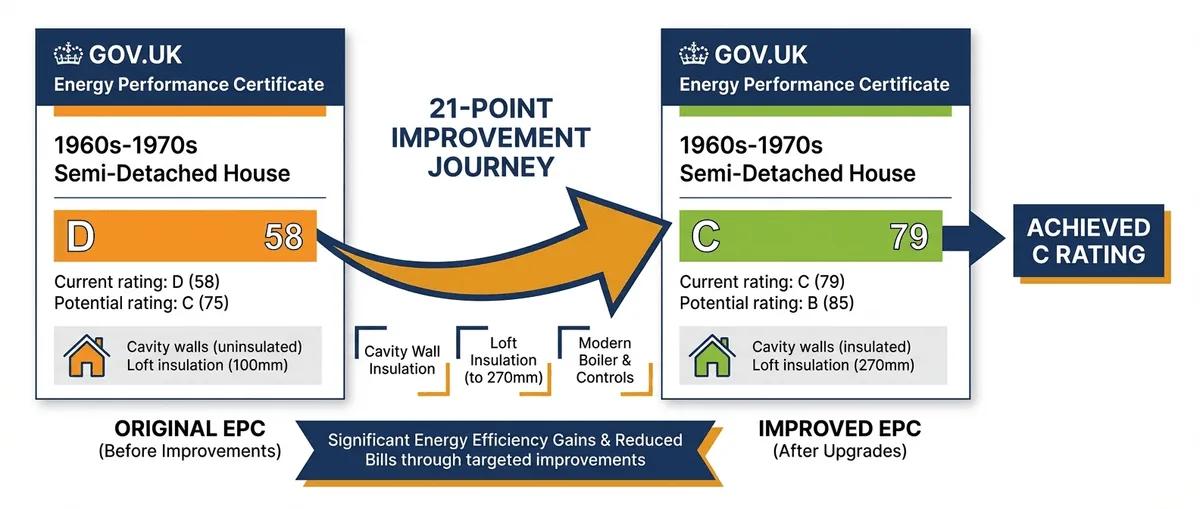
Here is a realistic example of how a typical 3-bedroom 1970s semi-detached house might progress from EPC rating D to C:
Case Study: 3-Bed 1970s Semi, Birmingham
Starting
D58 points
Target
C69 points
Next Steps
1. Get Your Current EPC
If you do not have a recent EPC (within 10 years), commission one from a qualified assessor. This gives you your baseline score and identifies recommended improvements.
Check your EPC on GOV.UK2. Check Cavity Wall Suitability
Arrange a cavity wall assessment to check if your walls are suitable for insulation, or if existing insulation has failed and needs replacing.
Find a CIGA registered installer3. Calculate Your Costs
Use our calculator to get a personalised estimate based on your specific property details and current EPC rating.
Use the Cost Calculator4. Get Professional Quotes
For cavity wall insulation and boiler upgrades, obtain at least three quotes from TrustMark-registered installers.
Find TrustMark tradespeople