Boiler Upgrade Scheme for Landlords: Complete Guide (2026)
Everything landlords need to know about the £7,500 heat pump grant: the 28 April 2026 rule changes, the £9,000 oil/LPG uplift, eligibility, how to apply, EPC impact, planning permission, and whether to act now or wait for HEM in 2027
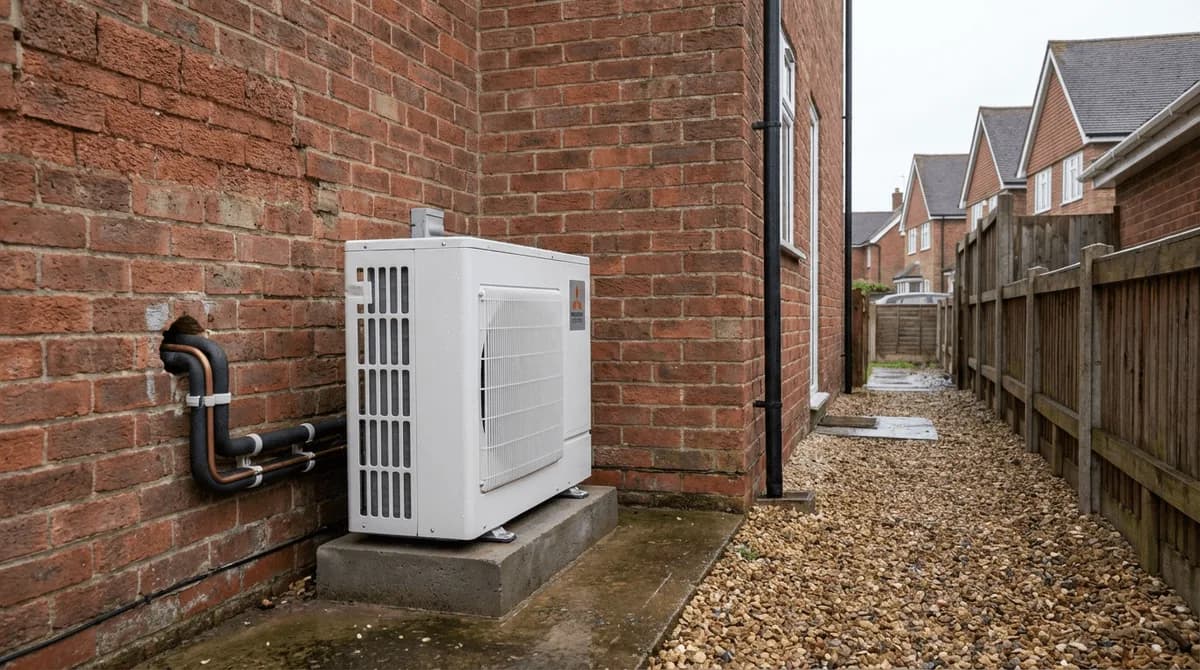
The Boiler Upgrade Scheme for landlords is one of the most valuable grants available in England and Wales right now. It offers up to £7,500 off the cost of a heat pump installation, and until March 2027 the grant is £9,000 for air source and ground source heat pumps in properties heated by oil or LPG with no mains gas connection. If you own a rental property on fossil fuel heating, you can claim this grant for every eligible property in your portfolio, with no income test and no cap on the number of claims. The scheme runs until March 2030.
This guide answers the #1 question landlords ask: "Is the Boiler Upgrade Scheme available to landlords?" It covers everything you need to know: the 28 April 2026 rule changes (EPC requirement removed, air-to-air heat pumps now eligible), current grant amounts, the step-by-step application process, the EPC impact, planning permission rules, and a 2026-specific section on how the Home Energy Model delay to 2027 affects the BUS timing decision.
According to EPCGuide analysis, the BUS represents the single most impactful financial incentive for landlords preparing for the proposed 2030 EPC C standard. Use our cost calculator to model the exact net cost for your property, or skip straight to the grant checker to confirm eligibility.
What is the Boiler Upgrade Scheme?
The Boiler Upgrade Scheme (BUS) is a government grant programme administered by Ofgem that provides upfront capital grants to help cover the cost of installing low-carbon heating systems. It started on 23 May 2022 and has been extended to run until March 2030. DESNZ confirmed in April 2026 that the budget for 2026 to 2027 is £400m.
Unlike some energy efficiency schemes, the BUS is open to private landlords as well as owner-occupiers, with no income test. The grant is paid directly to the MCS-certified installer and deducted from your installation bill, so you never handle the grant money yourself.
The scheme covers four technologies: air source heat pumps (ASHPs), ground source heat pumps (GSHPs), biomass boilers, and, from 28 April 2026, air-to-air heat pumps. Heat pumps are by far the most popular choice and the most relevant for landlords looking to hit the proposed EPC C standard. For a full overview of all available funding, see our landlord grants guide.
BUS at a Glance
- Who administers it: Ofgem on behalf of the UK government (DESNZ)
- Who applies: Your MCS-certified installer applies on your behalf
- How it works: Grant deducted upfront from your installation cost
- Available in: England and Wales (Scotland has Home Energy Scotland)
- Income test: None
- Portfolio limit: No limit. Claim for every eligible property you own
- EPC required? No. Removed from 28 April 2026
28 April 2026 Rule Changes: What Landlords Need to Know
The Boiler Upgrade Scheme (England and Wales) (Amendment) Regulations 2026 came into force on 28 April 2026. These are the most significant changes since the scheme launched. Per GOV.UK guidance (April 2026), four substantive amendments affect landlords directly.
EPC Requirement Removed
Properties no longer need a valid Energy Performance Certificate to qualify. This is a major change for landlords: it unlocks properties that previously failed the eligibility test because their EPC had expired or was never commissioned. Where a valid EPC exists, it remains the primary evidence of the existing heating type. Where no EPC is available, the installer must provide alternative evidence, typically a recent utility bill showing the existing fuel type plus photographs of the current heating system.
Air-to-Air Heat Pumps Now Eligible (£2,500 Grant)
Air-to-air heat pumps can now receive a £2,500 grant. This is lower than the £7,500 for air-to-water and ground-source systems, but air-to-air units are significantly cheaper to install (typically £3,000 to £7,000 total). For landlords with smaller properties or tighter budgets, this opens a more affordable path to low-carbon heating. Air-to-air systems also provide cooling, which is increasingly valued by tenants.
Scheme Extended to March 2030
The extension is now formally legislated, not just announced. This lines the BUS up with the EPC C standard government plans for 1 October 2030, which is not yet law.
MCS Certification Formally Required
The installer definition is now explicitly tied to MCS certification in the regulations. This was already standard practice, but the formal requirement gives landlords additional assurance that only certified, quality-assured installers can apply for vouchers.
From 21 July 2026: £9,000 Grant for Oil and LPG Homes
The BUS grant is £9,000, up from £7,500, for an air-to-water or ground source heat pump in a property that is off the gas grid and replaces an oil or LPG heating system. Ofgem says the uplifted value is available for applications properly made between 21 July 2026 and 31 March 2027, and GOV.UK adds that you must not have a mains gas connection at the property.
Air-to-air heat pumps and biomass boilers do not get the uplift. It is particularly relevant for rural landlords with oil-heated properties. On an illustrative £12,000 quote, a £9,000 grant would leave a net cost of £3,000.
Important: the uplift covers applications made up to 31 March 2027. Gas-heated properties remain at £7,500.
Can Landlords Apply for the Boiler Upgrade Scheme?
Yes. Landlords are fully eligible for the Boiler Upgrade Scheme.
Private landlords, portfolio landlords, HMO landlords, and limited company landlords can all claim the BUS grant. There is no income means-test and no tenant eligibility test, and the grant applies to the property, not to who lives in it. If you do not live in the property, you must tell your tenant about the installation. Social housing (including shared ownership), most new-build properties and properties that have already had government funding for a heat pump or biomass boiler are not eligible.
This is a common point of confusion. Many landlords assume that energy efficiency grants are only for owner-occupiers or for tenants on benefits. That is not the case with the Boiler Upgrade Scheme. The BUS was specifically designed to be property-owner-agnostic: anyone who owns an eligible property can claim, whether it's their home, a holiday let, or a buy-to-let rental.
For landlords, this is particularly powerful because you can claim the grant for every eligible property in your portfolio. A landlord with five gas-heated rental properties could claim up to £37,500 in total grants (£7,500 x 5). If all five are off the gas grid and use oil or LPG, that rises to £45,000 (£9,000 x 5) for air source or ground source heat pumps, for applications made up to 31 March 2027. The only condition is that each property must meet the individual eligibility requirements.
How Much Does the Boiler Upgrade Scheme Pay? (2026 Grant Amounts)
The BUS provides fixed upfront grants that are deducted directly from your installation invoice. There is no claiming back after the fact. The discount comes off the top, so you only pay the remaining balance. Grant values were last updated on 21 July 2026, when the oil and LPG uplift took effect. Air-to-air heat pumps were added on 28 April 2026.
BUS Grant Amounts by Technology (from 21 July 2026)
| Improvement | Low Estimate | High Estimate |
|---|---|---|
| Air source heat pump (ASHP)Most common option for rental properties. Typical total cost £10,000 to £15,000 before grant. £9,000 for oil/LPG homes with no mains gas, until March 2027. | £7,500 | £7,500 |
| Ground source heat pump (GSHP)Requires garden space for ground loops. Total cost £18,000 to £35,000 before grant. Also £9,000 for oil/LPG homes with no mains gas, until March 2027. | £7,500 | £7,500 |
| Water source heat pumpRare. Requires water source (river, lake, or borehole). | £7,500 | £7,500 |
| Air-to-air heat pump (NEW from April 2026)Cheaper to install (£3,000 to £7,000 total). Provides heating and cooling. Good for smaller properties. | £2,500 | £2,500 |
| Biomass boilerRural homes off the gas grid only, with an emissions certificate. Requires dedicated fuel storage space. Not suitable for most urban rentals. | £5,000 | £5,000 |
Grant amounts are fixed. You pay: total installation cost minus grant. Grant is paid directly to your installer by Ofgem.
Boiler Upgrade Scheme Eligibility Checklist for Landlords (Updated October 2026)
To qualify for the Boiler Upgrade Scheme, your property must meet certain criteria. These apply to both the property itself and to how the installation is carried out. There are no landlord-specific financial eligibility tests. If the property qualifies, you qualify. The criteria below reflect the 28 April 2026 amendments.
Property Must...
- Currently heat with gas, oil, LPG, coal or electric heating such as storage heaters (not an existing heat pump)
- Be located in England or Wales
- Have space for the heat pump unit
- Not be a new build (most are not eligible, but a finished new build with a fossil fuel boiler may qualify)
- Not already have a working heat pump installed
Note: a valid EPC is no longer required from 28 April 2026. Where one exists, it is used as evidence.
Installation Must...
- Be carried out by an MCS-certified installer (formally required from April 2026)
- Be completed within 3 months of voucher issue (6 months for ground source heat pumps)
- Replace (not supplement) the existing fossil fuel or electric heating system
- Be registered with MCS on completion
- Have a quote showing the grant deducted upfront
What the Boiler Upgrade Scheme Does NOT Cover
The BUS is a targeted grant with specific exclusions. Landlords often ask about these scenarios. Here is a clear breakdown of what is not eligible.
Gas boilers, oil boilers, and electric storage heaters
The BUS only covers heat pumps (air-to-water, ground source, water source, and now air-to-air) and biomass boilers. Installing a new gas or oil boiler does not qualify. Electric storage heaters are also excluded.
Most new-build properties
Most new-build properties are not eligible, including homes the developer is still building. If you move into a finished new build with a fossil fuel boiler, you may be able to get a grant, and some self-build properties are eligible.
Properties already fitted with a heat pump
If a property already has a working heat pump, it is not eligible, even if it is old or inefficient. The grant is only for replacing fossil fuel systems.
Properties in Scotland
Scotland has its own Home Energy Scotland scheme with different eligibility rules and grant amounts. The BUS only applies in England and Wales.
DIY installations or non-MCS installers
The installation must be carried out by an MCS-certified company. From 28 April 2026, this requirement is formally legislated. If your installer is not MCS-certified, your claim will be rejected.
Accompanying works (insulation, radiators, pipework upgrades)
The BUS grant only covers the heat pump itself. Associated works like new radiators, underfloor heating, hot water cylinders, or insulation improvements are not covered. You pay for these separately. However, ECO4 may fund insulation and the Warm Homes Local Grant can cover a wider package of measures.
Social housing
Social housing landlords (councils, housing associations) are not eligible for the BUS. They access separate government programmes such as the Social Housing Decarbonisation Fund (SHDF).
Biomass boilers in urban areas
Biomass boilers qualify only in rural homes that are off the gas grid, with an emissions certificate. Most urban landlords will be restricted to heat pumps only.
How to Apply for the Boiler Upgrade Scheme: Step by Step
The BUS application process is largely handled by your installer, not by you directly. Your main job is to choose a good MCS-certified installer. Here is exactly what happens, from start to finish.
The Full Application Process
- 1Confirm your property is eligible
Check that your property uses fossil fuel heating, is in England or Wales, and is not an ineligible new build. From 28 April 2026, a valid EPC is no longer required. Run your property through our free grant checker to confirm BUS eligibility and see which other grants you may qualify for.
- 2Get quotes from at least 3 MCS-certified installers
Find MCS-certified heat pump installers at mcscertified.com. Get at least 3 quotes. Compare not just price but also system design, heat loss calculations, and the installer's experience with rental properties.
- 3Installer surveys the property
A good installer will visit the property to assess heat loss, check the existing heating system, and design an appropriately sized heat pump. Be wary of installers quoting without a survey. This visit typically takes 1 to 2 hours.
- 4Accept a quote that shows the BUS grant deducted
The quote should clearly state the full installation cost and then show the £7,500 grant applied (or £9,000 for oil/LPG homes with no mains gas, until March 2027), leaving your net balance. You should never pay the full price and wait for a rebate.
- 5Installer applies to Ofgem for your voucher
Once you accept the quote, your installer submits the voucher application to Ofgem on your behalf. Ofgem typically issues the voucher within 2 to 4 weeks.
- 6Voucher issued: 3-month window to complete works
Once issued, the voucher is valid for 3 months (6 months for ground source heat pumps). Work must be fully completed within this period. If the work runs late, your installer may have to withdraw the voucher and apply again. Schedule the installation date promptly.
- 7Heat pump installed and registered with MCS
Installer completes the work (typically 2 to 3 days for ASHP) and registers the installation with MCS. This registration is required for the grant to be paid.
- 8You pay the balance. Installer receives the grant.
You pay the installer the agreed net amount (total cost minus £7,500). Ofgem then pays the £7,500 grant directly to the installer. You are done.
- 9Book a new EPC assessment
After installation, commission a new EPC to capture the improved rating. A new EPC records the improved band and is the evidence you would use if the proposed band C standard becomes law. Do not skip this step. For a detailed walkthrough, see our full BUS application guide.
Typical Timeline
Quotes + survey
2 to 4 weeks
Voucher issued
2 to 4 weeks
Installation
2 to 3 days
Total end-to-end
6 to 12 weeks
Why Boiler Upgrade Scheme Applications Get Rejected
The BUS approval rate is high when the basics are right, but rejections do happen, and a rejected voucher can delay a portfolio upgrade by weeks. Because your installer applies on your behalf, most avoidable failures come down to installer choice and timing. Here are common reasons a claim fails, and how landlords sidestep each one.
Installer is not MCS-certified
Only MCS-certified companies can submit a voucher application. Confirm certification on the MCS installer register before you sign a contract, not after.
Work started before the voucher was issued
Starting before the voucher is issued is allowed only if your installer applies within 120 days of commissioning, and it carries extra risk. Ofgem says a retrospective application does not guarantee that the installation will be eligible or that a grant will be paid. The safest route is to wait for the voucher.
Missing evidence of the existing heating type
Since 28 April 2026 an EPC is no longer required, but Ofgem still needs proof the property runs on fossil fuel heating. Where there is no valid EPC, the installer must supply a recent utility bill plus photographs of the current boiler or system. Gather these before the survey.
Property or system is ineligible
A new build that is not eligible, a property that already has a working heat pump, or a hybrid design where the gas boiler stays as the main heat source will all fail. Check eligibility with our grant checker before committing to a quote.
Voucher expired before completion
The voucher is valid for 3 months (6 months for ground source heat pumps). If the installation slips past that window (installer delays, tenant access issues, supply-chain waits), the grant can lapse. Agree a firm installation date up front and build in buffer for tenant coordination.
Cost Comparison: BUS-Funded Heat Pump vs Traditional Boiler
Landlords frequently compare the cost of a BUS-funded heat pump against simply replacing the gas boiler. Here is a direct comparison for a typical 3-bed semi-detached rental property, showing upfront cost, annual running cost, and long-term value.
| Factor | New Gas Boiler | ASHP with BUS Grant |
|---|---|---|
| Total installation cost | £2,500 to £4,000 | £10,000 to £15,000 |
| BUS grant applied | Not eligible | -£7,500 |
| Net cost to landlord | £2,500 to £4,000 | £2,500 to £7,500 |
| Annual running cost (tenant) | £1,020 to £1,060 | £900 to £1,130 |
| EPC improvement | 5 to 10 points | 10 to 25 points |
| Meets the proposed 2030 EPC C standard? | Unlikely on its own | Often yes, especially with insulation |
| Future gas boiler ban risk | Stranded asset risk post-2035 | Future-proof |
| Typical lifespan | 10 to 15 years | 15 to 25 years |
Costs based on a typical 3-bed semi-detached property with 12,000 kWh annual heating demand. Actual costs vary. Use our cost calculator for a property-specific estimate.
BUS vs Other Funding Routes: Which Should Landlords Use?
The BUS is not the only option, and for many landlords the right answer is a combination rather than a single scheme. The BUS pays for the heat pump. Insulation, radiators, and wider fabric works sit outside it, which is exactly where ECO4 and the Warm Homes Local Grant come in. Getting to EPC C is usually a package, so it helps to see how the routes fit together. For every option in one place, see our landlord grants overview.
| Route | What it covers | Landlord tenant test? | Best for |
|---|---|---|---|
| Boiler Upgrade Scheme | Heat pump only (£7,500, £2,500 air-to-air) | No income or tenant test | The heating swap itself, any tenant |
| ECO4 | Insulation, first-time central heating and heat pumps | Yes, tenant on qualifying benefits or an LA Flex referral; rented homes must be band E to G | Funding insulation before the heat pump |
| Warm Homes Local Grant | Full package: heat pump, insulation, radiators (average caps of £16,600 for energy performance plus £16,600 for low carbon heating, per home across a council project) | Yes, three national household routes (area, benefits or income); F and G rentals need a registered exemption | A whole-property retrofit in one project |
| New gas boiler (self-funded) | Like-for-like replacement, no grant | Not applicable | Short-term fix only, weak on EPC and future-proofing |
Grant availability and tenant tests vary by scheme and local authority. Confirm your specific eligibility with our grant checker.
When BUS on its own is enough
- Property is already reasonably insulated and rated D
- Tenant does not qualify for benefit-linked schemes
- The heat pump alone is likely to reach EPC C
When to stack schemes
- Property is a poorly insulated E or F, or solid wall
- Use ECO4 for insulation, then BUS for the heat pump
- Or use the Warm Homes Local Grant for the whole package
How the Boiler Upgrade Scheme Affects Your EPC Rating
For landlords, the EPC impact of a heat pump is arguably as important as the grant itself. With the proposed 2030 EPC C standard in view, any measure that moves your property toward or beyond a C rating has long-term compliance value. Heat pumps are one of the most powerful single measures available.
EPC Impact: What to Expect
Typical EPC Point Gain
10 to 25 points
Varies by property type, insulation level, and current heating system
Common Outcome
D-rated property (55 to 68) moves to high D or C (70+) with heat pump alone
Why Heat Pumps Score Well
EPC methodology credits heat pumps for low carbon emissions, not just energy use
Updated SAP Methodology
SAP 10.2 changes mean heat pumps score even better than in older EPCs
The EPC score improvement from a heat pump comes from two factors: lower carbon emissions (heat pumps produce roughly one-third the CO2 of a gas boiler) and, increasingly, from the updated SAP 10.2 calculation methodology which weights electricity more favourably than older models. Properties assessed before 2025 may see a larger improvement when re-assessed using the current methodology.
For landlords targeting the proposed 2030 EPC C standard, a heat pump installed via the BUS can be a decisive single measure, particularly when combined with loft and cavity wall insulation. Use our EPC predictor tool to see exactly what improvement is predicted for your property type. For a broader view of upgrade costs, see the costs and funding hub.
Running Costs Comparison
Landlords often worry that switching to a heat pump will increase their tenants' energy bills, particularly given that electricity costs more per kWh than gas. A heat pump uses far less energy for the same amount of heat: DESNZ's Warm Homes Plan says heat pumps are already around 3 times more efficient than gas boilers. Whether that wins on running cost depends on the electricity tariff and on how well the system performs, as the table below shows.
| System | Efficiency | Fuel Cost/kWh | Annual Cost* |
|---|---|---|---|
| Gas boiler (old) | 75 to 80% | 7.97p | £1,200 to £1,280 |
| Gas boiler (new A-rated) | 90 to 94% | 7.97p | £1,020 to £1,060 |
| Oil boiler | 85 to 92% | 8p (assumed) | £1,040 to £1,130 |
| Air source heat pump | 280 to 350% | 26.32p | £900 to £1,130 |
| Ground source heat pump | 350 to 450% | 26.32p | £700 to £900 |
| Air-to-air heat pump | 300 to 400% | 26.32p | £790 to £1,050 |
*Calculated as 12,000 kWh of heat demand (a typical 3-bed semi-detached house) divided by the efficiency shown, multiplied by the unit rate. The efficiencies and the oil price are assumptions. Electricity at 26.32p/kWh and gas at 7.97p/kWh are Ofgem's average Direct Debit price cap unit rates for 1 October to 31 December 2026, before standing charges. Actual costs vary by insulation level, tariff, and usage.
Planning Permission for Heat Pumps (2026 Rules)
A common concern for landlords is whether installing a heat pump requires planning permission. The good news: in England, since 29 May 2025, the rules have been significantly relaxed. Most heat pump installations on houses now fall under permitted development and do not need planning permission, provided the conditions are met. These rights come from an England-only order, so check with your local planning authority in Wales.
Key Planning Changes (from May 2025)
- 1-metre boundary rule removed: You can now install an ASHP within 1 metre of the property boundary without planning permission. This was previously a major barrier for terraced houses and properties with narrow side passages.
- Size limit increased: The maximum heat pump size under permitted development has increased from 0.6m3 to 1.5m3. Detached houses can now have two units.
- Air-to-air systems included: Air-to-air heat pumps now benefit from the same permitted development rights as air-to-water systems.
Noise Limit: 37 dB(A)
The limit is 37 dB(A), assessed 1 metre outside the centre of the nearest neighbour's door or window to a habitable room (MCS 020 a). Your MCS installer will confirm compliance as part of the design process.
Extended to 2030
The Boiler Upgrade Scheme regulations previously ran to 2028 and now run through to 2030, an extension legislated from 28 April 2026. This is good news for landlords because the grant now runs to the same year as the proposed EPC C standard (1 October 2030, not yet law). You can plan your upgrade timeline to suit your tenancy calendar and portfolio cash flow, rather than rushing to beat an arbitrary grant deadline.
Why the Extension Matters for Landlords
- Plan around tenancies: Schedule work during void periods or with good tenant notice
- Coordinate with the proposed EPC C standard: Align installation with your plans for 2030
- Improving technology: Heat pump efficiency and cold-weather performance improve year-on-year
- Spread portfolio upgrades: No need to upgrade all properties at once. Phase them over 4 years.
- £400m budget: The regulations stop vouchers being issued once a year's allocation is used unless the Secretary of State consents, so apply early in the financial year
HEM Delay to 2027: Does This Change the BUS Calculation?
On 9 March 2026, the government moved the launch of its reformed EPCs to the second half of 2027. Many landlords are asking: if the EPC scoring methodology is changing, should I wait before investing in a heat pump?
The answer, for most landlords, is no. Here is why:
You do not have to wait for HEM
A heat pump can lift your rating now. Under the proposed 2030 standard (decided policy, not yet law), you would first need to meet a fabric standard, then a heating system or smart readiness standard.
Your current EPC C should still count
Under the policy government has decided, an EPC C issued before 1 October 2029 would count as compliant until it expires. This is not yet law. You would not need a new EPC simply because the methodology changed.
Waiting carries real risks
Installer capacity will tighten significantly from 2027 onwards as the 2030 deadline approaches. Landlords who wait until 2028 to 2029 risk 6-month lead times, premium pricing, and rushed installations. The BUS grant itself runs to 2030 but the practical window to get quality work done at current prices is 2026 to 2027.
BUS + HEM: The Landlord Decision Matrix
| Your Situation | Recommended Action |
|---|---|
| Property currently rated D or E on gas heating | Apply for BUS now if a heat pump suits the property. Ask your installer or assessor for the predicted rating first. |
| Property on oil/LPG rated D or E | The £9,000 uplift is live for applications up to 31 March 2027 (air source and ground source heat pumps, no mains gas). Apply before then. |
| Property already rated C and recently assessed | Keep your EPC. Under the policy government has decided, an EPC C issued before 1 October 2029 would count as compliant until it expires (not yet law). |
| Solid wall property (Victorian, Edwardian) | Act now. Heat pump + insulation package is the right path regardless of HEM. |
| Leasehold flat with shared heating | Complex. Freeholder consent may be needed. Read the leasehold flat guide first. |
Do Heat Pumps Work in Older Rental Properties?
A common concern among landlords with older Victorian terrace, Edwardian, or 1930s to 1960s properties is whether heat pumps can work effectively. The short answer is yes, with proper installation design. Modern heat pumps can deliver comfortable temperatures in most UK housing stock. The 2025 planning rule changes (1-metre boundary rule removed) are particularly helpful for terraced houses with narrow side passages.
Making Heat Pumps Work in Older Rental Properties
- Correct sizing:Heat pumps must be sized based on a proper heat loss calculation for the property, not just by replacing the old boiler's kW rating.
- Insulation first where possible: Addressing loft and cavity wall insulation (potentially funded via ECO4) before installation reduces the required heat pump size and improves efficiency.
- High-temperature heat pumps: Newer models can deliver flow temperatures of 65 to 70 degrees C, suitable for existing radiator systems without full radiator replacement.
- Oversized radiators: Upgrading radiators in the key rooms (living room, bathroom) rather than all rooms can dramatically reduce the upgrade cost.
- Air-to-air option: For properties where an ASHP is physically difficult, the new air-to-air heat pump eligibility (£2,500 grant) provides a more compact alternative that can be wall-mounted.
Boiler Upgrade Scheme for Landlords: FAQ
Does Boiler Upgrade Scheme money count towards the proposed £10,000 cost cap?
No. Under the government's proposals for the 2030 standard, which are not yet law, Boiler Upgrade Scheme grant money would not count towards the proposed £10,000 cost cap, but other government-scheme funding, such as the Warm Homes: Local Grant, could. The cost cap in force today is £3,500 including VAT.
Can landlords claim the Boiler Upgrade Scheme?
Yes. Private landlords, portfolio landlords, HMO landlords, and limited company landlords are all eligible for the Boiler Upgrade Scheme. The grant is based on property eligibility, not on who owns it or who lives in it. There is no income means-test and no tenant eligibility test, but you must tell your tenant about the installation.
Does the Boiler Upgrade Scheme apply to rental properties?
Yes. The scheme covers rental properties in the same way as owner-occupied homes. The property simply needs to meet the standard eligibility criteria: existing fossil fuel or electric heating (not a heat pump), located in England or Wales, not a new build (most new builds are not eligible), and installed by an MCS-certified contractor. From 28 April 2026, the EPC requirement has been removed.
How do I make a Boiler Upgrade Scheme application as a landlord?
You do not apply directly. Your MCS-certified installer applies to Ofgem on your behalf. Your steps are: confirm your property is eligible, get 3 quotes from MCS installers, accept the best quote (which should show the grant deducted), and let the installer handle the paperwork. The grant is paid directly to the installer, so you only pay the net balance.
Can I claim the Boiler Upgrade Scheme on multiple rental properties?
Yes. There is no limit on the number of claims you can make. Each eligible property in your portfolio can receive the full grant amount. A landlord with five eligible properties could claim up to £37,500 in total. Each claim is processed independently.
Does the Boiler Upgrade Scheme cover HMO properties?
Yes, HMOs (Houses in Multiple Occupation) are eligible provided the property is a single dwelling with a single heating system. Schemes that heat multiple units via one plant room may have different treatment. Discuss with your installer.
What EPC rating do I need to qualify for the Boiler Upgrade Scheme?
From 28 April 2026, a valid EPC is no longer required. Previously, any rating from A to G qualified. If your property has a valid EPC, it remains the primary evidence of existing heating type. If no EPC exists, your installer must provide alternative evidence such as utility bills and photographs of the current heating system.
Will a heat pump installed via BUS definitely give me an EPC C?
Not guaranteed, but likely for many properties. Heat pumps typically improve EPC scores by 10 to 25 points. A property rated D65 could reach C75+ with a heat pump alone. Poorly insulated properties rated E or F may still fall short. Combine a heat pump with insulation for the best outcome.
Can I use the BUS if the property is currently tenanted?
Yes. The property does not need to be vacant. However, heat pump installation typically requires the heating to be off for a day or more. Most landlords schedule installations during a void period or with advance notice and written consent from tenants.
Is the Boiler Upgrade Scheme grant taxable income for landlords?
The BUS grant is not treated as rental income. However, it reduces your capital expenditure on the installation. The tax treatment of the remaining net cost depends on whether the installation is treated as a capital improvement or a revenue expense. Speak with a property tax accountant before proceeding.
Can I combine the Boiler Upgrade Scheme with other grants?
Yes. The BUS can be used alongside other schemes for different measures. For example, you can use ECO4 to fund insulation improvements alongside a BUS heat pump installation. The Warm Homes Local Grant covers a broader package, but it cannot be used on the same measure as BUS (for example, one heat pump). Different measures at the same property can come from different schemes. Confirm compatibility with your local authority.
Do I need planning permission for a heat pump on a rental property?
Usually not, in England. Since 29 May 2025, the 1-metre boundary rule has been removed and permitted development rights have been expanded. Most heat pumps on houses can be installed without planning permission. Planning permission may still be needed in some cases, for example for listed buildings, for units on a wall or roof facing a road in a conservation area, for units that breach the noise limit, and where a block of flats already has a unit or the unit is over 0.6 cubic metres. The noise limit is 37 dB(A), assessed 1 metre outside the nearest neighbour's habitable-room door or window. Planning rules in Wales may differ, so check with your local planning authority.
Are air-to-air heat pumps covered by the Boiler Upgrade Scheme?
Yes, from 28 April 2026. Air-to-air heat pumps are now eligible for a £2,500 grant. This is lower than the £7,500 available for air-to-water and ground-source heat pumps, but it opens a more affordable option for landlords. Air-to-air systems provide heating and cooling.
Has the BUS grant increased to £9,000?
Yes, for some homes. For applications properly made between 21 July 2026 and 31 March 2027, the grant is £9,000 for an air-to-water or ground source heat pump in a property that is off the gas grid and replaces an oil or LPG heating system. Gas-heated properties remain at £7,500.
Why might a landlord BUS application be rejected?
Reasons an application can fail include: the installer is not MCS-certified, the property already has a heat pump, the property is a new build that is not eligible, or evidence of the existing fossil fuel heating is missing. Starting work before the voucher is issued also carries extra risk: Ofgem says an installer can apply after commissioning only within 120 days, and that this does not guarantee a grant. The EPC requirement was removed on 28 April 2026, but you still need utility bills or photographs to prove the current heating type. Always confirm your installer is MCS-certified before signing anything.
How does the £7,500 grant get me to EPC C, and what is the total cost after the grant?
A heat pump typically adds 10 to 25 EPC points, which is enough to move many D-rated properties (55 to 68) into band C on its own. Poorly insulated E and F-rated properties usually need insulation alongside the heat pump. The grant covers the heat pump only, so a typical air source install costing £10,000 to £15,000 leaves you a net balance of typically several thousand pounds after the £7,500 is deducted. Insulation, radiators, and cylinders are separate costs, though ECO4 or the Warm Homes Local Grant may fund them.
Should I install a new gas boiler instead of using the BUS for a heat pump?
A new gas boiler is cheaper upfront (£2,500 to £4,000) but does little for your EPC and carries stranded-asset risk as gas heating is phased down. A BUS-funded heat pump has a similar net cost after the £7,500 grant, moves you meaningfully toward the proposed 2030 EPC C standard, and lasts longer. For most landlords facing MEES compliance, the heat pump is the better long-term decision. Model both routes with our cost calculator before deciding.
Can I install a heat pump while my tenants are living in the property?
Yes, the property does not need to be empty. A typical air source installation takes 2 to 3 days, during which the heating and hot water may be off for a day or more. Most landlords schedule the work during a void period, or give tenants advance written notice and arrange access. The scheme requires you to tell your tenant about the installation, and agreeing timing and access with them in advance avoids disputes.
Your Next Steps
- 1
Confirm your property is eligible
From 28 April 2026, a valid EPC is no longer required. Check that your property uses fossil fuel heating and is in England or Wales. Use our grant checker to confirm eligibility in under 2 minutes.
- 2
Model the costs for your property
Use our cost calculator to see the net cost after the BUS grant, and our ROI calculator to see the payback period versus a gas boiler replacement.
- 3
Get at least 3 quotes from MCS-certified installers
Use mcscertified.com to find local heat pump installers. Compare system design, not just price.
- 4
Consider insulation alongside heat pump
Check whether ECO4 can fund loft or cavity wall insulation at little or no cost to you. This improves heat pump performance and EPC score. See the full landlord grants overview for all options.
- 5
Understand your MEES obligations
Read our MEES regulations guideto understand exactly what the proposed 2030 EPC C standard means for your portfolio and how today's penalties work.
- 6
Oil/LPG landlords: the £9,000 uplift is live until March 2027
If your property uses oil or LPG heating and has no mains gas connection, the grant for an air source or ground source heat pump is £9,000 for applications made up to 31 March 2027, £1,500 more than the standard £7,500. Ask your installer to confirm your property qualifies before you commit.
Sources
Related Articles
ECO4 for Landlords
Insulation and heating funding for eligible tenants, to prepare your property for a heat pump.
Warm Homes Local Grant
Council-run grant with £16,600 average caps for insulation and for heating, including heat pumps. Covers what BUS doesn't.
All Landlord Grants (2026)
Complete overview of every grant available for UK landlords. BUS, ECO4, WHLG, and more.
Home Energy Model Delayed to 2027
How the HEM delay affects your upgrade timing and why heat pumps are still the right move.
Upgrade Now or Wait for HEM?
A decision framework for landlords weighing up BUS now vs waiting for the new EPC metrics.
MEES Regulations Guide
The proposed 2030 EPC C standard, today's penalties and exemptions, and how to comply.
Victorian Terrace EPC Guide
Heat pump suitability, upgrade path, and funding options for Victorian terrace landlords.
Manchester EPC Guide for Landlords
GMCA energy schemes, local installer scene, and Manchester-specific upgrade advice.
BUS Application Guide
Step-by-step walkthrough of the BUS application process and common rejection reasons.