Edwardian House EPC Upgrade Guide
Everything landlords need to know about bringing 1901-1914 properties up to EPC C standard
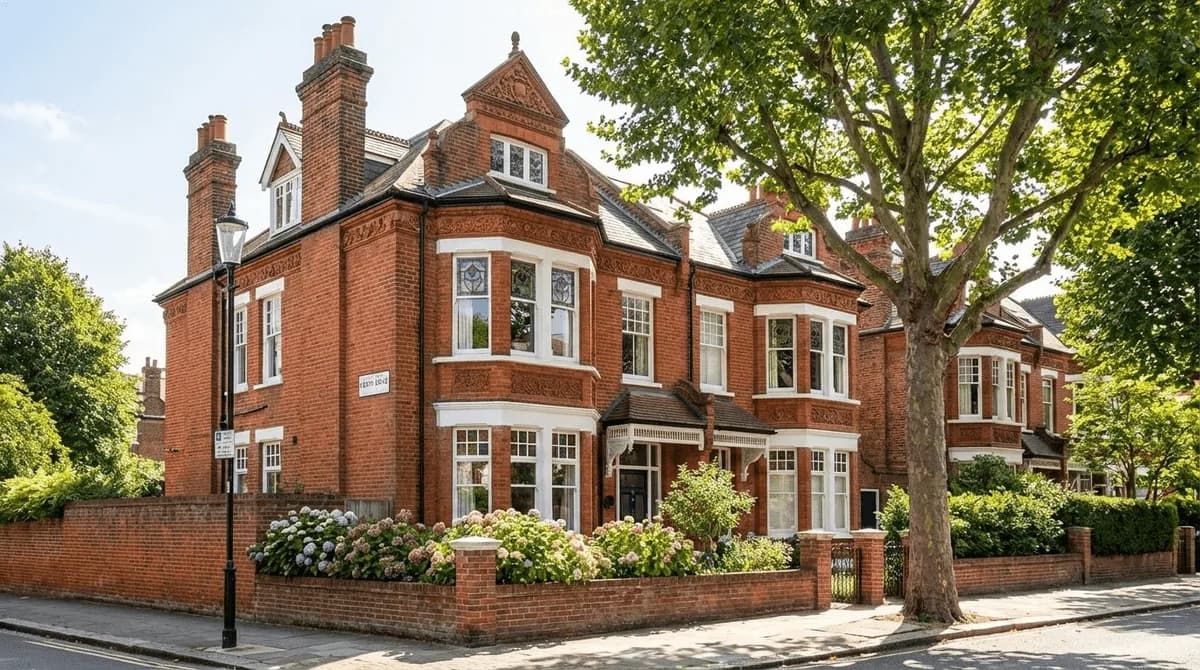
Edwardian houses, built mostly between 1901 and 1914 (Edward VII reigned from 1901 to 1910), represent a significant portion of the UK housing stock. These properties are often larger and more spacious than their Victorian predecessors, with bigger rooms, higher ceilings, and larger windows. While this makes them desirable family homes and rental properties, it also presents substantial challenges for energy efficiency.
The combination of solid brick construction, generous room volumes, and extensive glazing means Edwardian houses typically require more comprehensive improvements to reach EPC C, the band government has proposed for 2030. However, with strategic planning and investment, these characterful properties can be significantly improved while preserving their period charm.
Every pathway below starts from where the property is now, so it is worth using our predictor tool to estimate the band an Edwardian property is likely to land in before you plan the work.
Property Characteristics
Edwardian houses share many construction characteristics with Victorian properties but typically feature larger proportions and some architectural improvements. Understanding these features is essential for planning effective energy upgrades.
Wall Construction
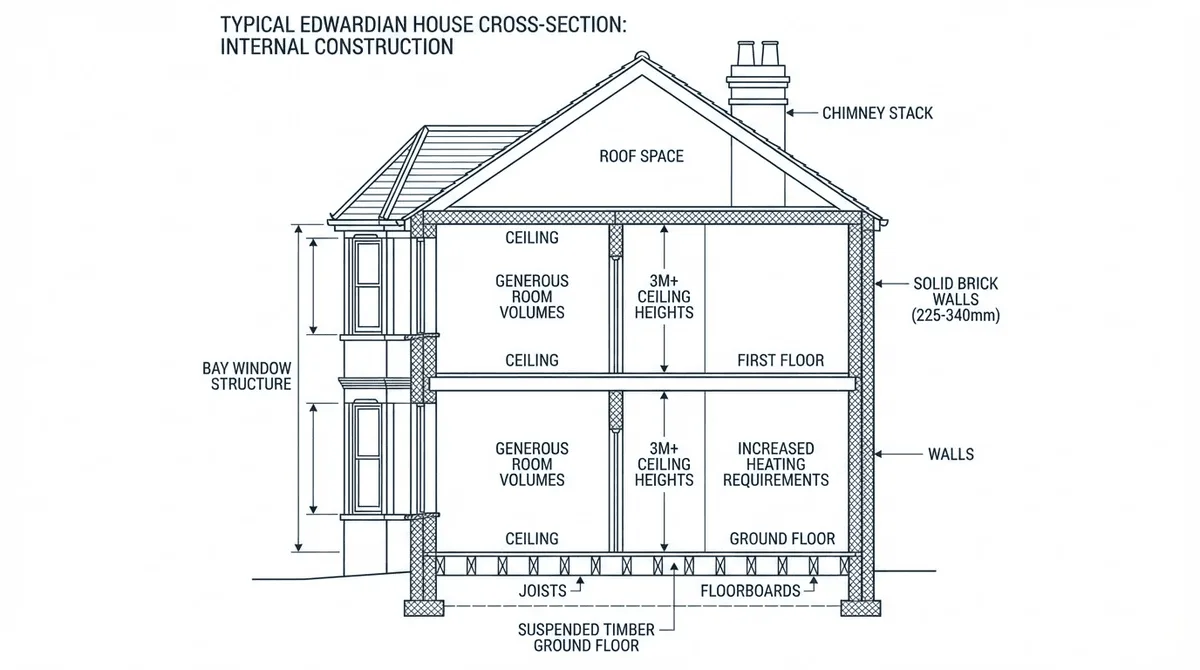
- -Solid brick walls, typically 9-13 inches (225-340mm) thick
- -Often thicker walls than Victorian properties
- -No cavity between inner and outer layers
- -U-value typically 1.7-2.1 W/m2K (poor performance)
Distinctive Features
- -Higher ceilings than Victorian (often 3m+ / 10ft+)
- -Large bay windows, often with decorative glazing
- -Wider rooms and hallways than Victorian homes
- -Larger loft spaces with better access potential
Common EPC Challenges
1. Larger Solid Wall Surface Area
Edwardian houses typically have more external wall area than Victorian terraces. This means solid wall insulation, whether internal or external, requires more material and labour. The cost premium can be 30-50% higher than a comparable Victorian terrace due to the additional square meterage.
2. Greater Heating Volume
With ceiling heights often exceeding 3 metres (10 feet), Edwardian rooms contain significantly more air volume to heat. This not only affects running costs but also impacts the EPC calculation, as the heating system must work harder to maintain comfortable temperatures.
3. Extensive Glazing with Decorative Features
Edwardian windows are often larger than Victorian ones, and frequently feature decorative leaded lights, stained glass panels, or Art Nouveau designs. Replacing or upgrading these windows while maintaining character requires specialist work and significantly increases costs.
4. Period Features and High-Quality Finishes
Edwardian properties often have elaborate cornicing, picture rails, ceiling roses, panelled doors, and decorative fireplaces. Internal wall insulation work must carefully work around these features, often requiring specialist craftsmen to recreate or preserve original details.
5. Larger Loft and Roof Areas
While larger lofts mean more space for insulation, they also mean higher material costs. Additionally, Edwardian roofs may have complex shapes with dormers, hipped sections, or decorative gables that complicate insulation installation.
Recommended Upgrades
The strategy for improving an Edwardian house is similar to Victorian properties but requires careful budgeting due to larger scale. Prioritise improvements that offer the best EPC points per pound while respecting the property character.
Priority Order for Maximum Impact
Edwardian House Upgrade Costs and EPC Impact
| Improvement | Low Estimate | High Estimate |
|---|---|---|
| Loft Insulation (to 270mm)Larger loft area. 4-8 EPC points. | £500 | £900 |
| Draught Proofing (windows, doors, floors)More windows to treat. 2-4 EPC points. | £300 | £600 |
| Smart Heating Controls + TRVsMore radiators in larger house. 2-3 EPC points. | £300 | £500 |
| LED Lighting ThroughoutMore light fittings required. 1-2 EPC points. | £150 | £300 |
| Internal Solid Wall InsulationLarger wall area. 10-15 EPC points. | £10,000 | £18,000 |
| Double Glazing (heritage style)Larger/more windows. 5-10 EPC points. | £6,000 | £12,000 |
| Condensing Boiler UpgradeMay need larger capacity. 5-10 EPC points. | £3,000 | £4,500 |
| Estimated Total | £20,250 | £36,800 |
Costs are indicative and vary by property size and complexity. Edwardian houses typically cost 20-40% more to upgrade than equivalent Victorian terraces.
Cost Estimates
Edwardian houses typically cost more to upgrade than Victorian terraces due to their larger size. Here are realistic cost ranges for comprehensive improvement:
An Edwardian house that has already had some work done may sit at low D rather than E, which changes the maths considerably. We have broken down the realistic bill for moving a property from D to C measure by measure.
Starting at E (40 points)
£10,000 - £18,000
Minimum investment to reach C. Requires partial wall insulation plus all low-cost measures in a typical 4-bed Edwardian.
Comprehensive Upgrade
£15,000 - £25,000
Full improvement including extensive wall insulation, new boiler, and heritage-style glazing upgrades.
Cost Cap Threshold
£3,500
The cap in force today, including VAT. Spend it on qualifying work without reaching band E and you can register an 'all relevant improvements made' exemption. £10,000 is proposed, not yet law.
Special Considerations
Listed Buildings
For listed Edwardian buildings, focus on sensitive improvements such as:
- Secondary glazing behind original decorative windows
- Loft insulation between joists without affecting roof structure
- Discreet draughtproofing using traditional methods
- High-efficiency boiler in existing boiler location
- Underfloor insulation from below where accessible
Conservation Areas
Edwardian streets and suburbs often have conservation area status, protecting their architectural character. This may restrict:
- External wall insulation on front or visible elevations
- Replacement windows that do not match original proportions
- Solar panels on walls that front a highway (in England, roof slopes are generally covered by permitted development, but listed buildings are excluded; check Wales and your local planning authority)
- Changes to decorative features like leaded lights
Contact your local planning authority for specific guidance on energy improvements in your conservation area.
Wall Insulation Options
Wall insulation offers the largest single EPC improvement for Edwardian houses, but costs are higher due to larger surface areas. Consider the options carefully:
Internal vs External Wall Insulation for Edwardian Houses
| Feature | Internal Wall InsulationRecommended | External Wall Insulation |
|---|---|---|
| Typical Cost (per m2) | 80 - 130 | 100 - 170 |
| Whole House Cost | 10,000 - 18,000 | 14,000 - 26,000 |
| EPC Points Gain | 10-15 points | 12-18 points |
| Disruption Level | High (room by room) | Medium (external only) |
| Effect on Room Size | Reduces by 50-100mm per wall | No internal change |
| Planning Permission | Usually not required | Often required |
| Conservation Area Suitable | Needs planning permission | |
| Listed Building Suitable | Needs listed building consent | Needs listed building consent |
| Period Feature Risk | High (cornices, dados at risk) | Low (internal features preserved) |
Edwardian houses have approximately 20-40% more wall area than Victorian terraces, reflected in higher total costs.
Example Upgrade Pathway
Here is a realistic example of how a typical 4-bedroom Edwardian house might progress from EPC rating E to C:
Case Study: 4-Bed Edwardian House, Bristol
Starting
E38 points
Target
C69 points
Next Steps
1. Get Your Current EPC
If you do not have a recent EPC, commission one from a qualified assessor. For Edwardian houses, ensure the assessor correctly identifies the solid wall construction and high ceiling heights.
Check your EPC on GOV.UK2. Survey Your Property
Measure wall thickness, ceiling heights, and window areas. This information helps contractors provide accurate quotes and helps you understand the scale of work required.
Download Survey Checklist3. Calculate Your Costs
Use our calculator to get a personalised estimate. Make sure to select Edwardian house as your property type for accurate sizing.
Use the Cost Calculator4. Find Specialist Contractors
For Edwardian properties, seek contractors with experience in period buildings who can work around decorative features and understand heritage requirements.
Find TrustMark tradespeople