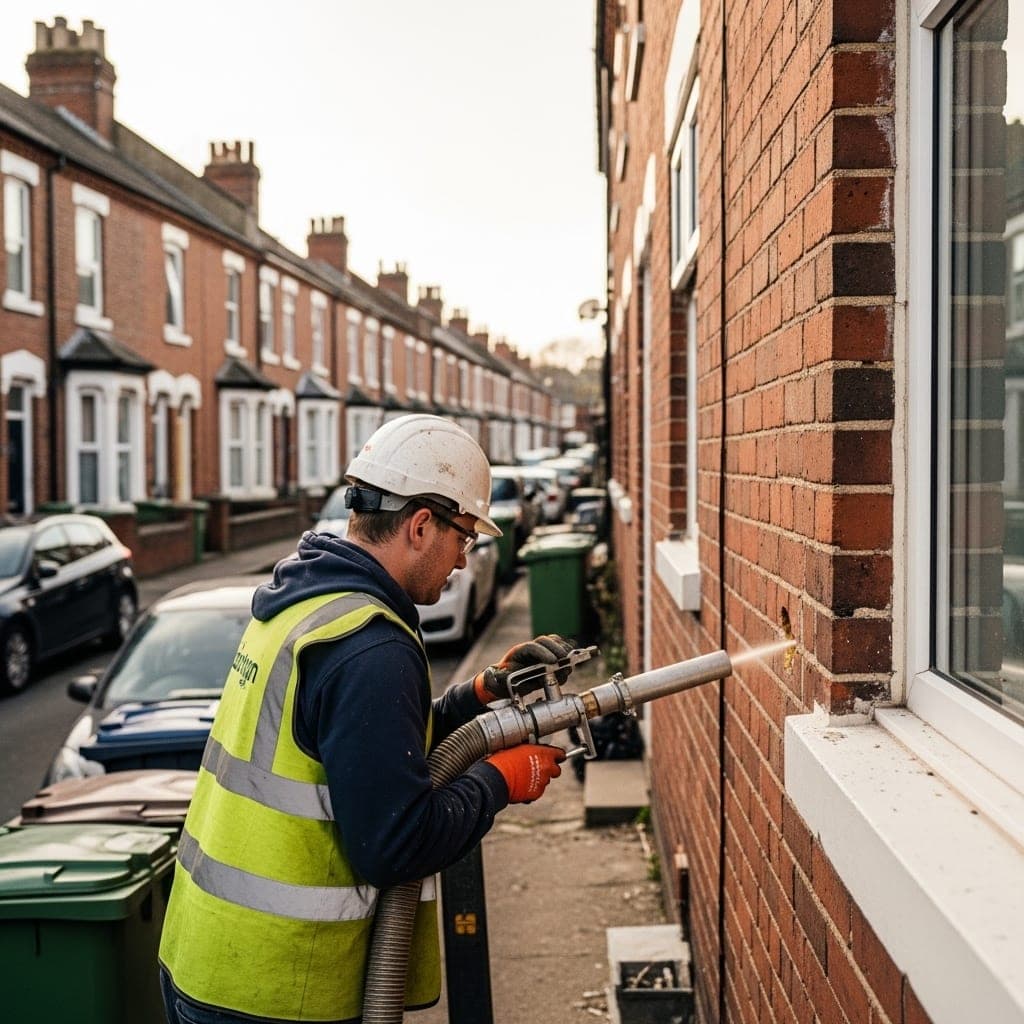
ECO4 Grants for Landlords: Claim Free Upgrades Before the December 2026 Deadline
As of August 2026, ECO4 is in its final weeks for new applications. The scheme closes 31 December 2026, and all installation work must be completed and lodged by that date, not just applied for. With 10 to 18 weeks from first contact to completed installation, the window for standard measures (loft insulation, cavity wall insulation, boiler replacement) closes in September 2026. That is now 2 to 4 weeks away.
ECO4 grants fund insulation, boiler replacements, heat pumps, and solar panels in rental properties at no cost to the landlord. Your tenant must qualify through means-tested benefits or a local authority referral (LA Flex), and the property must be EPC D, E, F, or G. If your tenant qualifies, this is the most generous energy upgrade funding available ahead of the band C standard government has proposed for 2030.
Key Facts
- Scheme name: Energy Company Obligation 4 (ECO4), administered by Ofgem
- Deadline: 31 December 2026 (extended from March 2026 by government response, GOV.UK)
- Practical deadline for new applications: September 2026, now 2 to 4 weeks away (allow 10 to 18 weeks for processing)
- Property requirement: EPC rating of D, E, F, or G
- Tenant requirement: Receiving qualifying benefits or referred via LA Flex
- Landlord cost: Typically zero to 50% depending on measure and route
- Covered measures: Loft insulation, cavity wall insulation, solid wall insulation, boiler replacement, heat pumps, solar panels, heating controls
- Who funds it: Energy suppliers (obligated by Ofgem to deliver a set number of upgrades)
Was ECO4 Extended?
Yes, and many landlords do not know this. ECO4 was originally due to close in March 2026. Following the government's formal consultation response, published on GOV.UK, the scheme was extended to 31 December 2026. If you dismissed ECO4 after seeing reports about the "March deadline", it is still open.
The extension matters because it changes the calculation. As of August 2026, the window for most standard measures (loft insulation, cavity wall insulation, boiler replacement) closes in September. For more complex work like solid wall insulation or heat pump installation, that window has effectively closed: starting now leaves almost no margin for survey, funding approval, and installation before December 31.
The Warm Homes Plan replaces ECO4 from 2027, but early indications suggest lower per-property funding and more complex eligibility. If your tenant qualifies today, ECO4 is the better deal.
What Is the ECO4 Scheme for Landlords?
ECO4 is the fourth phase of the Energy Company Obligation, a government scheme that requires large energy suppliers to fund energy efficiency improvements in homes across Great Britain. Per Ofgem guidance (2024), suppliers must deliver upgrades that raise properties from lower EPC bands (D to G) towards band C or above.
For landlords, ECO4 is one of the most valuable funding routes available ahead of the proposed 2030 EPC C standard, which government has announced but not yet legislated. The minimum band you must let at today is E. Unlike grants that require upfront payment and reimbursement, ECO4 measures are typically installed at no cost to the qualifying household, with the energy supplier covering the full amount through their obligation.
Does Your Rental Property Qualify for ECO4?
ECO4 eligibility has two parts: the property must qualify, and the occupant (your tenant) must qualify. Both conditions must be met.
Property Requirements
Your rental property qualifies if it:
- Has a current EPC rating of D, E, F, or G
- Is located in England, Scotland, or Wales (Northern Ireland has a separate scheme)
- Has a valid EPC certificate (if one does not exist, the installer will arrange an assessment)
Properties already rated C or above are excluded. According to EPCGuide's analysis of 75,000 lodged certificates across 15 local authorities, 33.8% of privately rented homes still sit below EPC C, meaning a large slice of rental stock is theoretically eligible on the property side.
Tenant Eligibility (Benefits Route)
Your tenant qualifies if they receive any of these means-tested benefits:
- Universal Credit (with income below the cap)
- Pension Credit (Guarantee or Savings Credit)
- Income-based Jobseeker's Allowance (JSA)
- Income-related Employment and Support Allowance (ESA)
- Income Support
- Child Tax Credit (with income below the threshold)
- Working Tax Credit (with income below the threshold)
- Housing Benefit
- Warm Home Discount (Core Group only)
Per Ofgem's FAQ for domestic consumers and landlords, the tenant must be the occupier of the property and must consent to the assessment and installation.
Tenant Eligibility (LA Flex Route)
If your tenant does not receive qualifying benefits, there is a second route. Local authorities can refer households under the LA Flex (Local Authority Flexible Eligibility) pathway. This covers tenants who:
- Live in an area of high deprivation
- Have a household income below a local threshold (typically 31,000 pounds or below)
- Are vulnerable to the effects of living in a cold home (health conditions, elderly, young children)
The LA Flex route is particularly relevant for landlords in areas like Manchester, where EPCGuide's GSC data shows strong search demand for ECO4 grants. Contact your local council to check if they participate in LA Flex referrals.
Manchester landlords can also access the Manchester City Council Home Energy Loan Plan -- see our Manchester EPC Guide for details.
What Measures Does ECO4 Cover?
ECO4 funds a wide range of energy efficiency measures. The specific measures available for your property depend on its current fabric, heating system, and what the surveyor recommends.
| Measure | Typical Savings | EPC Impact | Notes |
|---|---|---|---|
| Loft insulation (top-up or new) | 150 to 250 per year | +3 to 8 SAP points | Quickest, cheapest measure |
| Cavity wall insulation | 200 to 400 per year | +5 to 15 SAP points | Only for properties with unfilled cavities |
| Solid wall insulation (internal) | 300 to 500 per year | +10 to 20 SAP points | More disruptive, higher value |
| Solid wall insulation (external) | 300 to 500 per year | +10 to 20 SAP points | Changes property exterior |
| Boiler replacement (gas) | 100 to 300 per year | +5 to 10 SAP points | Replaces old G-rated boilers |
| Air source heat pump | 200 to 600 per year | +10 to 25 SAP points | Biggest EPC impact for most properties |
| Solar panels (PV) | 200 to 400 per year | +5 to 15 SAP points | Subject to roof suitability |
| Heating controls upgrade | 50 to 150 per year | +2 to 5 SAP points | Programmable thermostat, TRVs |
| Underfloor insulation | 100 to 200 per year | +3 to 8 SAP points | For suspended timber floors |
The surveyor will produce a "measure specification" listing exactly which upgrades your property needs to reach band C. ECO4 prioritises a "fabric first" approach: insulation before heating system changes.
How Much Does ECO4 Cost the Landlord?
This depends on your route in:
Benefits route (tenant on qualifying benefits): The measures are typically fully funded by the energy supplier. The landlord pays nothing. This is the most common route and the one most ECO4 marketing refers to when it says "free."
LA Flex route: Funding may cover 100% of costs, but some suppliers and installers require a landlord contribution of 35 to 50% depending on the measure. This varies by supplier and region. Always confirm costs in writing before agreeing to installation.
Multiple properties: There is no limit on the number of properties a landlord can put through ECO4, provided each property and tenant meets the eligibility criteria independently. If you have a portfolio of D-rated properties with tenants on Universal Credit, you could potentially upgrade several at once.
For context on what these measures would cost without ECO4 funding, see EPCGuide's cheapest ways to improve your EPC rating.
How to Apply for ECO4 as a Landlord
There is no single application form for ECO4. The process works through energy suppliers and approved installers. Here is the step-by-step process:
Step 1: Check Tenant Eligibility
Before anything else, confirm your tenant qualifies. Ask them (tactfully) whether they receive any of the qualifying benefits listed above. If not, contact your local authority about LA Flex referrals.
You will need your tenant's cooperation throughout. They must consent to the assessment and installation. Build this into your communication early.
Step 2: Contact an ECO-Approved Installer or Your Energy Supplier
You have three routes in:
- Contact your energy supplier directly. The Big Six (British Gas, EDF, E.ON, OVO, Scottish Power, Octopus) all have ECO4 obligations. Call their ECO team.
- Find an ECO-approved installer. Search for TrustMark-registered installers with ECO4 accreditation in your area. They handle the supplier paperwork on your behalf.
- Go through your local authority. Some councils run ECO4 referral programmes and can connect you with approved installers.
Route 2 (approved installer) is usually fastest for landlords. The installer handles eligibility checks, surveys, and supplier liaison.
Step 3: Property Assessment
An assessor visits the property to:
- Verify the current EPC rating
- Identify which measures are needed to reach band C
- Produce the measure specification
- Check for any structural issues that could prevent installation
This visit takes 1 to 2 hours. Your tenant must be home or you must provide access.
Step 4: Funding Confirmation
The installer submits the measure specification to the energy supplier for funding approval. This stage takes 2 to 4 weeks. Once approved, you receive a written confirmation of:
- Which measures will be installed
- Any landlord contribution required
- The installation timeline
- Guarantees and warranties
Do not sign anything until you have this in writing. Check that guarantees meet PAS 2030:2019 standards and that the installer is TrustMark-registered.
Step 5: Installation
Installation timelines vary by measure:
- Loft insulation: 1 day
- Cavity wall insulation: 1 to 2 days
- Solid wall insulation: 1 to 3 weeks
- Boiler replacement: 1 to 2 days
- Heat pump: 2 to 5 days
- Solar panels: 1 to 2 days
Your tenant needs to be aware of disruption, particularly for solid wall insulation which can require moving furniture and temporary room closures.
Step 6: Post-Installation EPC
After installation, a new EPC assessment is carried out to verify the property has improved. This new EPC is the one that counts for MEES compliance. Keep both the old and new certificates. Note that grant-funded work does not count towards the MEES cost cap: only money you spend yourself does.
The Timeline Is Tighter Than You Think
ECO4 ends on 31 December 2026. But "ends" means all work must be completed and lodged by that date, not just applied for. Per the GOV.UK government response on extending the ECO4 end date, the deadline refers to measure completion, not application submission.
Working backwards from the December deadline:
| Stage | Duration | Latest Start Date |
|---|---|---|
| Installation | 1 day to 3 weeks | Early December 2026 |
| Funding confirmation | 2 to 4 weeks | Early November 2026 |
| Property assessment | 1 to 2 weeks | Mid-October 2026 |
| Eligibility check | 1 to 3 weeks | Late September 2026 |
| Initial contact | Immediate | September 2026 at the latest |
For solid wall insulation (the longest measure), August 2026 was the last viable start point. That window has now closed. For loft insulation, cavity wall insulation, and boiler replacements, September 2026 is the last viable start: contact an installer this week, not next month. Installer capacity is already tightening as other landlords race the same deadline. The earlier you book a survey, the more likely you are to get a slot before Q4 becomes impossible.
What Happens After ECO4 Ends?
The government's Warm Homes Plan replaces the supplier obligation model with direct government funding. EPCGuide's guide to what replaces ECO4 covers the transition in detail.
Key points for landlords:
- The Warm Homes: Local Grant is already accepting applications in some areas
- Your first property is fully funded; subsequent properties require a 50% landlord contribution
- There will likely be a funding gap between ECO4 ending (December 2026) and Warm Homes Plan scaling up (mid-2027 at earliest)
- If you miss ECO4, you may need to self-fund upgrades should the proposed 2030 standard become law
Because the Local Grant is delivered through local authorities rather than energy suppliers, what you can claim depends on where the property is. Our breakdown of the council-run Warm Homes grant sets out the funding levels, the tenant income threshold and which councils have signed up so far.
The message is clear: if your tenants qualify, ECO4 is the most generous funding route you will see before 2030. The ECO4 deadline guide explains why waiting is risky.
Common Mistakes Landlords Make with ECO4
Assuming the March 2026 deadline already passed. ECO4 was extended from March 2026 to 31 December 2026 by the government's formal response to its own consultation. Many landlords gave up on ECO4 after seeing early deadline reports and have not checked since. The scheme is still running, but it will not be extended again. December 2026 is final.
Assuming you cannot apply because you are the landlord. ECO4 is tenant-qualifying, but landlords can and should initiate the process. Many landlords miss out because they assume it is a homeowner-only scheme.
Not checking LA Flex eligibility. Even if your tenant is not on benefits, the local authority route can unlock funding. Always check both pathways.
Waiting until autumn 2026. Installer capacity is finite. The closer to the deadline, the harder it is to book assessments and installations. Start now while slots are available.
Accepting the first installer quote. Get quotes from at least two TrustMark-registered ECO4 installers. Compare the landlord contribution (if any), the guarantee terms, and the proposed measures.
Forgetting the post-installation EPC. The upgrade only "counts" for MEES when you have a new EPC certificate showing the improved rating. Make sure the installer arranges this as part of the package.
Frequently Asked Questions
When does ECO4 end?
ECO4 closes 31 December 2026. All installation work must be completed and lodged by that date, not just applied for. The practical deadline for new applications is September 2026 for standard measures (loft insulation, cavity wall insulation, boiler replacement), allowing 10 to 18 weeks for survey, funding approval, and installation. As of August 2026, that window is now 2 to 4 weeks away. ECO4 will not be extended again; December 2026 is final.
Can a landlord apply for ECO4 directly, or does the tenant have to apply?
Either party can initiate the process. In practice, landlords often start by contacting an ECO-approved installer, who then verifies the tenant's eligibility with the tenant's consent. Per Ofgem guidance, the tenant must consent to the assessment and installation, but the landlord can drive the process.
Is there a cap on how much ECO4 will fund per property?
There is no fixed cap per property. The energy supplier funds whatever measures the surveyor specifies to bring the property to band C (or as close as possible). For a typical D-rated property, this might be 3,000 to 8,000 pounds of work. For an E or F-rated property needing solid wall insulation, it could exceed 15,000 pounds.
Do I need to pay the tenant back for any ECO4 costs?
No. ECO4 measures are funded by the energy supplier, not by you or the tenant. If the LA Flex route requires a landlord contribution, that comes from you directly to the installer. The tenant should not be out of pocket.
What if my tenant moves out during the ECO4 process?
This can complicate things. The eligibility is tied to the current occupant. If your tenant gives notice mid-process, the new tenant would need to qualify independently for the work to continue under ECO4. Discuss timing with your tenant before starting.
Can I use ECO4 alongside the Boiler Upgrade Scheme?
Not for the same measure. You cannot receive ECO4 funding for a heat pump and also claim the Boiler Upgrade Scheme grant for the same installation. However, you could use ECO4 for insulation and BUS for a heat pump on the same property if the tenant does not qualify for a heat pump under ECO4.
Does ECO4 cover properties in all parts of the UK?
ECO4 covers England, Scotland, and Wales. Northern Ireland is not included in the Energy Company Obligation. For Northern Ireland landlords, see our Northern Ireland EPC guide.
Can EPC band C properties qualify for ECO4 funding?
No. ECO4 is for properties at EPC D, E, F, or G only. Band C and above are excluded by scheme rules because the policy intent is to move properties from sub-standard ratings up to C, not to improve already-compliant homes. This applies to both the benefits route and the LA Flex route. If your property is already C, ECO4 cannot fund further upgrades, but you may still qualify for the Boiler Upgrade Scheme (no EPC requirement from April 2026) or the Warm Homes: Local Grant for additional measures.
Is LA Flex eligibility different for EPC C properties?
No. LA Flex is a tenant eligibility route, not a property route. The property must still be EPC D-G to qualify for ECO4. LA Flex changes who counts as an eligible tenant (it widens benefits to include households on lower incomes or in vulnerable circumstances), but it does not change the EPC band requirement. A landlord with an EPC C property cannot use LA Flex to access ECO4.
Can ECO4 take a property from D to C, or only towards C?
ECO4 aims to take properties to band C wherever possible. The surveyor produces a measure specification listing the upgrades needed to reach C. Where the property cannot reach C cost-effectively within the supplier's budget (typically older solid wall homes), ECO4 will fund the upgrades that get closest. The minimum requirement is moving the property up at least two SAP bands or to a defined target rating, whichever is greater. Per Ofgem's ECO4 minimum standards (2024), suppliers must demonstrate band uplift to count delivery against their obligation.
Was ECO4 extended past March 2026?
Yes. ECO4 was originally due to end in March 2026. The government confirmed an extension to 31 December 2026 in its formal consultation response on GOV.UK. This is not the same as GBIS (Great British Insulation Scheme), which did end in March 2026. ECO4 and GBIS ran in parallel under different rules. ECO4 is still open; GBIS is not. With the December end date confirmed as final, and measures needing to be completed (not just applied for) by then, the practical application window closes in September 2026 for most property types.
Does ECO4 fund EPC certificates as well as upgrades?
The post-installation EPC assessment is funded as part of the measure package; you do not pay extra for it. If your property does not have a current EPC, the installer will typically arrange one at the start of the process as part of the eligibility check. Both certificates are issued in your name as the property owner.
This article was last updated on 16 August 2026. EPCGuide's analysis covers the full domestic EPC register for England and Wales: 29.2 million EPC certificates across 19.7 million homes. For methodology and interactive data, visit the EPCGuide Research Hub.