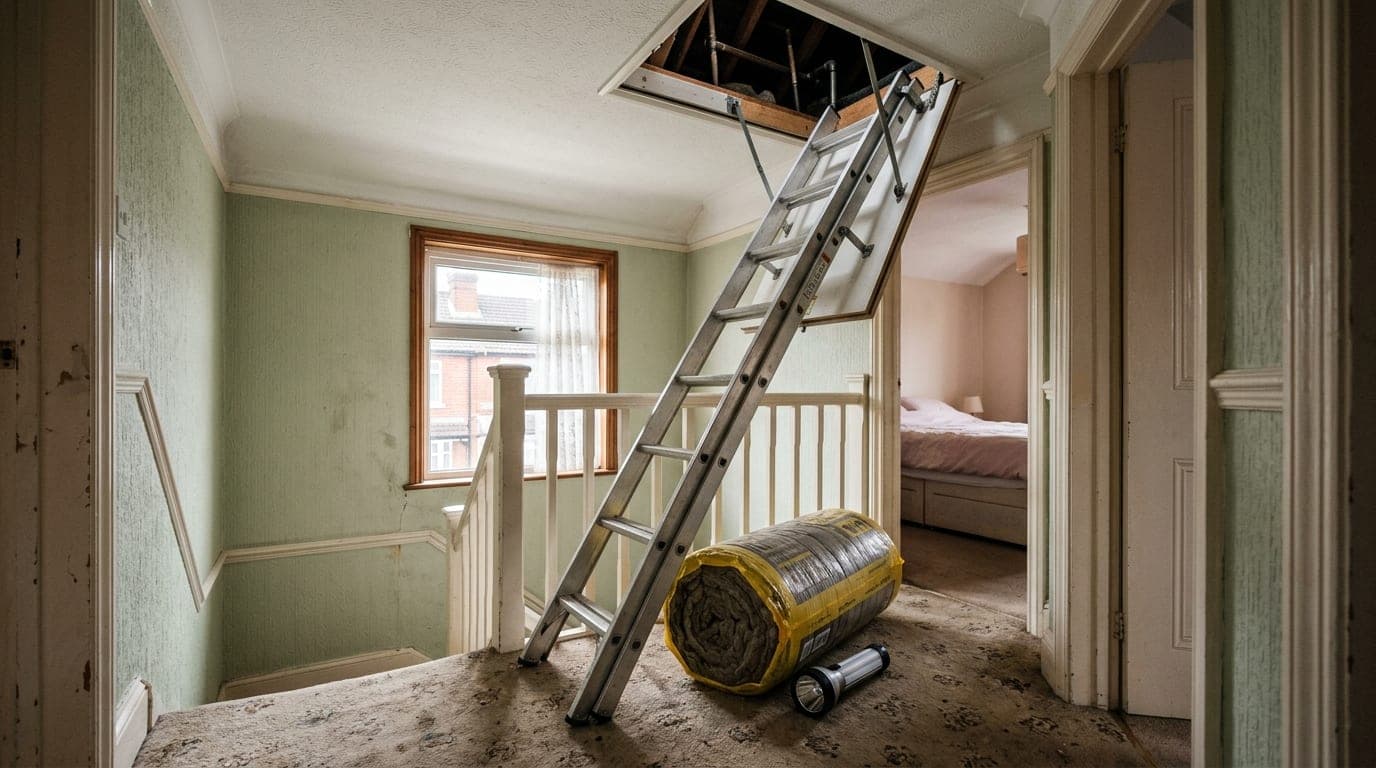
To get an EPC certificate, book an accredited domestic energy assessor through the GOV.UK "get a new energy certificate" service, give them 30 to 60 minutes of access to the property, then wait for them to lodge the certificate on the national register, usually within 24 hours. For most rental properties in England and Wales the fee is £60 to £120.
That is the short version. The longer version matters because the score is not fixed by the bricks alone: what the assessor can see and prove on the day moves the number, sometimes by a whole band. This guide covers the process from checking whether you need a new certificate at all to what to do if the rating comes back lower than you expected.
New to EPCs? Our guide to what an EPC certificate is covers the basics.
Do You Actually Need a New EPC?
Check before you book. An EPC is valid for 10 years from lodgement (see how long an EPC lasts for the detail). Every certificate issued since 2008 in England, Wales and Northern Ireland is searchable for free at GOV.UK's find an energy certificate service, by postcode, street or certificate number. Scotland runs its own register. Our EPC finder lets you search by postcode on one page and explains what to do when nothing comes up.
You need a new certificate when:
- The register shows nothing for the address, or the certificate has expired.
- The certificate expires before a new tenancy would start. You must have commissioned an EPC before the property goes on the market, so an expiry date a few months out is a reason to book now.
- You have completed improvement works and want the higher rating on record, for a mortgage application, a compliance file, or to stop marketing the property at a band it no longer deserves.
You do not need a new one when the same tenant renews on the same terms, or when a fixed-term tenancy became periodic under the Renters' Rights Act. Neither counts as a new letting for EPC purposes. Our guide on how to check a property's EPC rating covers the lookup in detail. What to do if an EPC expires mid-tenancy covers the awkward middle case.
Step 1: How Do You Find an Accredited EPC Assessor?
Only an accredited domestic energy assessor (DEA) can produce a valid EPC, because only an accredited assessor can lodge it on the register. You cannot assess the property yourself. A certificate that is not lodged is not a certificate at all.
The official route is GOV.UK's get a new energy certificate service. Choose "domestic", enter the postcode, then pick from the accredited assessors covering the area. Each listing shows contact details, so you book directly. The service covers England, Wales and Northern Ireland.
Every assessor on the list belongs to one of five government-approved accreditation schemes: Elmhurst Energy, ECMK, Stroma, Quidos and Sterling Accreditation. The scheme name appears on the finished certificate too, which matters later if you need to challenge the result. If a letting agent or a local search points you to someone else, confirm their scheme on that scheme's own lookup before paying.
A letting agent can arrange the assessment for you, but the legal duty to have the certificate stays with you as the "relevant person" under the Energy Performance of Buildings (England and Wales) Regulations 2012.
Need an EPC for your property?
Only an assessment by an accredited energy assessor produces an official EPC. Tell us about the property and we can put you in touch with a trusted one.
What to ask before you book
- Which accreditation scheme are you registered with?
- How long will you be on site? Under 30 minutes for a house is a warning sign.
- Will you inspect the loft, the boiler and every room?
- How soon after the visit will the certificate be lodged?
Our checklist for choosing an EPC assessor covers the red flags in more depth, including the "we can improve your rating without a visit" offer that should end the conversation.
Step 2: What Does an EPC Assessment Involve and How Long Does It Take?
A domestic EPC assessment takes 30 to 60 minutes for a typical one to three bedroom property. Larger houses and HMOs take longer. The survey is non-invasive: nothing is drilled, lifted or dismantled. The assessor records what they can observe and photograph, then enters it into RdSAP software (Reduced Data Standard Assessment Procedure), which calculates the score.
They will look at:
- Walls: construction type (solid, cavity, timber frame) and whether insulation is present or evidenced.
- Roof and loft: insulation depth in millimetres, measured at the hatch if the loft is accessible.
- Floors: construction and any insulation, usually inferred from the property's age unless evidenced.
- Windows and doors: glazing type, proportion double glazed, frame age.
- Main heating: boiler make and model from the data plate, fuel, plus controls such as a programmer, room thermostat and radiator valves.
- Hot water, lighting and renewables: cylinder insulation, proportion of low-energy bulbs, any solar PV or heat pump with its certification.
- Extensions and rooms in the roof: each recorded separately with its own age band.
The assessor also measures the external footprint and photographs every feature they record. Those photographs are the audit trail: accreditation schemes sample-check lodged certificates against them, which is why a good assessor will not record something they cannot see or prove.
If the property is tenanted, you need the tenant's agreement to access. The NRLA's EPC guidance for landlords puts the notice requirement at a minimum of 24 hours in writing. In practice, agree a slot with the tenant a week ahead. Ask them to leave the loft hatch and boiler cupboard clear.
RdSAP 10 has been the methodology for every new domestic EPC since June 2025. It asks assessors for more data points and more evidence than the previous version, so the evidence you prepare in Step 4 carries more weight. Our page on the RdSAP 10 changes covers what moved.
Step 3: How Much Does an EPC Certificate Cost?
There is no government-set fee. Assessors price the job themselves. The range for a standard rental property in 2026 is £60 to £120.
| Property type | Typical fee (2026) |
|---|---|
| 1 to 2 bed flat | £60 to £80 |
| 3 bed house | £70 to £100 |
| 4+ bed house | £85 to £130 |
| Large or complex property | £120 to £200+ |
| HMO (whole-house EPC) | £150 to £300 |
| London and South East | Add 10 to 30% |
Cheap has a cost. An assessor charging under £50 for a house is working on volume. A rushed survey defaults more features to "unknown", which is where scores get undersold. Paying an extra £30 for someone who spends an hour and checks the loft is usually the better trade.
The assessment fee counts towards your MEES cost cap. The cap in force is £3,500 including VAT per property. Government has proposed raising it to £10,000 alongside a band C standard from 1 October 2030, but that package is a proposal, not law. Keep the invoice either way. For pricing by area, see how much an EPC assessment costs. For HMO specifics, see the HMO EPC compliance guide.
Step 4: How Do You Prepare the Property So the Score Is Not Undersold?
This is the step the assessor's booking email will not mention. It is where most landlords leave points on the table.
RdSAP scores what the assessor can evidence. Where a feature cannot be seen or proved, the software falls back to a default assumption based on the property's age band. For anything built before the 1990s those defaults are pessimistic: an unevidenced cavity wall is scored as unfilled, a boarded loft with no visible insulation gets the age-band default, a boiler with an unreadable data plate is scored as a generic old boiler. A property with 270mm of loft insulation, filled cavities and a 2019 condensing boiler can be scored as if it had none of them, purely because the assessor could not confirm it on the day.
The fix is evidence, prepared before the visit:
| Feature | What the assessor needs to see | If it is missing |
|---|---|---|
| Loft insulation | Clear hatch, ladder, a board lifted or a gap where depth can be measured; or an installer invoice stating depth in mm | Scored at the age-band default, which for older homes assumes little or none |
| Cavity wall insulation | Installer guarantee certificate (for example CIGA), or visible drill-and-fill marks on the external wall | Scored as an unfilled cavity |
| Boiler | Data plate readable, or the manual, installation certificate or Benchmark commissioning record | Generic default for a boiler of its apparent age |
| Heating controls | Programmer, room thermostat and thermostatic radiator valves present and visible | Recorded as absent |
| Double glazing | Installation date or FENSA/CERTASS certificate; frame age affects the score | Assumed to be older, lower-performing glazing |
| Solid wall or floor insulation | Invoices, building control completion certificate, installer photos | Scored as uninsulated |
| Solar PV or heat pump | MCS certificate, installation date, capacity | May not be recorded at all |
| Hot water cylinder | Jacket or factory insulation visible, cylinder thermostat visible | Scored as poorly insulated |
| Lighting | Low-energy bulbs actually fitted in every fitting | Counted as standard bulbs |
The evidence must be documentary or physical: the assessor cannot record insulation because you told them it is there. Leave the paperwork in a folder at the property, because most assessors will not chase you for it after the visit. Do the cheap fixes the week before: swap every remaining bulb for an LED, fit a cylinder jacket, clear the loft hatch. Each removes a default that drags the score down.
Want to know what the score should be before you pay for the visit? Run the property through our free EPC predictor to see the likely band from its age, construction and heating.
Step 5: When Does the EPC Appear on the Register?
The assessor enters the data after the visit and lodges the certificate electronically with their accreditation scheme, which passes it to the national register. Most assessors lodge within 24 hours of the survey. You receive a digital copy (a PDF) with the certificate number, a 24-digit Report Reference Number (RRN).
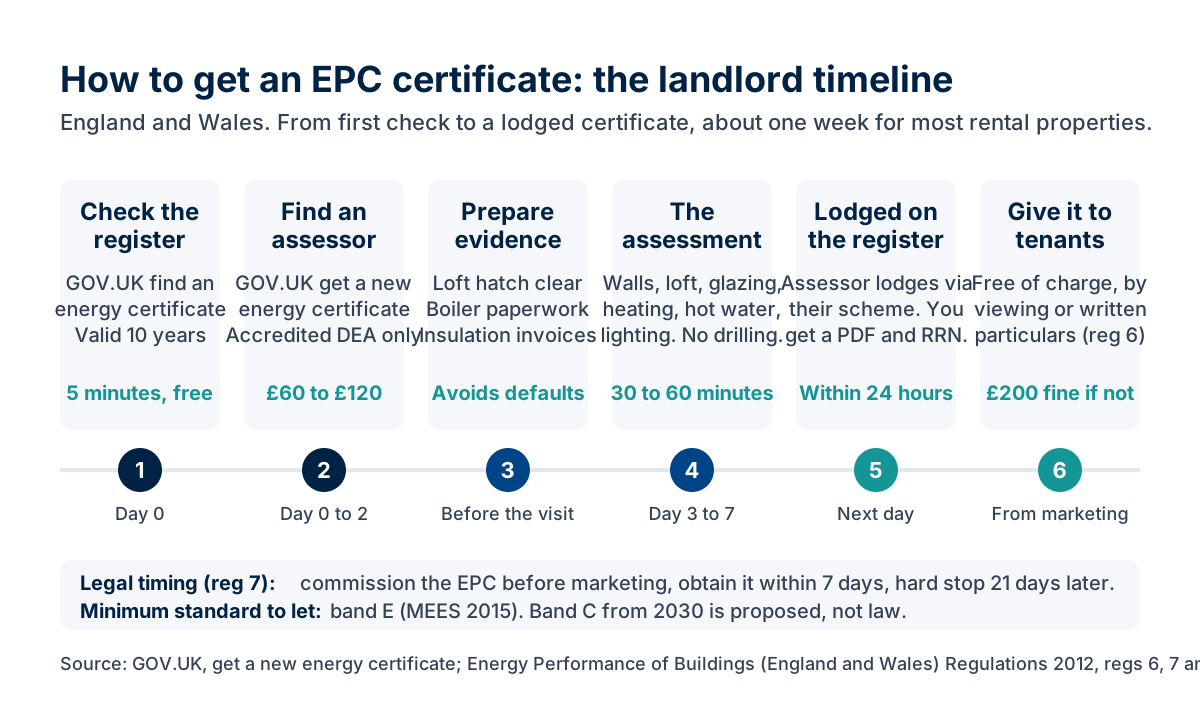 From register check to lodged certificate, the whole process fits inside a week for most rental properties, with the assessment itself taking under an hour.
Until it is lodged, you do not have an EPC. A PDF alone proves nothing, so check the address on the register the day after the visit. If the certificate has not appeared within 48 hours, chase the assessor first, then their scheme. Once lodged, a certificate cannot be edited: a correction means the assessor lodges a replacement, which supersedes the original.
Two timing rules from the 2012 Regulations shape when you should book. Regulation 7 requires an EPC to be commissioned before the property is put on the market, with all reasonable efforts to obtain it within 7 days and a hard stop 21 days after that. Regulation 6 requires the certificate to be given free of charge to a prospective tenant at the earliest opportunity, no later than the point they receive written particulars or view the property. The fixed penalty for a dwelling under regulation 38 is £200, enforced by trading standards. Small, but it sits alongside the separate MEES penalties for letting below band E. Keep the RRN in the tenancy file.
What If the EPC Rating Is Lower Than Expected?
Start by reading the certificate properly. The register page lists every input the assessor recorded: wall type, loft insulation, heating, glazing. Compare that list against what is actually in the property. A wrong input is the most common cause of a surprise rating. It is also fixable.
If an input is wrong or a feature was missed: contact the assessor in writing within a few days, attach the evidence (the installer invoice, the boiler certificate, a photograph of the insulation), then ask them to correct and re-lodge. Most will, because the audit trail sits with their scheme. If the assessor does not respond or refuses, raise a complaint with the accreditation scheme named on the certificate. Schemes investigate lodged certificates and can require a corrected re-lodgement or a re-inspection. For problems with the register itself, GOV.UK lists the Ministry of Housing, Communities and Local Government's digital services team as the contact.
If the inputs are right and the score is simply low: the certificate is telling you something true about the property. Look at the recommendations section, which lists the measures the software modelled and the band each would reach. Then check how far you are from the boundary you care about. Band C starts at 69 SAP points, D at 55, E at 39. A property at 66 needs one modest measure; a property at 45 needs a programme. Loft insulation from bare joists is typically worth 5 to 12 points for £300 to £600, cavity wall insulation 5 to 10 points for £500 to £1,500, a modern condensing boiler replacing a pre-2005 unit 5 to 15 points. Our E to C upgrade guide has the full table. Our ranked list of the cheapest EPC improvements sorts them by points per pound.
If the rating is F or G: you cannot let the property in England or Wales without a registered exemption. The minimum standard in force is band E under the MEES Regulations 2015, with a £3,500 cost cap and a maximum civil penalty of £5,000 per property, as set out in GOV.UK's MEES landlord guidance, last updated 5 May 2026. Either carry out improvements up to the cap or register an exemption, which lasts five years. The complete EPC exemptions guide walks through each ground. Band C from 1 October 2030, with a proposed £10,000 cap and £30,000 penalty, remains a government proposal and has not been laid before Parliament.
One thing not to do: book a second assessor in the hope of a friendlier number. A second visit works from the same evidence as the first, and an assessor who inflates a rating without evidence risks their accreditation.
Frequently Asked Questions
How long does it take to get an EPC certificate? Booking typically takes a few days depending on assessor availability in your area. The visit lasts 30 to 60 minutes. The certificate is usually lodged on the register within 24 hours of the survey, so from first enquiry to a valid certificate, allow about a week.
Can a landlord do their own EPC assessment? No. Only an accredited domestic energy assessor can lodge a certificate on the national register. An unlodged assessment has no legal standing. The GOV.UK service exists precisely so you can find an accredited assessor by postcode.
Do I need a new EPC for every new tenant? No. A certificate is valid for 10 years and covers every letting in that period. You need a new one only when it expires, when there is none on the register, or when you want improvement works reflected in the rating.
What happens if I let a property without an EPC? Trading standards can issue a fixed penalty of £200 per dwelling under regulation 38 of the 2012 Regulations. The duty to provide the certificate to prospective tenants free of charge is separate from the duty to hold one. Letting below band E without an exemption is a further breach under MEES, with penalties up to £5,000 per property. Our guide to EPC fines and penalties covers both regimes.
Can I get an EPC while a tenant is living in the property? Yes. You need the tenant's agreement to access, with at least 24 hours' written notice. The assessor needs the same access as they would in an empty property: every room, the loft hatch, the boiler and the meters. Agreeing a time with the tenant a week ahead prevents a wasted visit.
Does getting a new EPC now affect the proposed 2030 band C rule? No. The proposed band C standard from 1 October 2030 would apply to the property regardless of when the current certificate was issued. It is not yet law. A new EPC records where the property stands today under RdSAP 10; it neither locks in nor resets any future requirement.
How do I get a copy of a lost EPC certificate? Search the address on the GOV.UK find an energy certificate service and download the PDF. It is free and needs no login. If the certificate was lodged before October 2008, it will not appear, so you will need a new assessment.