HMO EPC Compliance: What Landlords Need to Know in 2026
Houses in Multiple Occupation (HMOs) sit in a grey area of the EPC rules today, and the government intends to close it. The minimum EPC to let an HMO in England and Wales today is band E. The government has proposed that from 1 October 2030 all HMOs must hold a valid EPC rated C or above for the whole building, regardless of whether you let room-by-room or on a single tenancy, and that the maximum penalty rises to £30,000. Neither change is law yet.
Key Facts
- Minimum in force: EPC E for privately rented homes in England and Wales that need an EPC, since 1 April 2020. Bands D and E are legal to let. A room in an HMO does not need its own EPC
- 2030 date, proposed: All privately rented homes, including HMOs, would need EPC C or above from 1 October 2030. This needs new powers from an Act of Parliament and then regulations, which the government aims to have in force in 2027
- Whole-house EPC: where the whole building is let as one unit, one EPC covers it and rooms do not need their own. The government intends to require a whole-building EPC even when only a room is let (not yet law)
- Penalty in force: Up to £5,000 in total per property, across all breaches combined. The government has proposed raising the maximum to £30,000, which is not yet law
- Cost cap: £3,500 inc VAT maximum spend per property under the MEES rules in force, with a rise to £10,000 proposed for the 2030 standard
- Low-value property cap, proposed: 10% of property value if valued under £100,000
- Transitional period, consulted on: 24 months for HMOs newly brought into scope to obtain an EPC and comply with MEES; the government has not yet confirmed it
- 49% of PRS below C: Just under half of private rented homes fall short of the 2030 target (English Housing Survey 2024-25). On EPCGuide's analysis of the full domestic EPC register for England and Wales, the register figure is higher: 53.3% of privately rented homes (1,848,327 of 3,467,781) sit below band C
What is HMO EPC compliance?
HMO EPC compliance is the legal requirement for landlords of Houses in Multiple Occupation to hold a valid Energy Performance Certificate that meets the Minimum Energy Efficiency Standard (MEES) for their property. Under the rules in force, that standard is EPC E. The government has proposed raising it to EPC C from 1 October 2030 for all tenancies, both new and existing, but that proposal is not yet law.
An HMO is defined as a property rented to three or more tenants from two or more households who share facilities like a kitchen or bathroom. Mandatory HMO licensing applies to properties with five or more tenants from two or more households, but whether an HMO needs an EPC does not depend on its size or licensing status.
The critical distinction for HMO landlords is how the EPC applies. Unlike self-contained flats where each unit gets its own EPC, an HMO needs an EPC only where one is required for the building as a whole, and then it is a single whole-building EPC. This means the rating reflects the energy performance of the entire property, including communal areas, shared heating systems, and the building fabric as a whole.
Does an HMO need a whole-house EPC or per-room EPCs?
An HMO does not need EPCs per room. Where the building as a whole needs an EPC, it is a single whole-house certificate. This has been a source of confusion for years, and the government's January 2026 consultation response says it intends to require a whole-building EPC whenever a room is let.
Under the rules in force, an EPC is technically only required when the whole building is sold or rented as a unit. This created a loophole: landlords letting individual rooms within an HMO could argue no EPC was needed because they were not letting the "whole building."
The proposed reforms close this loophole. The government has said it intends to extend the EPC scope so that a valid EPC is required for the entire HMO whenever a single room within it is rented out, bringing all room-by-room HMO lettings firmly within MEES. That extension needs legislation and has not been made yet.
For HMO landlords who have been operating without an EPC, the consultation proposed a 24-month transitional period to obtain an EPC and comply with MEES. The government has said it will set out the transitional arrangements for MEES in its final response. If the 2030 standard becomes law and the transition does not push back its start for HMOs, a rating below C would need upgrading by October 2030.
When is a room assessed separately?
There is one exception worth understanding. If a unit within a larger property is self-contained, it can count as a separate dwelling and takes its own EPC, as a studio flat would. A bedsit that shares facilities does not need its own. Once tenants share a kitchen or bathroom, any EPC is for the building as a whole, and only where the building needs one.
This matters because the assessor measures the property as one thermal envelope. A single cold, north-facing room with an old electric heater will not sink your rating on its own, but the weakest shared elements will. The main heating system, the loft, the walls and the glazing across the whole building drive the score. You cannot lift the rating by upgrading one popular room and ignoring the rest, and equally you do not need every room to be identical. Run your building through our EPC predictor tool to see which whole-building measures move the number most before you commit to any works.
How does HMO licensing interact with EPC compliance?
HMO licensing and EPC compliance are separate regimes with separate enforcement and penalties. When you apply for or renew an HMO licence, ask your council whether it asks for an EPC or sets energy requirements in its licensing scheme.
Article 4 directions and planning constraints
A growing number of councils have made Article 4 directions that remove permitted development rights for HMOs in certain wards. Where an Article 4 direction is in force, converting a family home into a small HMO needs full planning permission. Check with your council's planning team whether an Article 4 direction or a conservation area affects external energy works such as wall insulation, solar panels or a heat pump.
The practical point for compliance planning is timing. If your HMO sits in an Article 4 area or a conservation area, factor planning permission into your upgrade schedule. A heat pump application can add two to three months, and a refusal on a front elevation may push you toward internal insulation or a rear-mounted unit instead. Check your council's planning portal before you assume any external measure is straightforward, because a delayed application is the most common reason a well-planned HMO upgrade slips past the deadline.
For the full list of penalties landlords face, see our guide on EPC fines and non-compliance penalties.
What are the penalties for HMO EPC non-compliance?
The penalty framework in force today caps MEES civil penalties at £5,000 in total per property, across all breaches combined, under regulation 40 of the 2015 Regulations. The government has proposed raising that maximum to £30,000 alongside the band C standard, a sixfold increase, but no legislation has been laid.
For HMO landlords, the risk is compounded:
MEES fine in force: Up to £5,000 in total per property for letting below EPC E without an exemption. The proposed maximum against a band C standard is £30,000.
Licensing offence: Operating an HMO without a valid licence (or breaching licence conditions that require EPC compliance) carries an unlimited fine on conviction, or in England a civil penalty of up to £40,000 (£30,000 for conduct before 1 May 2026).
Rent repayment orders: In England, tenants in unlicensed HMOs can apply for rent repayment orders of up to 24 months' rent (12 months for offences before 1 May 2026).
Banning orders: Landlords convicted of a banning order offence can be banned from letting in England.
Licensing penalties are the larger exposure today: in England, a landlord who is both unlicensed and letting below band E faces up to £40,000 on the licensing side (£30,000 for conduct before 1 May 2026) plus up to £5,000 under MEES, before any rent repayment order. If the proposed £30,000 MEES maximum is legislated, that combined figure rises to £70,000.
How does the MEES cost cap apply to HMOs?
The MEES cost cap limits how much a landlord must spend before they can register an exemption. Under the rules in force the cap is £3,500 including VAT per property. The government has proposed raising it to £10,000 for the 2030 EPC C standard, which is a sensible figure to budget against, though it is not yet law. If a landlord spends up to the cap and the property still does not reach the required rating, they can register a high-cost exemption. Registered exemptions currently last five years; the proposal would extend the equivalent grounds to ten. The property can continue to be let at whatever rating it achieves after spending the cap amount.
Under the rules in force, grant funding does not use up the £3,500 cap. GOV.UK states that where third-party funding covers the full cost of reaching the minimum, the cost cap does not apply. Under the proposed £10,000 cap, Boiler Upgrade Scheme money would not count, but other third-party funding, such as ECO4 or local grants, could.
Under the proposal, for properties valued under £100,000 the cost cap would reduce to 10% of the property value. This would mainly affect HMOs in lower-value regions of the North and Midlands.
Critical details for HMO landlords:
The cap is per property, not per room. A six-bedroom HMO has the same cap as a single-let terraced house, whether that cap is the £3,500 in force or the £10,000 proposed. This is the single most important number for HMO owners to grasp. A large shared house often costs far more to bring up to standard than a small flat, yet it gets the same fixed cap. Once you have spent the cap amount on qualifying works, you are entitled to the exemption even if the building is still short of band C. Since HMOs tend to be larger properties with higher upgrade costs, the cap is often reached sooner, which makes the sequencing of works below genuinely important: spend the cap on the measures that move the rating most, not on whatever contractor is available first.
EPC assessment costs do not count toward the £3,500 cap in force, which covers the cost of buying and installing measures. Under the proposed £10,000 cap, EPCs commissioned before and after the works could be included.
You must demonstrate qualifying expenditure. Keep receipts and invoices for all works. The exemption application requires evidence of spending.
The exemption does not protect you commercially. A cost-cap-exempt HMO rated D is still a property that tenants perceive as expensive to heat. Rooms will be harder to fill, and rent may need to be discounted. For more on cost cap strategy, see our guide to the proposed £10,000 EPC cost cap and the MEES regulations guide for how the exemption process works.
What are the biggest EPC challenges specific to HMOs?
HMOs present unique upgrade challenges that standard rental properties do not. Understanding these before you start spending saves both money and frustration.
Communal heating systems
Many HMOs use a single boiler to heat the entire property. Upgrading or replacing this system affects all tenants simultaneously. A boiler replacement in a six-bedroom HMO means coordinating access, managing tenant expectations, and potentially providing temporary heating during installation. If you are considering a heat pump, the disruption is greater but the EPC improvement is significant (typically 15-30 points).
For grant support on heat pump installations, see our Boiler Upgrade Scheme application guide and the April 2026 BUS regulation changes.
Room-by-room electric heating
Some HMOs use individual electric heaters per room, which score poorly on EPCs because electricity is rated at a higher carbon factor than gas. Converting from room electric heaters to a central heating system is expensive (£8,000-£15,000) but can shift the EPC by 20-30 points.
Loft and wall insulation in larger buildings
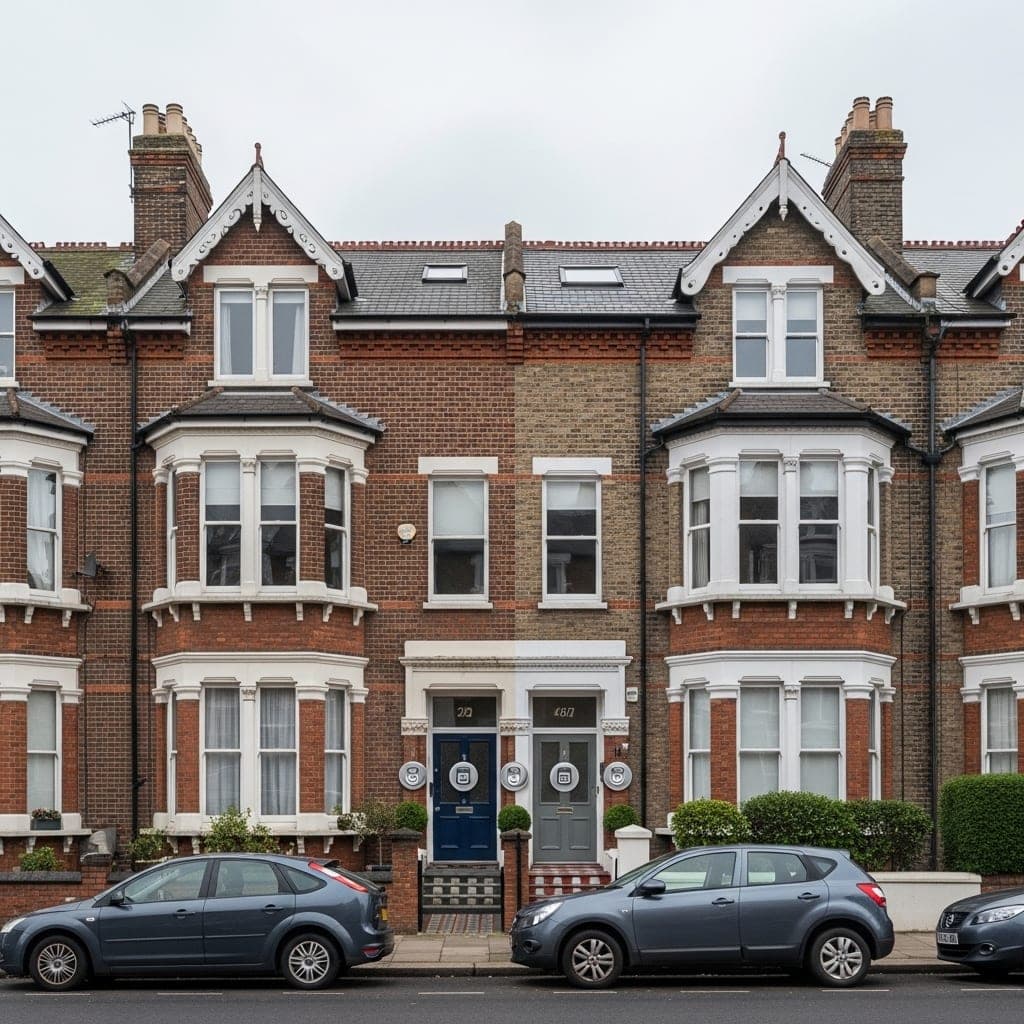
HMOs are typically larger buildings: Victorian terraces, converted houses, or purpose-built shared accommodation. Larger wall areas mean higher insulation costs. The sample EPC in GOV.UK's landlord guidance lists £4,000 to £14,000 for internal or external wall insulation on its example property (indicative), and a four-storey Victorian HMO has far more wall to treat. Even the low end is above the £3,500 cap in force.
Tenant access and coordination
Every upgrade requires access to occupied rooms. Unlike a void period in a single-let property, an HMO rarely has all rooms empty simultaneously. Works need to be scheduled room by room, which increases contractor costs and extends timelines.
Fire safety interactions
HMO fire safety requirements (fire doors, compartmentation, escape routes) can conflict with energy efficiency measures. For example, internal wall insulation may require repositioning fire doors or adjusting escape route widths. Always check with your local authority fire safety team before starting insulation works in an HMO.
Which upgrades give the best EPC improvement for HMOs?
The most cost-effective upgrades for HMOs follow a similar hierarchy to standard rentals, but the scale and complexity differ. EPCGuide recommends this priority order:
1. Loft insulation (£400-£1,200 for a typical HMO) If your loft has less than 270mm of insulation, topping up is the single best return on investment. Larger HMO loft areas cost more but the per-point improvement is still the cheapest available.
2. LED lighting throughout (£200-£600) HMOs have more rooms and more light fittings than standard properties. Replacing all lighting with LEDs across communal areas and individual rooms typically adds 3-8 EPC points. At this cost, there is no reason not to do it immediately.
3. Cavity wall insulation (£2,000-£4,500) Where cavities exist and are unfilled, this delivers excellent cost-per-point improvement. Many HMOs in the Midlands and North have unfilled cavities.
4. Boiler replacement (£3,000-£5,000) If your HMO runs a non-condensing boiler (pre-2005), replacing it with a modern condensing unit can add 10-15 EPC points. The Boiler Upgrade Scheme can offset costs if switching to a heat pump.
5. Double glazing (£4,000-£10,000) HMOs with single-glazed windows see significant gains from upgrading. However, the cost is high relative to the EPC improvement (typically 5-10 points), so prioritise other measures first.
For a full breakdown of cost-effective improvements, see our guide on the cheapest ways to improve your EPC rating. For the specific path from D to C, our EPC D to C upgrade guide covers the most common scenarios.
A practical cost and sequencing plan for a typical HMO
The theory only helps if you know what to do first. The table below sets out a sensible order for a typical five or six-bedroom Victorian or Edwardian HMO currently rated D, working through the cheap high-return measures before the expensive ones. The idea is to spend the cost cap in the order that lifts the rating fastest, so if you do hit the cap you have already banked the biggest gains.
| Step | Measure | Typical HMO cost | Rough EPC points | Why this order |
|---|---|---|---|---|
| 1 | Loft insulation top-up to 270mm | £400 to £1,200 | 3 to 8 | Cheapest points available, minimal tenant disruption |
| 2 | LED lighting throughout | £200 to £600 | 3 to 8 | Trivial cost, done in an afternoon across all rooms |
| 3 | Draught-proofing and hot water tank jacket | £150 to £500 | 2 to 5 | Quick wins the assessor rewards |
| 4 | Cavity wall insulation (where cavities exist) | £2,000 to £4,500 | 5 to 12 | Strong cost-per-point where walls are suitable |
| 5 | Condensing boiler or heat pump upgrade | £3,000 to £5,000 (boiler) | 10 to 15 | Central system change lifts the whole building |
| 6 | Double glazing (remaining single-glazed) | £4,000 to £10,000 | 5 to 10 | High cost per point, only if still short of C |
Work top to bottom and re-run the numbers after each stage. The cheapest measures may get some D-rated HMOs to band C, depending on the building, leaving glazing untouched. If you are starting from an E rating or relying on room-by-room electric heaters, expect to reach steps 5 and 6 and to spend closer to the top of the range. Our EPC cost calculator will size these figures to your specific building, and the full cost breakdown page sets out how each measure is priced. Before booking works, read how much an EPC assessment costs so you budget for the post-works re-inspection too, and check available landlord grants that can cover some insulation and heating costs, noting that Boiler Upgrade Scheme money would not count towards the proposed £10,000 cap.
Larger buildings such as the classic Victorian terrace often have solid walls, which changes the maths: solid-wall insulation is far more expensive than the cavity figure above and can exhaust the cap on its own, so treat it as a last resort rather than a starting point.
What should HMO landlords do now?
With four years until the proposed 2030 date, the window for action is wider than it feels. But HMO upgrades take longer to plan and execute than single-let improvements because of the tenant coordination and scale involved. EPCGuide recommends this timeline:
Now (2026): Get a current EPC if you do not have one. Identify which measures your assessor recommends. Complete low-cost, high-impact improvements (loft insulation, LEDs, draught-proofing). These can be done room by room with minimal disruption.
2026-2027: Plan and budget for major works (boiler replacement, insulation, glazing). Apply for available grants including the Boiler Upgrade Scheme and any local authority Warm Homes grants. Our ECO4 grants guide for landlords covers what you can still claim, and our guide on what replaces ECO4 covers upcoming funding options.
2027-2028: Execute major works. Allow time for contractor availability, which is already tightening as the deadline approaches. Our EPC assessor shortage analysis shows that both assessors and qualified installers are in increasingly short supply.
2029: Get a post-works EPC to confirm your rating. If you are still below the standard that applies by then, despite spending up to the cost cap, register a high-cost exemption.
For a complete step-by-step compliance plan, see our 2026 EPC action plan for landlords and compliance checklist.
Frequently asked questions
Do I need an EPC for each room in my HMO?
No. A room in an HMO does not need its own EPC. Where the building as a whole needs one, a single EPC covers the whole house. A self-contained unit within the property, such as a studio flat, takes its own certificate.
What EPC rating does my HMO need?
Your HMO needs EPC E or above under the MEES regulations in force in England and Wales. Bands D and E are legal to let. The government has proposed an EPC C standard for all privately rented properties including HMOs from 1 October 2030, covering both new and existing tenancies after the earlier 2028 new-tenancy milestone was dropped in January 2026. That proposal is not yet law.
Can I get fined for an HMO without an EPC?
Only if the property needs an EPC. Failing to have an EPC when one is required can attract a £200 fixed penalty under the Energy Performance of Buildings Regulations, separate from MEES. Separately, letting below band E without a registered exemption carries a MEES civil penalty of up to £5,000 in total per property. The government has proposed a £30,000 maximum alongside a band C standard from 2030, which is not yet law.
Does the MEES cost cap apply per room or per property?
Per property. Whether your HMO has three bedrooms or ten, the cap applies once to the whole building. The cap in force is £3,500 including VAT, and the government has proposed raising it to £10,000 for the 2030 standard. Under that proposal, for properties valued under £100,000 the cap would reduce to 10% of the property value. Under the rules in force, grant funding does not use up the £3,500 cap. Under the proposed £10,000 cap, Boiler Upgrade Scheme money would not count, but other third-party funding, such as ECO4 or local grants, could.
How much does it cost to get an HMO to EPC C?
Costs vary widely depending on current rating and property type. A typical HMO moving from D to C costs roughly £3,000 to £8,000, while moving from E to C is more likely to fall in the £8,000 to £15,000 range. HMOs tend toward the higher end of any estimate because of their size and the complexity of shared heating systems. Our analysis of the full EPC register for England and Wales shows 49.6% of homes are below band C, so most landlords are starting the journey rather than finishing it.
Which upgrade should I do first in an HMO?
Start with loft insulation and LED lighting, then draught-proofing, then cavity wall insulation where cavities exist. These give the most EPC points for the least money and the least tenant disruption. Leave boiler replacement and double glazing until later, because they cost the most per point. Spending the cost cap in this order means you bank the biggest gains first if you do reach the cap.
Are there grants available for HMO EPC upgrades?
Yes. The Boiler Upgrade Scheme provides £7,500 toward an air source or ground source heat pump for eligible properties, including properties rented out to tenants. Until March 2027 it is £9,000 if the property is heated by oil or LPG and has no mains gas connection. Check your HMO qualifies before applying. Local authority Warm Homes grants may also cover insulation and heating improvements. ECO4 runs until December 2026 and the government has said it will not continue supplier obligations. The Warm Homes Plan funds low-income grants instead, and a single scheme is planned from 2027/28. Check our grant conditions guide for eligibility details.
Do Article 4 or planning rules affect HMO EPC works?
They can. In wards covered by an Article 4 direction, or in conservation areas, external measures such as wall insulation, solar panels or a heat pump on a street-facing elevation may need planning permission. This adds time rather than blocking the work, but it needs to be built into your schedule so a delayed application does not push you past the 2030 deadline.
What if my HMO cannot reach EPC C even after spending the cost cap?
Under the proposed band C rules, you would be able to register a cost cap exemption on the PRS Exemptions Register, valid for ten years. Those rules are not law. Today the minimum is band E: if you have made every recommended improvement the £3,500 cap allows and the HMO is still below E, you register an 'all relevant improvements made' exemption, which lasts five years. If even the cheapest recommended measure costs more than £3,500, the high-cost exemption applies instead. The property can continue to be let while the exemption is valid. You must provide evidence of the work. The exemption protects you legally but does not remove the commercial disadvantage of a lower-rated property.
Does my HMO licence depend on my EPC rating?
Ask your council. Licensing is run locally, so check what yours needs when you apply for or renew a licence.
This guide is general information for landlords in England and Wales, not legal or financial advice. MEES, the cost cap and the PRS Exemptions Register do not apply in Scotland or Northern Ireland. The 2030 standard and the higher cost cap are proposals rather than law, so confirm the current position with your local authority or a qualified assessor before committing to works.