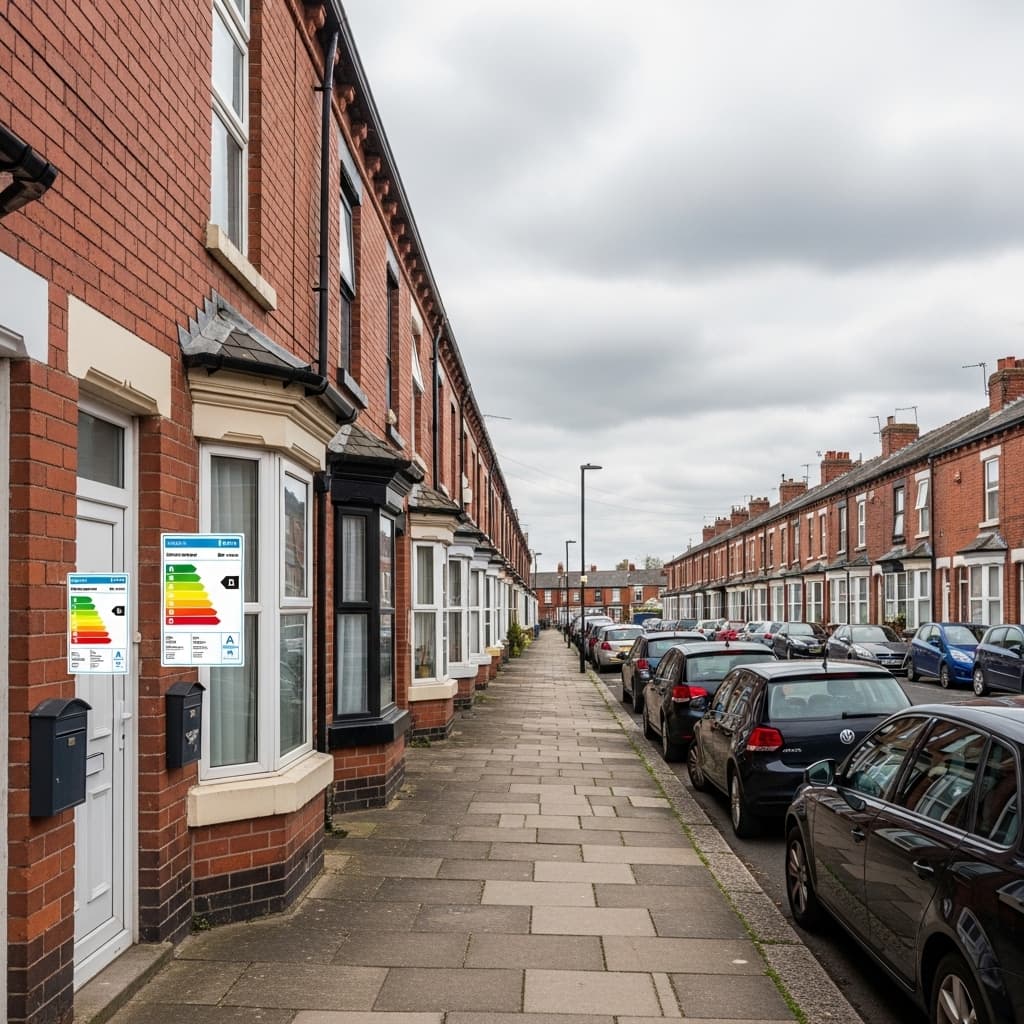
The minimum EPC rating for renting out a property in England and Wales is E. Any property rated F or G cannot legally be let without a valid exemption registered on the national PRS Exemptions Register. Government has said it intends to raise the minimum to EPC C from 1 October 2030 for all tenancies, new and existing alike, but that is a proposal and not yet law. Landlords with properties currently rated D or E are compliant today and have roughly four years to plan and fund the upgrade if the proposal becomes law as intended.
What Is the Minimum EPC Rating for Renting Right Now?
The current Minimum Energy Efficiency Standard (MEES) requires a minimum EPC rating of E for all private rented properties in England and Wales. This has applied to all tenancies since 1 April 2020.
A D-rated property is fully legal to let. A C-rated property is legal to let. Only F and G are prohibited, and even those can be let if a valid exemption is in place.
Scotland has its own rules: the minimum there is EPC D since March 2025, rising to C by the end of 2028.
When Does the Minimum Change to EPC C?
Not yet, and not by law. Government has proposed that from 1 October 2030 all private rented properties in England and Wales must achieve EPC C, covering both new tenancies starting after that date and tenancies already running. There is one proposed deadline, not two.
Nothing has changed the legal minimum yet. To raise it, government must first take new powers through an Act of Parliament, then lay a statutory instrument amending the Energy Efficiency (Private Rented Property) (England and Wales) Regulations 2015. Its stated aim is for the amended rules to come into force during 2027. Until that instrument is made, the standard that binds you is band E.
Earlier proposals would have required new tenancies to meet EPC C from 2028. The government dropped that split-date approach in its January 2026 response to the EPB consultation (GOV.UK), proposing a single deadline of 1 October 2030 for all tenancies.
EPC Minimum Requirements by Date
| Date | Minimum EPC (England and Wales) |
|---|---|
| Now (2026) | E, in force. F and G properties cannot be let without exemption |
| 1 October 2029 | Proposed transition point: existing EPCs rated C or above would count as compliant until expiry |
| 1 October 2030 | C, proposed for all tenancies, new and existing. Not yet law |
What Happens If Your Property Is Below the Minimum?
F or G rated right now
You cannot legally let this property without a registered exemption. Doing so is a civil offence. Councils can serve a compliance notice and issue financial penalties totalling up to £5,000 per property, which is the maximum in force under regulation 40 of the 2015 Regulations. Government has proposed raising that maximum to £30,000, but no legislation has been made to do so. Letting agents may also be named in the penalty notice.
Register an exemption on the PRS Exemptions Register before continuing to let the property. Each exemption lasts five years.
Read more: How EPC fines work for UK landlords
D or E rated before 2030
You are compliant today and would need to act before October 2030 if the proposal becomes law. EPCGuide's analysis of the national register, 27.6 million certificates covering 19.7 million homes, shows 49.6% of assessed homes in England and Wales are below EPC C. Millions of landlords face the same position. The grant window is closing: ECO4 ends 31 December 2026 and has not been extended further.
What Are the EPC Exemptions?
If a property cannot reach the minimum rating after spending up to the cost cap, a landlord can register an exemption. The cost cap in force is £3,500 per property including VAT, set by regulation 24 of the 2015 Regulations. Government has proposed raising it to £10,000 alongside the band C standard, with qualifying spend counted from 1 October 2025, but that change needs legislation that has not been laid.
The main exemptions are:
- High-cost exemption: The cheapest recommended improvement exceeds the £3,500 cost cap in force
- Third-party consent exemption: Works require consent from a freeholder or leaseholder that was refused or unobtainable
- Devaluation exemption: A qualified surveyor confirms upgrades would reduce market value by 5% or more
- New landlord exemption: A 6-month temporary exemption when a landlord inherits a non-compliant property or acquires it via a court order
- Property characteristics exemption: Listed buildings or conservation areas where improvements would affect character
Each exemption lasts five years. After that, the landlord must re-register or comply.
Full details: EPC exemptions for landlords: complete guide
Step-by-step application: How to register on the PRS Exemptions Register
How Much Does It Cost to Reach EPC C?
Cost varies significantly by property type and current rating. The exemption cost cap in force is £3,500, and the proposed cap is £10,000, but most properties reach C for considerably less if the right measures are in place.
| Property Type | Typical Cost to Reach EPC C |
|---|---|
| 1930s–1970s cavity wall semi-detached | £2,000–£5,000 |
| Victorian terrace (solid walls) | £8,000–£18,000 |
| Purpose-built flat | £1,500–£4,000 |
| Post-1990 house needing boiler or glazing | £3,000–£7,000 |
Grants can reduce these figures substantially. ECO4 covers insulation and heating upgrades in full for properties where the tenant receives a qualifying benefit such as Universal Credit, Housing Benefit, or Pension Credit. The Boiler Upgrade Scheme provides £7,500 toward a heat pump and is open to landlords. Check which grants apply to your property.
Want the exact route from your current band to C, costed for your specific property? Get your costed EPC C Action Plan (£29) at epcguide.co.uk/action-plan/start?src=blog_minimum-epc-rating-renting-landlord-guide. In your inbox within the hour, then refined by a real person over the next 48.
How to Improve Your EPC Rating Before 2030
Start with the recommendation list on the existing EPC certificate. An assessor calculated which measures give the most points per pound. Work through them in that order.
Common measures that move D and E-rated properties to C:
- Cavity wall insulation (where the walls are cavity construction): £650–£1,500, often grant-funded
- Loft insulation top-up (to 270mm): £400–£900, often grant-funded
- Boiler replacement (to a modern condensing model): £1,500–£3,000
- Low-energy lighting throughout the property: £50–£200, straightforward
- Smart heating controls (programmer and room thermostat): £200–£600, adds 3–5 EPC points
If you have not had the property assessed recently, how to find an EPC certificate for your property.
Read more on the upgrade path: How to get from EPC D to C
Scotland, Wales, and Northern Ireland
| Nation | Minimum In Force | Proposed Change |
|---|---|---|
| England | E | C from 1 October 2030, proposed, not yet law |
| Wales | E | C from 1 October 2030, proposed, not yet law |
| Scotland | D (since March 2025) | C by end of 2028 |
| Northern Ireland | No minimum | No minimum (EPC required for marketing only) |
Frequently Asked Questions
What is the minimum EPC rating to rent a property in England in 2026? The minimum EPC rating for renting in England is E. Properties rated F or G cannot be let without a valid exemption registered on the PRS Exemptions Register. Government has proposed raising the minimum to C from 1 October 2030, which is not yet law.
Can I rent my property if it has an EPC D rating? Yes. A D rating is above the minimum of E in force, so you can let the property legally today. Under the current proposal you would need to reach EPC C before 1 October 2030, giving you roughly four years to plan and fund the works.
Is there a 2028 EPC C deadline for new tenancies? No. The government set out in its January 2026 consultation response that it intends a single deadline: 1 October 2030 for all tenancies, both new and existing. The earlier proposal to require C for new tenancies from 2028 was dropped. Neither date is in legislation yet.
What happens if I cannot afford to reach EPC C? Against the band E standard in force, if you spend up to £3,500 on qualifying improvements and the property still cannot reach the minimum, you can register a high-cost exemption on the PRS Exemptions Register. This exemption lasts five years. You are not required to sell the property. The proposed cap for the band C standard is £10,000.
What is the minimum EPC rating for renting in Scotland? Scotland requires a minimum of EPC D for all private rented properties since 31 March 2025. The minimum rises to EPC C by end of 2028 under separate Scottish regulations.
Do EPC minimum rules apply to furnished holiday lets? Holiday lets used as holiday accommodation for fewer than 4 months per year are exempt from MEES. If let for more than 4 months as holiday accommodation, an EPC is required but no minimum rating applies. Standard MEES rules apply if the property is used as a primary residence rather than a holiday let.