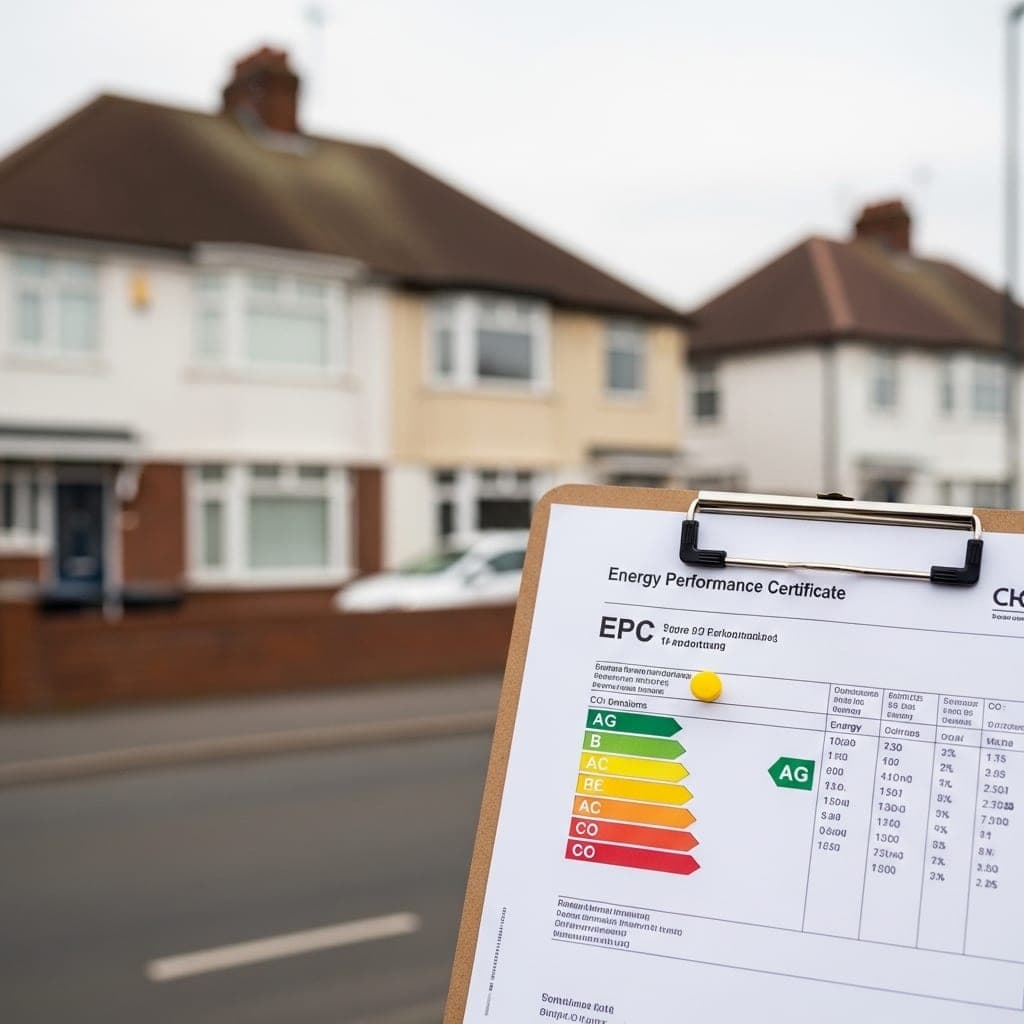
Can You Rent an EPC D Property in 2026?
Yes, you can legally rent an EPC D property in England and Wales in 2026. The Minimum Energy Efficiency Standard (MEES) in force requires a minimum EPC rating of E for privately rented property. A D-rated property is compliant, and nothing about it is due to change before Parliament passes new law. Government has proposed raising the minimum to band C from 1 October 2030, but that proposal is not law and no statutory instrument has been laid.
Key Facts
- Legal minimum today: EPC E. D-rated properties are compliant right now, with no action required beyond holding a valid certificate
- Proposed future minimum: band C from 1 October 2030, for new and existing tenancies on the same date. This is government policy intent, not law
- No split deadline in the proposal: an earlier plan for a separate, earlier new-tenancy date was dropped in the January 2026 government response
- Cost cap: £3,500 including VAT in force today. Government has proposed £10,000, or 10% of property value where that is below £100,000
- Maximum penalty: £5,000 per property in total under the rules in force. The proposal would raise it to £30,000
- Roughly half of the private rented sector sits below C: (English Housing Survey 2024-25)
- Typical D-to-C cost: £3,000-£8,000 depending on property type and measures needed
Status check. Nothing on this page about 2030, the £10,000 cap or the £30,000 penalty is law. Government must first take powers through an Act of Parliament, then lay a statutory instrument amending the Energy Efficiency (Private Rented Property) (England and Wales) Regulations 2015, targeted to be in force during 2027. An almost identical EPC C proposal was scrapped in September 2023 without needing any repeal, because it had never become law. Plan for band C. Do not panic-buy it.
What are the current EPC rules for renting in 2026?
The MEES regulations, in force since 1 April 2020 for all tenancies, require a minimum EPC rating of E for any privately rented property in England and Wales. Bands A through E are compliant. Only F and G are barred, and even then a registered exemption can permit letting.
If your property is rated D, you are fully compliant with today's rules. You can let the property to new tenants, renew existing tenancies, and continue any current tenancy without any legal issue related to energy efficiency.
Per the government's guidance on GOV.UK (updated January 2026), the only immediate obligation for landlords of D-rated properties is to hold a valid EPC certificate. EPCs are valid for 10 years from the date of assessment.
When would the EPC C requirement start?
Government has proposed 1 October 2030 as the date the private rented sector minimum in England and Wales would rise to band C, applying to new and existing tenancies on the same day. That date sits in the government response to the "Improving the energy performance of privately rented homes" consultation, published on 21 January 2026 alongside the Warm Homes Plan.
A response to a consultation is a statement of intent. It does not change the law. Two further steps are needed: an Act of Parliament giving ministers the necessary powers, then a statutory instrument amending the 2015 Regulations. Government has said it is aiming for the new rules to be in force during 2027. Neither step has happened, so the date, the band and every figure attached to them can still move.
The proposal did settle one thing worth knowing. An earlier version would have hit new tenancies in 2028 and existing tenancies in 2030. That split was dropped in favour of a single date.
For full details on the proposed deadline, see our EPC C deadline guide.
What happens if you rent an EPC D property today?
Nothing. Band D is above the legal minimum, so there is no penalty, no notice and no exposure. The enforcement regime that exists today applies to F and G properties let without a registered exemption.
Under the regulations in force, a local authority can impose civil penalties totalling a maximum of £5,000 per property, all breaches combined. The tiers are £2,000 for letting a non-compliant property for less than three months, £4,000 for three months or more, £1,000 for providing false or misleading information to the PRS Exemptions Register, and £2,000 for failing to comply with a compliance notice. These are civil penalties, not criminal convictions.
Government has proposed raising the per-property maximum to £30,000 as part of the same 2030 package. That figure is not in force and cannot be levied on anyone today.
Separately from regulation, lending criteria are a live commercial factor now. Some buy-to-let lenders price sub-C stock differently or restrict product ranges, which can affect refinancing regardless of what happens to the 2030 proposal.
For the penalty framework as it actually stands, see our EPC fines and penalties guide.
How much does it cost to upgrade from EPC D to C?
The typical cost to upgrade a D-rated property to EPC C ranges from £3,000 to £8,000, depending on the property type, current rating within the D band (a high D is cheaper to upgrade than a low D), and which measures are needed.
Most D-rated properties need one to three of the following measures to reach C. Costs below are typical installed prices and will vary by region and by installer:
Low cost (under £1,000):
- Loft insulation top-up to 270mm: £300-£800
- LED lighting throughout: £100-£300
- Draught-proofing: £200-£400
- Hot water cylinder insulation: £100-£200
Medium cost (£1,000-£5,000):
- Cavity wall insulation: £1,500-£3,000
- Condensing boiler replacement: £2,500-£4,000
- Smart heating controls: £1,000-£1,500
Higher cost (£5,000+):
- Heat pump (minus BUS grant of £7,500): £500-£4,500 net
- Double glazing: £4,000-£8,000
- Internal or external wall insulation: £4,000 to £14,000 (sample EPC in GOV.UK's landlord guidance, indicative)
Many D-to-C upgrades can be achieved with a combination of low-cost measures alone. A property rated D with 59 EPC points that needs 69 to reach C might only need loft insulation and LEDs to cross the threshold.
For a detailed breakdown, see our EPC D to C upgrade guide and cheapest ways to improve EPC rating. To see what each measure costs, read how to improve EPC from D to C.
Can you get an exemption for an EPC D property?
A D-rated property needs no exemption today, because it already meets the legal minimum. Exemptions matter now only for F and G properties, and they would matter for D properties if the band C proposal becomes law.
Under the rules in force, the cost cap for the high-cost exemption is £3,500 including VAT, and a registered exemption lasts 5 years (6 months on the recently-become-a-landlord ground). Government has proposed raising the cap to £10,000, or 10% of property value where that value is below £100,000, and extending three grounds only (cost cap, property value adjustment, negative impacts) to 10 years. Those changes are proposals.
Worth knowing about grant money: under the rules in force, third-party funding does not eat into the £3,500 cost cap. GOV.UK guidance states that where funding covers the full cost of an improvement the cost cap does not apply, and where it covers part, a landlord may need to top up with their own funds up to the value of the cap. Under the proposed £10,000 cap, Boiler Upgrade Scheme money would not count, but other third-party funding, such as ECO4 or local grants, could.
Exemption routes under the current regulations include:
Consent exemption: If a third party whose consent is needed (such as a freeholder or planning authority) refuses permission for the improvements.
Devaluation exemption: If a surveyor confirms the improvements would reduce the property's value by more than 5%.
Wall insulation exemption: If an independent surveyor advises that cavity, external, or internal wall insulation would damage the property.
All exemptions must be registered on the PRS Exemptions Register before letting or continuing to let the property. An unregistered exemption offers no protection.
For a step-by-step guide to exemptions, see our exemption register guide and cost cap guide.
Should you upgrade now or wait?
You are not legally obliged to do anything to a D-rated property. So this is an investment question, not a compliance question, and it deserves an honest answer rather than a countdown clock.
The case for doing the cheap work now. Loft insulation, LEDs, draught-proofing and cylinder jackets are worth doing on their own merits. They cut tenant bills, they cost a few hundred pounds, and they often move a high D into C anyway. None of that depends on any proposal passing.
The case against spending heavily now. Band C is not a legal requirement and the rules that would make it one have not been written. The identical proposal died in 2023. Committing five figures to a solid wall or a heat pump on the strength of a policy announcement is a bet, and it should be sized like one. If the works pay for themselves through rent, void reduction or bills, do them. If the only reason is the 2030 date, wait for the statutory instrument.
On the spend clock. Government has proposed that qualifying spend from 1 October 2025 counts toward the higher cap. Because the rules are not law, that start date is not guaranteed. Keep every invoice either way, since it costs nothing and may matter later.
On contractor capacity. If the deadline does land, demand for insulation installers, heat pump engineers and assessors will concentrate in the years before it. That is a reasonable argument for not leaving works to the last eighteen months, though it is a judgement rather than a measured forecast.
For more on the financial case, see our guide on EPC rating and property value.
What about the new EPC methodology?
The assessment methodology is also changing. Government intends to replace the current Standard Assessment Procedure (SAP/RdSAP) with the Home Energy Model, and has indicated transitional arrangements so that a certificate issued under the current methodology stays valid for its remaining life rather than being invalidated overnight.
Timing here has already slipped once and the detail is not final, so treat any specific switchover date you read as provisional. The practical takeaway is unchanged: an EPC lasts 10 years from the date of assessment, and a certificate you hold remains the certificate you hold.
For more on the new system, see our new EPC metrics guide and Home Energy Model timing.
What should landlords with EPC D properties do now?
Step 1: Check your current EPC. Find it on the EPC register, or use our EPC finder for the lookup and a guide to reading the result. Note the rating, the score (out of 100), and the recommended improvements listed on the certificate.
Step 2: Get quotes for the recommended measures. Focus on the cheapest improvements first, as these often deliver the biggest EPC point gains per pound spent.
Step 3: Complete low-cost improvements immediately. Loft insulation, LEDs, and draught-proofing can often shift a high D (58-68 points) into C territory (69+) for under £1,000.
Step 4: Get a new EPC after the works. A certificate is valid for 10 years from assessment.
Step 5: If you are still below C after the low-cost measures, cost the medium-cost works (boiler, cavity wall insulation) but do not commit to them on the strength of a proposal. Watch for the statutory instrument, and check grant eligibility first: the Boiler Upgrade Scheme is open now if you are considering a heat pump.
For a complete step-by-step plan, see our 2026 EPC action plan for landlords.
Frequently Asked Questions
Is it legal to rent an EPC D property in 2026?
Yes. The MEES minimum in England and Wales is EPC E, so a D-rated property is fully compliant. You can let to new tenants, renew tenancies, and continue existing tenancies without any energy efficiency issue. Government has proposed raising the minimum to C from 1 October 2030, which is not yet law.
When do I need to upgrade my EPC D property?
There is no legal deadline for a D-rated property. If the proposal becomes law as drafted, the date would be 1 October 2030 for new and existing tenancies alike. Until a statutory instrument is laid, upgrading is a commercial decision, not a compliance one.
How many EPC points do I need to go from D to C?
EPC D covers scores of 39-54 on the old scale, while C starts at 55. Under the current methodology, D is 39-54 and C is 55-68. In practice, a property at the top of band D (score 52-54) may need only loft insulation and LEDs to cross into C. A property at the bottom of band D (score 39-42) will likely need a boiler replacement or insulation.
Can I sell an EPC D property instead of upgrading?
Yes, and you are free to. Buyers of tenanted stock increasingly price in the cost of future upgrade work, so a D-rated property may attract a lower offer than an equivalent C, but there is no legal barrier to selling and no requirement to improve the property first.
What if my EPC D property is in Scotland?
Scotland is a separate jurisdiction. MEES, the £3,500 cost cap and the PRS Exemptions Register described on this page are England and Wales only, and the proposed 2030 band C requirement is an England and Wales proposal. Scottish private rented sector standards are set by the Scottish Government. For Scottish rules, see our Scottish landlord EPC guide.
Does the proposed EPC C requirement cover Wales?
Yes. The January 2026 consultation response covers England and Wales, so the proposed 1 October 2030 date, the proposed £10,000 cap and the proposed £30,000 maximum penalty would apply in Wales too. None of them is law in either country yet. The rules currently in force, band E and a £3,500 cap, apply equally across England and Wales. For Welsh-specific guidance, see our Wales EPC guide.
Can I get a grant to upgrade my EPC D property?
Yes. The Boiler Upgrade Scheme provides up to £7,500 toward heat pump installation with no income requirement. The Warm Homes Local Grant covers insulation and heating for properties with low-income tenants. ECO4 runs until December 2026. These schemes can significantly reduce or eliminate your out-of-pocket cost.
Will my mortgage be affected by an EPC D rating?
Possibly, and this is separate from regulation. Lenders set their own criteria, and some already differentiate on EPC band through pricing or product availability. If the band C proposal becomes law, more are likely to. Check your own lender's current criteria rather than assuming, since they change frequently and vary widely.