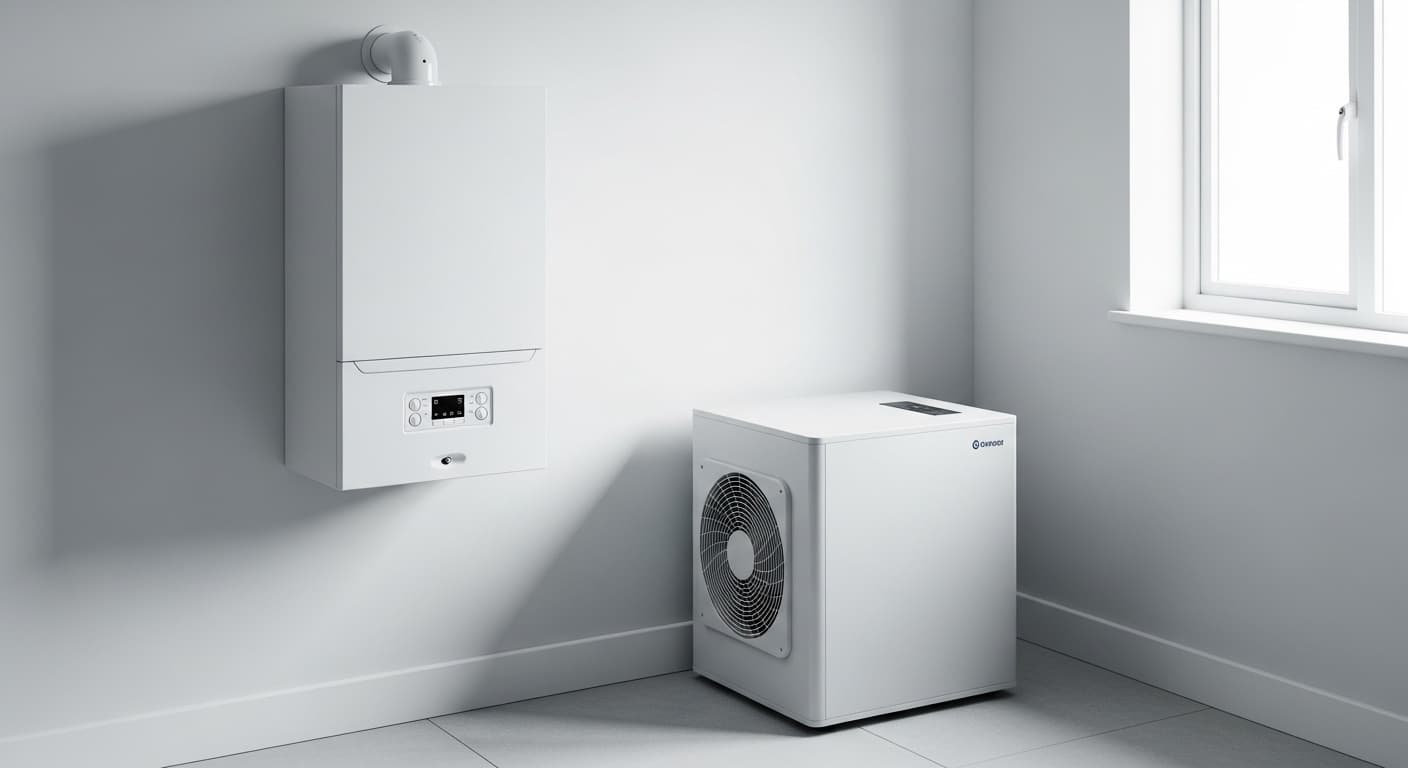
Search "boiler grants for landlords" and you will find a wall of installer marketing promising free or heavily subsidised boilers. The reality in 2026 is narrower and more specific than the ads suggest, and getting it wrong wastes money. There is no general grant for swapping an old gas boiler for a new gas boiler. Government funding has shifted decisively toward low-carbon heating and toward the poorest-performing homes, and the schemes that remain each fund different things for different households. Our analysis of the full EPC register for England and Wales puts 49.6% of assessed homes below band C, and heating is one of the largest single factors in the EPC calculation. That makes boiler and heating funding a live question for most landlords, but only if you know which scheme actually applies.
This guide covers every current route: what each scheme funds, who qualifies, how to apply, and the one truth the marketing hides, that like-for-like gas boiler grants are essentially gone.
The blunt truth: gas boiler replacement grants are essentially gone
Start here, because it saves the most time. If your goal is a grant that pays for a straight swap of one working-age gas boiler for a new gas boiler, no such scheme exists for landlords in 2026.
Policy has moved. The direction of travel is decarbonisation, so public money now flows to heat pumps and to fabric-and-heating upgrades in genuinely poor-performing homes, not to keeping the gas boiler stock churning. A landlord who wants a new gas combi in an otherwise decent property is paying for it privately.
There are two narrow exceptions where a boiler can still be publicly funded, and both are conditional:
- ECO4 can fund a first-time central heating system, or in limited circumstances a boiler repair or replacement, but only for a qualifying low-income or vulnerable household in a property below band C. It is not a boiler grant so much as a heating-and-insulation grant that can include a boiler.
- The Boiler Upgrade Scheme funds a heat pump, not a boiler, despite the name. It replaces the boiler with a low-carbon system.
Everything below explains those routes and the council-run schemes around them. If none fit, the honest answer is that the boiler is a private cost, and the smarter spend may be a heat pump with grant support rather than a gas boiler with none.
Which grants can fund heating for landlords in 2026?
Four routes are worth knowing. They fund different things, target different households, and are administered differently. Here is the picture at a glance.
| Scheme | What it funds | Who qualifies | Landlord eligible? | Key limit |
|---|---|---|---|---|
| Boiler Upgrade Scheme (BUS) | £7,500 toward an air-source or ground-source heat pump (not a gas boiler) | Property currently fossil-fuel heated in England or Wales | Yes, no income test, no tenancy test | Heat pumps only |
| ECO4 | Insulation, heating measures, first-time central heating, limited boiler repair/replacement | Low-income or vulnerable household, property below band C (E-G for private rented) | Yes, with tenant qualifying and landlord consent | Ends 31 Dec 2026 |
| Warm Homes: Local Grant | Insulation and low-carbon heating for lower-income households | Household income and property criteria set by council | Varies by council, often limited landlord access | Council-delivered, area-dependent |
| Council / local schemes | Varies (insulation, heating, sometimes controls) | Local eligibility rules | Varies | Postcode lottery |
The rest of this guide takes each in turn. For every scheme side by side, see our landlord energy grants comparison.
Boiler Upgrade Scheme (BUS): the heat pump grant, not a boiler grant
The Boiler Upgrade Scheme is the biggest single grant most landlords can access, and its name is misleading. BUS does not fund a new gas boiler. It funds the replacement of a fossil-fuel heating system with a low-carbon one.
What it pays: £7,500 toward the cost and installation of an air-source or ground-source heat pump, £5,000 toward a biomass boiler in eligible cases, and £2,500 for an air-to-air heat pump. Grant values are set by regulation and can be changed by a further statutory instrument, so confirm the current figure with your installer.
Who qualifies: The property must be in England or Wales and currently use fossil-fuel heating. There is no income means-test and no tenancy test. The 2026 Amendment Regulations, in force from 28 April 2026, removed the requirement for a valid EPC: where none exists, the installer supplies alternative evidence of the existing fuel type.
Landlord eligibility: Private landlords, portfolio landlords, HMO landlords, and limited-company landlords can all claim BUS. This is unusually landlord-friendly, and it is the clearest route to a funded heating upgrade.
How to apply: The application is installer-led. You engage an MCS-certified installer, and they apply for the grant on your behalf, discounting it from the price. You do not claim it yourself.
The catch to plan for: your installer assesses whether the property's insulation is adequate for a heat pump to work properly. A poorly insulated property may need loft or cavity work first, which is where ECO4 or council schemes can slot in ahead of a heat pump. For the full walkthrough, see our Boiler Upgrade Scheme application guide and the BUS regulations for landlords. For the heat-pump-specific angle, our heat pump grant guide covers eligibility in detail, and there is a separate route for air-to-air heat pump grants.
ECO4: the closest thing to a boiler grant, with strict conditions
ECO4, the Energy Company Obligation, is the scheme that can genuinely fund heating hardware including, in limited circumstances, a boiler. But it is means-tested and property-tested, so it reaches a specific slice of the rented sector.
What it funds: ECO4 takes a whole-house approach under PAS 2035. It can fund insulation (loft, cavity, solid wall, underfloor), heating controls, first-time central heating, and in limited circumstances boiler repair or replacement, as part of a package that must lift the property's SAP rating to a minimum target.
Who qualifies: The household in the property must be on a qualifying means-tested benefit, or be referred by the council under LA Flex (Local Authority Flexible Eligibility) on low-income or vulnerability grounds. The property must be below band C, typically E to G for private rented homes.
Landlord eligibility: Landlords can access ECO4 where the tenant qualifies and the landlord gives written consent for the works. The tenant's circumstances drive eligibility, not the landlord's.
The deadline that matters: ECO4 is scheduled to end on 31 December 2026. There is no confirmed like-for-like replacement, so this is a closing window.
For the household-qualification detail, including the LA Flex route for tenants not on benefits, see our ECO4 grants landlord guide and our explainer on ECO4 LA Flex and EPC band eligibility. We also track the wind-down in ECO4 ending December 2026.
Warm Homes: Local Grant and council schemes
As ECO4 winds down, the government's Warm Homes programme is picking up part of the load through councils, and this is where post-2026 funding is heading.
Warm Homes: Local Grant provides funding for insulation and low-carbon heating to lower-income households, delivered through local authorities. Eligibility criteria, including income thresholds and property requirements, are set locally, so availability and rules vary by area. Landlord access is more restricted than under BUS and depends heavily on the specific council scheme.
Beyond that, individual councils run their own energy efficiency schemes, sometimes funded through Warm Homes allocations, sometimes locally. These can cover insulation, heating controls, and occasionally heating hardware. The trade-off is a postcode lottery: what is available in one borough may not exist in the next.
For where this is going, see our Warm Homes: Local Grant guide and our analysis of what replaces ECO4 under the Warm Homes Plan.
How do landlords apply for boiler and heating grants?
The application path depends on the scheme, but the sensible order of operations is the same.
- Get a current EPC. Most schemes key off it. ECO4 needs the property below band C. BUS no longer requires one, but having a valid certificate saves your installer assembling alternative evidence. Check the government EPC register or estimate with the EPCGuide EPC predictor.
- Match the property and household to a scheme. Use the table above. Owner of a fossil-fuel-heated property wanting a heat pump: BUS. Low-income or vulnerable tenant in a sub-C home: ECO4. Neither: check local council and Warm Homes routes.
- Screen eligibility before you call an installer. The EPCGuide grant checker narrows down which schemes a specific property is likely to qualify for.
- For BUS, engage an MCS-certified installer. They apply for and deduct the grant. You never handle the claim.
- For ECO4 or LA Flex, go through the council or an approved installer. The retrofit assessment under PAS 2035 sets the measures.
- Model the return. Whatever the grant, the net cost still matters. Our ROI calculator helps weigh the upgrade against value and running-cost impact, and the costs section breaks down measures by price.
What EPCGuide's data says about heating and boiler upgrades
Our analysis of the domestic EPC register covers 27.6 million certificates across 19.7 million homes in England and Wales. Three figures explain why heating funding is a live question.
- 49.6% of assessed homes sit below band C, roughly 9.8 million properties.
- The average SAP score is 63, six points under the band C threshold of 69. For many properties, a heating upgrade is one of the larger single steps toward closing that gap.
- Band D is the most common rating at 37.8%. Every one of those homes is legal to let today, because the minimum in force is band E.
The read for landlords: sitting at D is not a compliance problem. Government has proposed band C from 1 October 2030, with a £10,000 cost cap in place of the current £3,500 and a maximum penalty of £30,000 in place of the current £5,000, but none of that is law yet. It needs an Act of Parliament and then a statutory instrument amending the 2015 Regulations. What is true now is that gas boiler grants have gone, and if you are going to spend on heating anyway, the heat pump route is the one with £7,500 attached to it, provided the fabric is up to it. Our interactive local authority map shows where the least efficient rented stock concentrates.
Frequently asked questions
Is there a grant to replace a gas boiler with a new gas boiler in a rental property?
Generally no. There is no scheme in 2026 that funds a like-for-like gas boiler replacement for landlords. Government funding has moved toward low-carbon heating and toward the poorest-performing homes. A new gas boiler in an otherwise decent property is a private cost.
Can landlords get the £7,500 Boiler Upgrade Scheme grant?
Yes. Private landlords, portfolio landlords, HMO landlords, and limited-company landlords can all claim BUS. There is no income means-test and no tenancy test. The property must be in England or Wales and currently use fossil-fuel heating. Since 28 April 2026 a valid EPC is no longer required; where none exists, the installer provides alternative evidence. The grant funds a heat pump, not a gas boiler.
Does ECO4 pay for a boiler?
In limited circumstances. ECO4 can fund first-time central heating and, in some cases, boiler repair or replacement, but only as part of a whole-house package for a qualifying low-income or vulnerable household in a property below band C. It is not a standalone boiler grant, and it ends on 31 December 2026.
What is the difference between BUS and ECO4 for boiler funding?
BUS funds a heat pump for any eligible property owner, with no income test, and is the clearest landlord route. ECO4 is means-tested, targets sub-C properties with qualifying households, and can include heating hardware in a broader upgrade. BUS is about the low-carbon switch. ECO4 is about lifting poor homes for poorer households.
Do I need a certain EPC rating to get a boiler grant?
It depends on the scheme. ECO4 needs the property to be below band C (typically E to G for private rented). BUS has no band requirement and, since 28 April 2026, no EPC requirement at all. Check the current certificate before applying anyway, because an out-of-date EPC can misrepresent where the property sits.
Can I get a grant for a boiler if my tenant is not on benefits?
Possibly, through two routes. BUS has no income test at all, so a heat pump is available regardless of tenant circumstances. For ECO4, a tenant not on benefits may still qualify via LA Flex if the council refers them on low-income or vulnerability grounds. A straight gas boiler grant remains unavailable either way.
When do these boiler and heating grants end?
ECO4 is scheduled to end on 31 December 2026, with no confirmed like-for-like replacement. BUS runs to 2030 after the 2026 Amendment Regulations extended it from 2028. Warm Homes: Local Grant and council schemes are ongoing but vary by area and year.
Is a heat pump a better use of money than a gas boiler?
If you are replacing heating anyway, usually yes. A gas boiler attracts no grant and gives a smaller EPC gain. A heat pump attracts up to £7,500 through BUS and delivers a larger EPC improvement, provided the property's insulation is adequate first. Note that band C by 2030 is a government proposal rather than a legal duty, so this is an investment decision, not a compliance one. The minimum band in force is E.
This article was last updated on 19 August 2026. EPCGuide's analysis covers the full domestic EPC register for England and Wales (27.6 million certificates covering 19.7 million homes). For methodology and interactive data, visit the EPCGuide Research Hub.