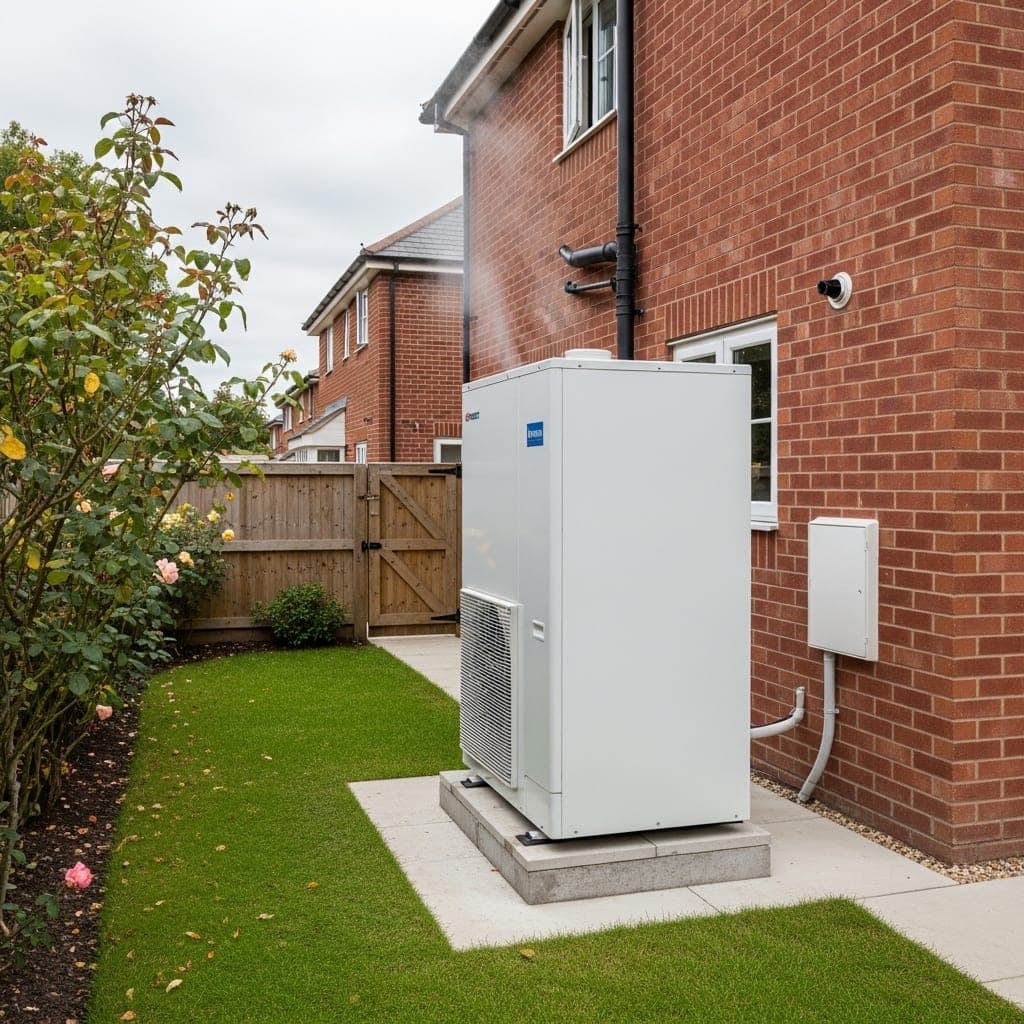
Yes, private landlords are fully eligible for the Boiler Upgrade Scheme (BUS) grant. You don't need to live in the property. If you own it and it has a fossil fuel heating system, you can claim £7,500 toward an air source or ground source heat pump installation.
Most landlords who know about BUS think it's for homeowners. It isn't. The grant is available per property, which means a portfolio landlord with five qualifying homes can claim up to £37,500 in total. The money comes off the top of your installation invoice, the typical net cost after the grant is £5,000–£6,500 for an air source heat pump.
There's also a compliance angle. Government has proposed an EPC C minimum for the private rented sector from 1 October 2030, and under the Home Energy Model that would come with a heating system metric where heat pumps score far better than gas boilers. The proposal is not law: it needs primary legislation and then a statutory instrument, and the minimum you must let at in England and Wales today is band E. Installing a heat pump now cuts heating costs and puts you ahead of a standard that looks likely to arrive.
What Is the Boiler Upgrade Scheme?
The Boiler Upgrade Scheme (BUS) is a government grant programme administered by Ofgem. It runs in England and Wales only, and an April 2026 amendment extended it to 2030 (it had previously been due to end in March 2028). The budget for 2025/26 was £295 million. Scotland and Northern Ireland have their own routes: in Scotland, the Home Energy Scotland Grant and Loan.
Current grant amounts:
- Air source heat pump (ASHP): £7,500
- Ground source heat pump (GSHP), including water source and shared ground loops: £7,500
One important change made in 2025: the previous requirement to address loft insulation and cavity wall insulation recommendations before claiming BUS has been removed. Landlords no longer need to resolve outstanding insulation recommendations on the EPC before applying.
The grant is applied directly to your installation invoice. You don't receive it as a payment, your MCS certified installer claims it through Ofgem and deducts it from the amount they charge you.
Are Landlords Eligible for the BUS Grant?
Gov.uk is explicit: you qualify if you "own the property you're applying for (including if it's a business, a second home, or a property you rent out to tenants)."
To qualify, your property must meet all of the following:
- You are the owner (tenants cannot apply)
- The property currently has a fossil fuel heating system: gas, oil, LPG, or electric resistance heating
- The property has a valid EPC (EPCs are valid for 10 years)
- You use an MCS certified installer
- Installation must be commissioned within 120 days of grant approval
One detail landlords often get wrong: the tenant doesn't apply, you do. The process runs through your MCS installer, who handles the Ofgem paperwork and applies the grant to your bill. You initiate the process by finding an MCS certified installer and having them assess the property.
What Does It Cost After the Grant?
According to official MCS data, the average installed cost of an air source heat pump in the UK (late 2024) was £12,868. After the £7,500 BUS grant, the average net cost is approximately £5,368. British Gas reports most households pay £5,000–£6,000 after the grant.
| System | Typical Install Cost | BUS Grant | Typical Net Cost |
|---|---|---|---|
| Air source heat pump (ASHP) | £10,000–£14,000 | £7,500 | £2,500–£6,500 |
| Ground source heat pump (GSHP) | £18,000–£25,000 | £7,500 | £10,500–£17,500 |
Ground source systems are significantly more expensive due to ground loop excavation and are rarely the default choice for landlords. For most rental properties, particularly 2–4 bedroom houses, an air source heat pump at a net cost of £2,500–£6,500 is a realistic investment.
Additional costs to budget for: older radiator systems may need upgrading to larger panels to distribute heat effectively at lower flow temperatures. A buffer tank for hot water may also be required. A good installer will identify these during the initial survey.
To estimate the full cost for your specific property, use the EPCGuide property cost estimator.
Heat Pumps and EPC Ratings, What Landlords Need to Know
Under Current RdSAP 10
The EPC impact of a heat pump under the current assessment methodology (RdSAP 10, live since June 2025) is property-dependent and sometimes counterintuitive.
Under SAP energy cost calculations, electricity is priced higher per unit than gas. This means that in some property types, particularly those with existing gas boilers, the EPC's cost-based score can actually be lower after installing a heat pump, even though carbon emissions fall. Heat pumps work most efficiently in well-insulated properties, and SAP rewards this combination.
Properties already at EPC D (high) with reasonable insulation are the best candidates for a heat pump improving the rating to C under current RdSAP. Properties at E or below typically need combined insulation and heating upgrades to reach C.
Under the New Home Energy Model (HEM), Due H2 2027
This is where the BUS grant becomes a strategic decision, not just a financial one.
The government's January 2026 consultation response set out the MEES framework it intends to legislate for 2030. Under those proposals, landlords would need to meet two metrics under the Home Energy Model:
- Fabric Performance band C, covers walls, roof, windows, floors, and airtightness
- One secondary metric of your choice, either Heating System Efficiency or Energy Cost
A heat pump is the primary technology for meeting Heating System Efficiency band C. If your property has adequate fabric performance, installing a heat pump delivers compliance on the second metric.
HEM was originally due in October 2026 and has been moved to H2 2027, becoming the only methodology from October 2029. The proposed compliance date is 1 October 2030, covering every tenancy, new and existing, if the legislation passes. Installing a heat pump now, while the BUS grant is available, positions your property ahead of that.
If your property is currently EPC D and you're planning your upgrade path, the D-to-C upgrade guide for landlords covers all improvement routes and how they stack under both current RdSAP and HEM metrics.
For context on how MEES works today and what is proposed for 2030, see the MEES regulations guide.
What BUS Won't Do
These are the restrictions competitors rarely explain clearly:
Hybrid systems are not eligible. If you want to keep your existing gas boiler and add a heat pump alongside it ("hybrid" configuration), BUS won't fund it. The scheme requires you to replace the fossil fuel system, not supplement it.
Social housing is excluded. BUS is for privately owned property, social housing has separate schemes.
New builds are mostly excluded. Properties where a developer is still building are not eligible. A finished new build with a fossil fuel boiler installed can qualify, but purpose-built new builds with heat pumps fitted by the developer are out.
One grant per property. If a property has already received government-funded heat pump support, it cannot claim BUS.
England and Wales only. Scotland operates separate energy efficiency schemes.
BUS vs ECO4 for Landlords
ECO4 (Energy Company Obligation 4) was extended and now runs until 31 December 2026, with measures needing to be installed by then and no new applications accepted after that date. It offers free or heavily subsidised heating upgrades, but eligibility is driven by tenants on qualifying benefits, landlords can't initiate it independently.
BUS is different: it's income-independent and landlord-led. You don't need tenants on benefits to access it. This makes BUS the primary grant route for most private landlords in 2026 and beyond.
How to Apply for the BUS Grant as a Landlord
- Check your property qualifies, valid EPC, fossil fuel heating currently installed, property in England or Wales, not previously received government heat pump funding
- Find an MCS certified installer, use the directory at mcscertified.com/find-an-installer, only MCS certified installers can process the BUS grant
- Book a heat loss survey, the installer assesses your property and confirms suitability. This step is typically free
- Installer applies and installs, your installer submits the Ofgem grant application. Installation must be completed within 120 days of approval. The £7,500 is deducted from your invoice at completion
Which Properties Benefit Most from BUS?
The strongest candidates for an ASHP installation under BUS are:
- 2–4 bedroom terraced or semi-detached houses with oil, LPG, or older electric heating, these properties have the most to gain on running costs and EPC metrics
- EPC D-rated properties with reasonable insulation already in place, best candidates for pushing to C under current RdSAP
- Properties between tenancies, installation is easier and faster with vacant possession, though it can be done with tenants in situ with proper notice
Properties less suited to BUS (but not excluded):
- Flats where freeholder consent is needed, check your lease before proceeding
- Victorian solid-wall properties with no insulation, heat pump efficiency is lower without insulation; tackle fabric first
- Properties with EPC A/B already, the compliance case is weaker (though running cost benefits may still apply)
Solar PV pairs well with heat pumps, reducing running costs significantly. The solar panels and EPC ratings guide for landlords covers the combined case. Green mortgage lenders increasingly recognise heat pump installations as a positive EPC signal, the buy-to-let mortgage and EPC guide has current lender criteria.
Frequently Asked Questions
Can I apply while my tenant is in the property?
Yes, with appropriate notice. Many landlords prefer to time installations between tenancies to minimise disruption.
Will a heat pump automatically give me EPC C?
Not automatically under current RdSAP, it depends on your property's insulation and current band. Under HEM (due H2 2027), a heat pump directly addresses the proposed Heating System Efficiency metric and, combined with adequate fabric performance, would be the clearest path to dual-metric C.
Do I need to insulate before applying?
No. The requirement to address outstanding insulation recommendations before applying was removed in 2025.
Is the £7,500 grant per property or per landlord?
Per property. Each qualifying property you own can claim separately, provided none have previously received government-funded heat pump support.
Does the BUS grant count toward the MEES cost cap?
No. BUS money does not count towards the cap under either the rules in force or the proposed £10,000 cap. That is the point of exhausting grant routes first: £7,500 of BUS funding leaves your own spend against the cap untouched. The cap in force today is £3,500 including VAT, with £10,000 proposed alongside the band C standard. Under the proposed cap, other third-party funding, such as ECO4 or local grants, could count towards it.
The £7,500 BUS grant makes heat pump installation one of the most cost-efficient EPC upgrades available to landlords right now, and it addresses the heating system metric that the proposed 2030 standard would be measured against. Use the property cost estimator to see what the numbers look like for your specific property.