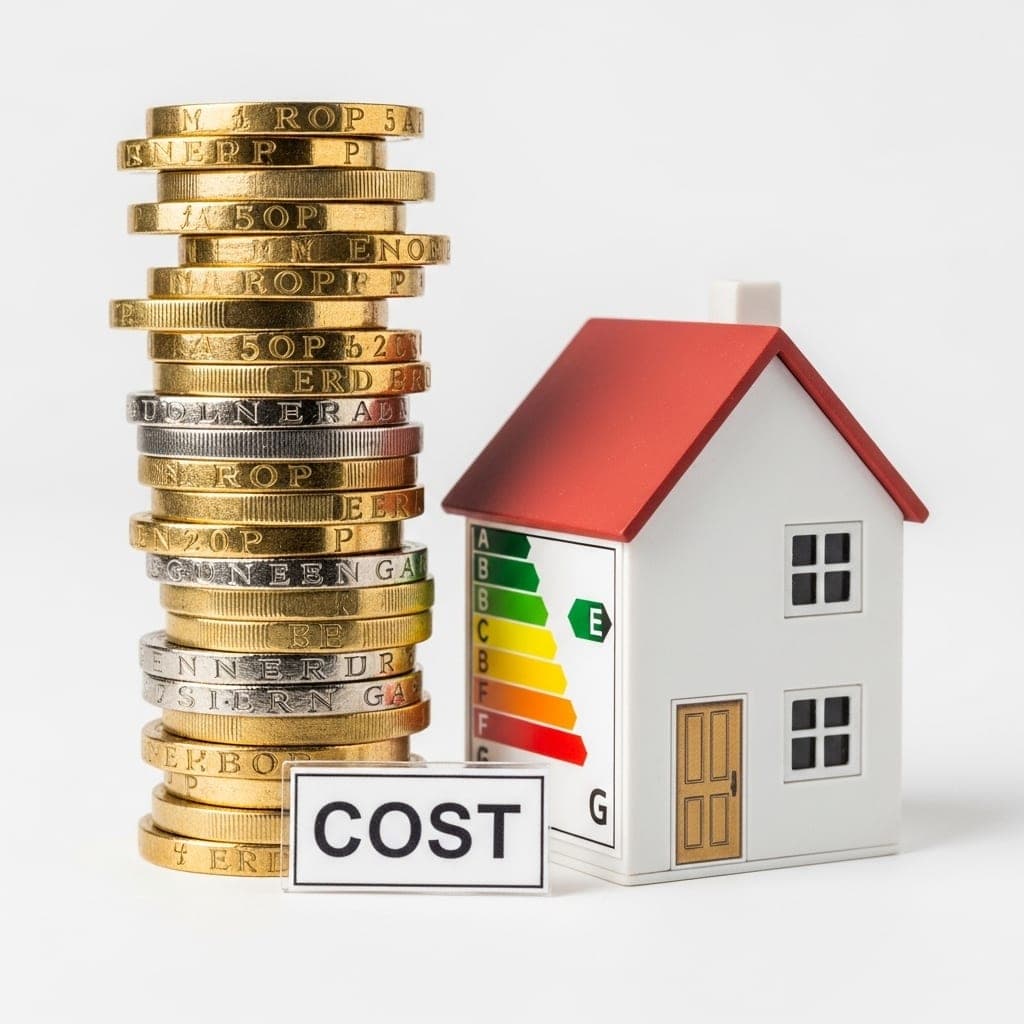
The £10,000 EPC cost cap is a government proposal. It is not law. It appears in the response published on 21 January 2026 alongside a proposed minimum of band C from 1 October 2030. Both need primary legislation and then a statutory instrument amending the Energy Efficiency (Private Rented Property) (England and Wales) Regulations 2015. No such instrument has been laid, and an almost identical package was scrapped in September 2023.
The cap in force today is £3,500 including VAT per property, measured against the band E minimum that has applied to all existing tenancies since 1 April 2020. Band D is legal to let. If you spend £3,500 including VAT on the improvements recommended on your EPC and the property still cannot reach E, you can register a high-cost exemption on the PRS Exemptions Register and keep letting legally.
Only your own spending counts toward the cap. Grant money does not, so a measure funded through ECO4 or the Boiler Upgrade Scheme leaves your cap intact.
EPCGuide's analysis of 75,000 lodged certificates across 15 local authorities shows that around 33.8% of privately rented properties currently sit below EPC C, with the bulk in bands D and E. Those landlords are compliant today. What follows is what would count if the proposals become law, so you can plan and keep the right records now.
What Is the Proposed £10,000 Cost Cap?
Under the proposals, £10,000 would be the maximum a landlord is required to spend per property on the improvements needed to reach band C. Properties valued under £100,000 would instead have a cap of 10% of market value. The £10,000 figure replaced an earlier £15,000 consultation proposal.
The proposed rule: make all the improvements your EPC assessor recommends, up to a total spend of £10,000. Spend that much without reaching C and you could register a cost cap exemption.
When would the cap start counting?
Government has proposed 1 October 2025 as the date from which landlord spending counts, including the cost of obtaining the EPC itself. That start date is part of the proposal, not settled law.
The practical implication, if the timetable holds: landlords who started improvements in late 2025 or early 2026 would already be building cap credit ahead of a compliance date of 1 October 2030. Keep the receipts either way. They cost nothing to file and they are impossible to reconstruct later.
Which Improvements Count? The Full List
Under both the current rules and the proposals, the qualifying works are the "relevant energy efficiency measures" recommended by an accredited EPC assessor. In practice that covers the following categories:
Insulation measures
| Improvement | Typical cost | Typical SAP impact |
|---|---|---|
| Loft insulation (270mm) | £300-£600 | +4-8 points |
| Cavity wall insulation | £350-£500 | +5-10 points |
| Internal wall insulation | £2,000-£8,000 | +4-12 points |
| External wall insulation | £5,000-£20,000+ | +8-15 points |
| Floor insulation | £500-£2,000 | +2-4 points |
| Hot water cylinder jacket | £20-£50 | +1-2 points |
Heating systems
- Boiler replacement (to modern A-rated condensing boiler)
- Air source heat pump (ASHP) installation
- Ground source heat pump (GSHP) installation
- Storage heater upgrades
- Communal heating connection (where available)
Heating controls
- Programmers and timers
- Room thermostats
- Thermostatic radiator valves (TRVs)
- Smart heating controls (Tado, Nest, Hive, etc.)
- Hot water cylinder thermostat
Windows and doors
- Double glazing or triple glazing replacement
- Secondary glazing
- Draught-proofing (windows and doors)
- Letterbox draught excluders
Renewable energy
- Solar PV panels (photovoltaic)
- Solar thermal hot water system
- Battery storage (where combined with solar)
Does the EPC assessment fee count?
Under the proposals, yes: the cost of obtaining the EPC itself would count toward the cap, typically £50 to £150. Keep the assessor's invoice with the rest of your records.
What Doesn't Count?
The improvements must be on your EPC assessor's recommended list or be recognised energy efficiency measures. The following do not count toward the cap:
- Grant funding. Only your own spend counts, under both the current rules and the proposals
- General home maintenance (replacing a broken radiator, repainting walls)
- Kitchen or bathroom renovations
- Garden works
- New flooring or carpet
- Decorative upgrades
- Works that improve comfort but have no EPC impact (a new shower that does not change the hot water system type, for instance)
The test is: does the improvement appear on your EPC assessor's recommendations, or is it a recognised energy efficiency measure under the MEES regulations? If it's neither, it doesn't count.
How to Track Your Spend Toward the Cap
This is where most landlords fall short. Tracking your cap spend requires keeping a proper paper trail from day one, not reconstructing it in 2029 when you're trying to register an exemption.
Documentation checklist
Keep all of the following for every qualifying improvement:
- A copy of your current EPC certificate (with the improvement recommendations listed)
- Invoice or receipt for each piece of work, dated after 1 October 2025
- Confirmation that the works were carried out by a suitably qualified installer (TRUSTMARK-registered where relevant)
- Any updated EPC certificate commissioned after works are complete
- A running total of qualifying spend per property
Store these in a folder per property, either physical or digital. If you use property management software, keep a note against each property.
A high-cost exemption application needs three things regardless of which cap applies: a list of the improvements recommended on your EPC and which of them you carried out, invoices and receipts showing what you spent, and an EPC or assessor's evidence showing that no further relevant improvement can be made within the cap.
Planning Around the Cap
If your property is already at D: you are compliant today and under no obligation to act. Most D-to-C improvements cost £1,000 to £5,000, so if the 2030 proposal becomes law you would likely reach C well inside the proposed cap. Acting early tends to mean better installer availability.
If your property is at E: you are compliant today. Reaching C typically costs £3,000 to £10,000 depending on the upgrade path, so you would probably use most of the proposed cap. Prioritise the improvements your assessor flags first: they deliver the most SAP points per pound. See our guide to the cheapest EPC improvements.
If your property is at F or G: you are already unlawful to let without a registered exemption, and the relevant cap is the £3,500 including VAT one measured against band E. Spend that on the recommended improvements without reaching E and you can register a high-cost exemption, which lasts five years. Government has proposed ten-year exemptions under the new regime, but that is not law.
Why the October 2025 date matters: the proposed start date exists so landlords can spread costs across several years rather than face one bill in 2029 or 2030. Phasing work early generally means better availability and better prices, whether or not the proposals survive.
Combining Grants With Your Cap Spend
Grant schemes can cut your out-of-pocket cost substantially if your property or tenants qualify, and because grant money does not count toward the cap, using one leaves your own cap allowance intact.
ECO4: Available where your tenants meet low-income or benefit eligibility criteria. Covers up to £14,000 per property for insulation and heating upgrades. ECO4 closes 31 December 2026, so landlords with eligible tenants need to act now. The Warm Homes Plan takes over from 2027. See our full ECO4 landlord guide.
Boiler Upgrade Scheme (BUS): Offers £7,500 toward a qualifying air or ground source heat pump. Landlords are eligible and the scheme is not means-tested. The BUS is open now and runs alongside the MEES cost cap. Read the Boiler Upgrade Scheme application guide for eligibility criteria and the full application process.
Note: under the rules in force, only the landlord's own spending counts toward the cap. Third-party grant funding does not, which is why a grant-funded measure improves your rating without eating into your cap allowance.
What Happens When You Hit the Cap and Still Can't Reach the Standard?
If you have spent the cap on your EPC assessor's recommended improvements and the property still falls short, you register a high-cost exemption on the PRS Exemptions Register.
You will need to provide:
- Evidence of the improvements made (invoices, receipts)
- The total qualifying spend, which must reach the cap
- A current EPC confirming the property is still below the required band despite the works
- Evidence that no further works remain within the recommended improvements list
Once registered, the exemption lasts five years under the rules in force. After that you must try again, or register a fresh exemption if you still cannot comply. Government has proposed ten-year exemptions on three grounds under the new regime, which is not yet law.
Read our full guide to exemption types and how to register.
Frequently Asked Questions
Is the £10,000 cost cap law?
No. It is a proposal in the government response of 21 January 2026, tied to a proposed band C standard from 1 October 2030. It needs primary legislation and then a statutory instrument amending the 2015 Regulations, and none has been laid. The cap in force is £3,500 including VAT, measured against band E.
Does grant funding count toward the cap?
No. Only your own spending counts. If a £5,000 heat pump is half-funded by a grant, the £2,500 you actually paid is what counts toward your cap, and the grant leaves the rest of your allowance intact.
Does the cap reset between properties?
No. Each property has its own separate cap. If you own five properties, each has its own limit and each tracks improvement costs independently.
What if I spent money before October 2025?
The proposals set 1 October 2025 as the date from which landlord spending would count toward the proposed £10,000 cap. Spending before that date would not count and cannot be backdated. That start date is part of the proposal and is not settled law.
My property is under £100,000 in value, does that change things?
Under the proposals, yes. Properties valued below £100,000 would have a cap of 10% of market value instead of the flat £10,000, which is intended to protect landlords of very low-value properties from disproportionate costs. This alternative cap does not exist in the rules in force.
Do I need to spend the full cap before claiming the exemption?
Yes. A high-cost exemption requires evidence that you have spent up to the cap on the recommended improvements. It is not an upfront opt-out. You must attempt compliance first and reach the cap before registering.
Does the Boiler Upgrade Scheme grant count toward the cap?
No. The Boiler Upgrade Scheme gives landlords £7,500 toward a qualifying heat pump with no means test, and grant money does not count toward the cost cap. Only your own contribution does. A typical air source heat pump runs £10,000 to £15,000, so the grant reduces both your bill and the amount of your cap allowance the measure consumes.
What would happen to the proposed cap under the Warm Homes Plan?
The Warm Homes Plan is expected to launch in 2027 as the successor to ECO4, focused on low-income households. The proposed £10,000 cap is tied to the proposed band C standard rather than to any grant scheme, so the two are separate questions. EPCGuide will update this page if either changes.
What to Do Next
If you have carried out any EPC improvement works since October 2025, locate the invoices and receipts today and start a tracking file. If the proposals become law, that spending counts. If they do not, you have lost nothing but a folder.
If you haven't started yet, use our property cost estimator to see what typical improvement costs look like for your property type and current EPC band. For D-rated properties in particular, the cost of reaching C is often well under the proposed cap, and prices tend to be better before a deadline crowd forms.