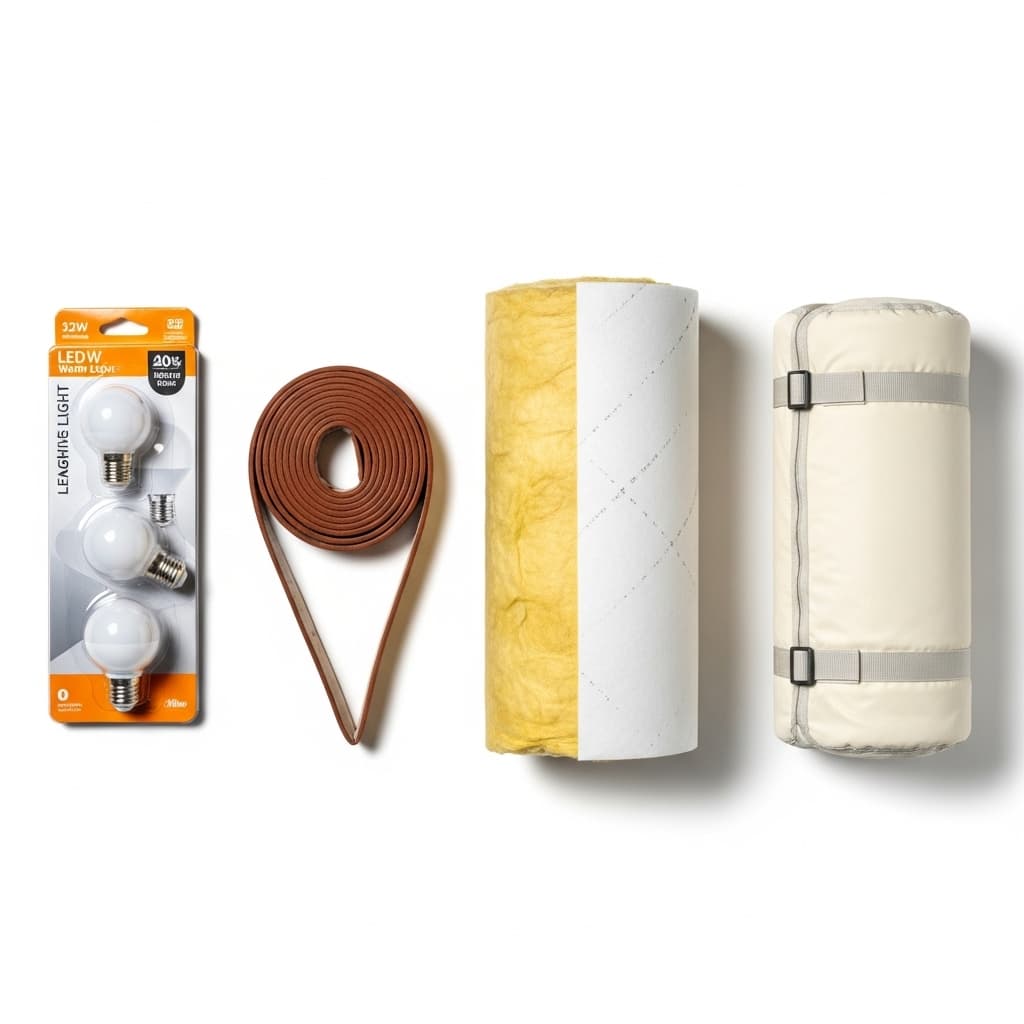
The cheapest way to improve your EPC rating is a hot water cylinder jacket, costing as little as £15 and gaining up to 3 EPC points. That works out to roughly £8 per SAP point gained. LED lighting comes second at around £30 per point. Both are DIY jobs that take less than an hour.
Most guides rank EPC improvements by total cost. That is the wrong metric. A £500 upgrade that gains 15 points is far better value than a £300 upgrade that gains 2 points. What matters is cost per EPC point, the amount you spend for each SAP point gained on your certificate.
EPCGuide's analysis of 29.2 million EPC records shows that landlords consistently overspend on the wrong measures. They skip the cheap wins and jump straight to expensive upgrades. This guide fixes that. Every improvement is ranked by cost per point so you can spend the least to gain the most.
The Full Cost-per-Point Ranking
This table ranks every common EPC improvement by its cost per SAP point gained. Costs reflect 2026 installed prices for a typical 3-bed mid-terrace. Point gains are based on EPCGuide's analysis of real EPC assessments across 29.2 million records.
| Rank | Improvement | Typical Cost | Points Gained | Cost per Point | Difficulty |
|---|---|---|---|---|---|
| 1 | Hot water cylinder jacket | £15--25 | 1--3 | ~£8/point | DIY |
| 2 | LED lighting upgrade | £100--300 | 3--8 | ~£30/point | DIY |
| 3 | Loft insulation top-up | £300--600 | 5--15 | ~£40/point | Trade |
| 4 | Draught-proofing | £100--400 | 2--5 | ~£55/point | DIY/Trade |
| 5 | Smart heating controls | £200--500 | 3--8 | ~£55/point | Trade |
| 6 | Cavity wall insulation | £500--1,500 | 10--20 | ~£65/point | Trade |
| 7 | Solid floor insulation | £1,000--3,000 | 5--10 | ~£250/point | Trade |
| 8 | Heat pump | £8,000--15,000 | 15--40 | ~£350/point | Specialist |
| 9 | External wall insulation | £5,000--15,000 | 15--30 | ~£400/point | Specialist |
| 10 | Double glazing | £3,000--8,000 | 5--10 | ~£650/point | Trade |
Source: EPCGuide analysis of 29.2 million EPC records. Costs reflect 2026 installed prices. Point gains vary by property type, existing measures, and SAP methodology.
The first six improvements on this list cost under £1,500 each. Combined, they can add 24--59 SAP points. Most D-rated properties only need 9--14 points to reach band C.
Quick Wins Under £500
These four improvements cost less than £500 combined. Every landlord should do them before considering anything else.
1. Hot water cylinder jacket (£15--25, up to 3 points)
If your property has a hot water cylinder without a factory-fitted jacket, wrapping it in a British Standard 80mm jacket is the single cheapest EPC improvement that exists. They cost £15--25 from any hardware shop, fit in ten minutes, and the SAP methodology rewards them directly.
Not every property has a cylinder. Combi boilers heat water on demand and do not have one. But if yours does, and it is unlagged or has a thin old jacket, this is free money.
Cost per point: approximately £8. Nothing else comes close.
2. LED lighting (£100--300, 3--8 points)
The SAP calculation scores the percentage of fixed lighting outlets using low-energy bulbs. If your property still has halogen downlights or incandescent fittings, switching every fixed light to LED is the second-best value improvement available. A full swap for a 3-bed property costs £100--300. GU10 replacements for halogen spotlights cost £2--4 each.
EPCGuide's data shows properties moving from less than 50% low-energy lighting to 100% gain 3--8 SAP points. Note: the EPC only counts fixed lighting. Plug-in lamps do not affect the score.
3. Draught-proofing (£100--400, 2--5 points)
Sealing gaps around windows, doors, letterboxes, loft hatches, and pipe entries reduces air leakage. Professional draught-proofing for a full house runs £200--400, though DIY kits for doors and windows cost under £100. Priority areas: front and back doors, sash windows, letterboxes, and the loft hatch.
For Victorian properties with timber sash windows, specialist draught-proofing strips can be fitted without altering the window appearance. See our Victorian sash window upgrades guide.
4. Smart heating controls (£200--500, 3--8 points)
If your EPC report lists "heating controls" as a recommended measure, upgrading to a programmable room thermostat, TRVs on all radiators, and a time/temperature programmer adds 3--8 SAP points. Smart thermostats (Hive, Nest, tado) satisfy the requirements. TRVs cost £8--15 each. A full controls upgrade for a 3-bed house runs £200--500 installed.
Total for all four quick wins: £415--1,225. Potential gain: 9--24 SAP points. For many D-rated properties, that is enough to reach band C without further work.
Use EPCGuide's EPC cost calculator to estimate the exact combination for your property.
The D-to-C Sweet Spot
According to the English Housing Survey, approximately 55% of England's 4.5 million rental properties sit below EPC band C. The majority of those are band D, scoring between 55 and 68 on the SAP scale. Band C starts at 69.
That means most non-compliant landlords need somewhere between 1 and 14 SAP points. EPCGuide's analysis shows that the median D-rated rental property needs just 9 points to cross into band C.
Here is what that typically looks like in practice.
The 3-upgrade formula
For a typical D-rated property, the combination that gets you to C most cheaply is:
- Loft insulation top-up to 270mm (£300--600, 5--15 points)
- Heating controls upgrade (£200--500, 3--8 points)
- LED lighting swap (£100--300, 3--8 points)
Combined cost: £600--1,400. Combined gain: 11--31 SAP points.
This three-upgrade package is enough for roughly 70% of D-rated properties based on EPCGuide's dataset. The properties it does not cover are typically solid-walled homes (pre-1920s construction) where insulation options are more limited and more expensive.
When cavity wall insulation changes everything
If your property has unfilled cavity walls, adding cavity wall insulation (£500--1,500, 10--20 points) is often the single highest-impact measure available. It scores well on cost per point at roughly £65 per SAP point, and the point gain is large enough to jump an entire band on its own.
Properties built between the 1930s and 1990s almost always have cavity walls. Properties built before 1920 almost never do. If yours does, confirm suitability with a free cavity inspection before committing.
For a full breakdown of upgrading D to C, see our dedicated D to C upgrade guide.
How Results Vary by Property Type
Not every property responds the same way to the same upgrades. EPCGuide's analysis of 29.2 million EPC records shows significant variation in cost-per-point by property type.
Victorian terraces (pre-1919)
Victorian terraces are the hardest and most expensive property type to improve. They have solid walls (no cavity to fill), single-glazed sash windows, suspended timber floors, and often poor loft access. The cheap wins still apply: LED lighting, draught-proofing, and heating controls. But reaching band C from band E or low D usually requires either internal wall insulation (£4,000--8,000) or external wall insulation (£8,000--15,000).
The cost per point for solid wall insulation is high, around £400 per SAP point. Government grants through ECO4 or the Warm Homes Local Grant can reduce this significantly for eligible properties. Check our grant eligibility checker to see what funding is available.
For a detailed breakdown, read our Victorian terrace EPC guide and Victorian terrace property type guide.
1930s semi-detached
This is the sweet spot for cheap EPC gains. Most 1930s semis have cavity walls, accessible lofts, and straightforward heating systems. The three-upgrade formula (loft insulation, heating controls, LEDs) plus cavity wall insulation typically moves a band D property to band C for under £2,500 total. Some manage it for under £1,000.
Cost per point for the full package: roughly £50--80. See our 1930s semi guide for specific figures.
Modern flats (post-2000)
Post-2000 flats typically already have cavity wall insulation, double glazing, and reasonable heating systems. If they score band D, the issue is usually old boiler efficiency, basic heating controls, or outdated lighting. The quick wins (LEDs, controls, draught-proofing) are often enough. Leasehold properties face additional constraints covered in our leasehold flat EPC guide.
What NOT to Waste Money On
Some improvements have poor cost-per-point ratios and should only be done when genuinely necessary.
Double glazing (£650 per point)
Double glazing is the worst value EPC improvement on a cost-per-point basis. At £3,000--8,000 for a full house and only 5--10 SAP points gained, you are paying roughly £650 per SAP point, 80 times worse than a hot water cylinder jacket.
Replace windows when they are genuinely at end of life. Do not replace functional single-glazed windows purely for EPC gains. Secondary glazing (£100--300 per window) is a cheaper interim solution, particularly for listed buildings where replacement is restricted.
Solar panels (good for bills, modest for EPC)
Solar PV panels reduce energy bills but their SAP impact is moderate: 5--10 points for a 3--4 kW system costing £5,000--8,000. The cost per point is around £600--800, worse than double glazing. Unless your property has ideal south-facing roof orientation, solar panels are an expensive way to gain EPC points.
Over-specifying insulation
Insulating a loft to 400mm when 270mm is the SAP maximum scoring threshold wastes money. No extra points beyond 270mm. Similarly, filling a cavity wall that already has partial insulation may yield fewer points than expected. Always check your EPC recommendations before ordering work.
How Grants Change the Maths
Government grants can dramatically reduce the effective cost per point for expensive measures. Here is how the major schemes affect the ranking as of May 2026.
Boiler Upgrade Scheme (BUS)
The Boiler Upgrade Scheme provides £7,500 toward an air source heat pump. A typical heat pump costs £8,000--15,000 installed, so the grant reduces the landlord's cost to £500--7,500. That changes the effective cost per point from £350 to as low as £18 per point. If your property is suitable for a heat pump, the BUS grant makes it one of the best value upgrades available. Current funding runs until March 2028 per GOV.UK.
ECO4
The Energy Company Obligation (ECO4) can fully fund insulation and heating upgrades where the tenant receives qualifying benefits (Universal Credit, Pension Credit, other means-tested benefits). That reduces the cost per point to £0 for loft insulation, cavity wall insulation, solid wall insulation, and boiler replacement. ECO4 runs until December 2026. The successor Warm Homes Plan has been announced but details are being confirmed.
Warm Homes Local Grant
Regional grants through local authorities vary. Some councils offer £5,000--10,000 toward insulation and heating measures with landlord contributions of 33--50%. Check availability via EPCGuide's grant checker or see our EPC grant conditions guide.
Common Mistakes Landlords Make
Starting with the most expensive upgrade
Jumping straight to a boiler replacement or new windows without doing the cheap wins first is the most common mistake. Loft insulation, lighting, and controls cost a fraction of a boiler and often deliver enough points on their own. Work through the cost-per-point ranking from top to bottom.
Not getting a fresh EPC before planning work
Your current EPC tells you exactly which measures the assessor recommends, calibrated to your specific property. Working from generic advice without checking your certificate first leads to wasted money. Check your rating free at the GOV.UK EPC register.
Doing upgrades in the wrong order
Insulation should always come before heating upgrades. If you upgrade the boiler first and insulate later, the boiler may be oversized for the improved building fabric. Insulate first, then right-size the heating.
Ignoring the reassessment
EPC improvements only count when a new assessment confirms them. Budget £60--120 for a reassessment after completing works. See our EPC assessment cost guide.
Assuming one upgrade is enough
A single measure rarely moves a property a full band. D-rated properties typically need 2--4 measures to reach C. Plan a package, not a single fix.
DIY vs Professional Installation
Some improvements can be done by a competent DIY landlord. Others require certified installers.
| Improvement | DIY Possible? | Certification Needed? |
|---|---|---|
| Hot water cylinder jacket | Yes | No |
| LED lighting | Yes | No (unless new wiring needed) |
| Draught-proofing | Yes (doors, windows) | No |
| Loft insulation top-up | Yes (if accessible) | No, but TrustMark recommended |
| Smart heating controls | Partially (smart thermostat) | Gas Safe for boiler wiring |
| Cavity wall insulation | No | TrustMark + guarantee scheme |
| Floor insulation | Sometimes | Building regs may apply |
| Double glazing | No | FENSA or CERTASS registered |
| Wall insulation | No | TrustMark + PAS 2030 |
| Heat pump | No | MCS certified installer |
If you plan to claim work under ECO4 or the Boiler Upgrade Scheme, the installer must be TrustMark registered and PAS 2030/2035 certified. DIY work will not qualify for grant funding and may not be recognised by an EPC assessor.
How to Predict Your EPC Score After Upgrades
Before spending anything, use EPCGuide's EPC predictor tool to estimate how specific improvements will affect your SAP score. Enter your property details and select the measures you are considering. The tool calculates the likely new score based on the SAP 10 methodology.
This avoids the common trap of spending £2,000 on upgrades only to find you are still one point short of band C.
Frequently Asked Questions
What is the cheapest single improvement to boost an EPC rating?
A hot water cylinder jacket is the cheapest EPC improvement, costing £15--25 and gaining 1--3 SAP points. That works out to approximately £8 per point gained. LED lighting is the second cheapest at around £30 per point. Both are DIY jobs.
How much does it cost to go from EPC D to C?
EPCGuide's analysis shows the typical cost to move from band D to band C is £600--2,500, depending on the property type and which measures are needed. Properties with cavity walls and accessible lofts tend to cost under £1,500. Solid-walled Victorian properties cost more, typically £3,000--8,000 without grant funding.
Can I improve my EPC rating without spending thousands?
Yes. The four cheapest improvements, a hot water cylinder jacket, LED lighting, draught-proofing, and smart heating controls, cost £415--1,225 combined and can gain 9--24 SAP points. For many D-rated properties, that is enough to reach band C. No single improvement on this list requires spending thousands.
Which EPC improvements give the most points?
Cavity wall insulation (10--20 points), heat pumps (15--40 points), and external wall insulation (15--30 points) give the most SAP points per installation. However, they are also the most expensive. On a cost-per-point basis, hot water cylinder jackets, LED lighting, and loft insulation top-ups deliver better value.
Is it worth getting a heat pump just for EPC points?
Without a grant, a heat pump costs £8,000--15,000 and scores roughly £350 per SAP point. That is poor value compared to insulation and controls. With the £7,500 Boiler Upgrade Scheme grant, the effective cost drops to £500--7,500, making the cost per point as low as £18. If your property qualifies for BUS funding, a heat pump becomes one of the best value options. If it does not, exhaust cheaper measures first.
Do I need to hire a professional for every EPC improvement?
No. Hot water cylinder jackets, LED lighting, draught-proofing, and basic loft insulation top-ups can all be done DIY. Cavity wall insulation, external wall insulation, heat pumps, and window replacements require certified professionals. If you plan to claim government grants, all work must be done by TrustMark-registered, PAS 2030-certified installers.
What is the EPC C deadline for landlords?
The EPC C deadline for rental properties in England is 2030. From that date, all new tenancies must have a minimum EPC rating of band C. Existing tenancies will need to comply within a transitional period. The £10,000 cost cap for landlord spending has been confirmed. For full details, see EPCGuide's 2030 deadline guide.
How often should I get a new EPC assessment?
An EPC is valid for 10 years. However, if you have completed improvement works, you should get a new assessment to update your certificate. The new assessment will reflect the upgrades and produce a higher SAP score. Assessment costs range from £60--120 depending on property size and location. See our EPC assessment cost guide.
The Bottom Line
The cheapest ways to improve your EPC rating follow a clear hierarchy. Work through the cost-per-point ranking from top to bottom. Do the £15 cylinder jacket. Swap the lights to LED. Draught-proof the doors and windows. Top up the loft insulation. Upgrade the heating controls.
For most D-rated rental properties, that package costs under £1,500 and gains enough SAP points to reach band C. Only move to expensive measures like wall insulation, windows, or heat pumps if the cheap wins are not enough.
Check your current EPC, run the numbers through EPCGuide's EPC predictor and cost calculator, and work out which combination gets you over the line for the least money. For a full breakdown of costs by upgrade type and property, see our complete guide to EPC improvement costs. The 2030 deadline is coming, but compliance does not have to cost five figures.
Costs in this article reflect 2026 installed prices and are based on EPCGuide's analysis of 29.2 million EPC records, cross-referenced with figures from the Energy Saving Trust and GOV.UK. Individual property results will vary based on construction type, location, and existing measures.