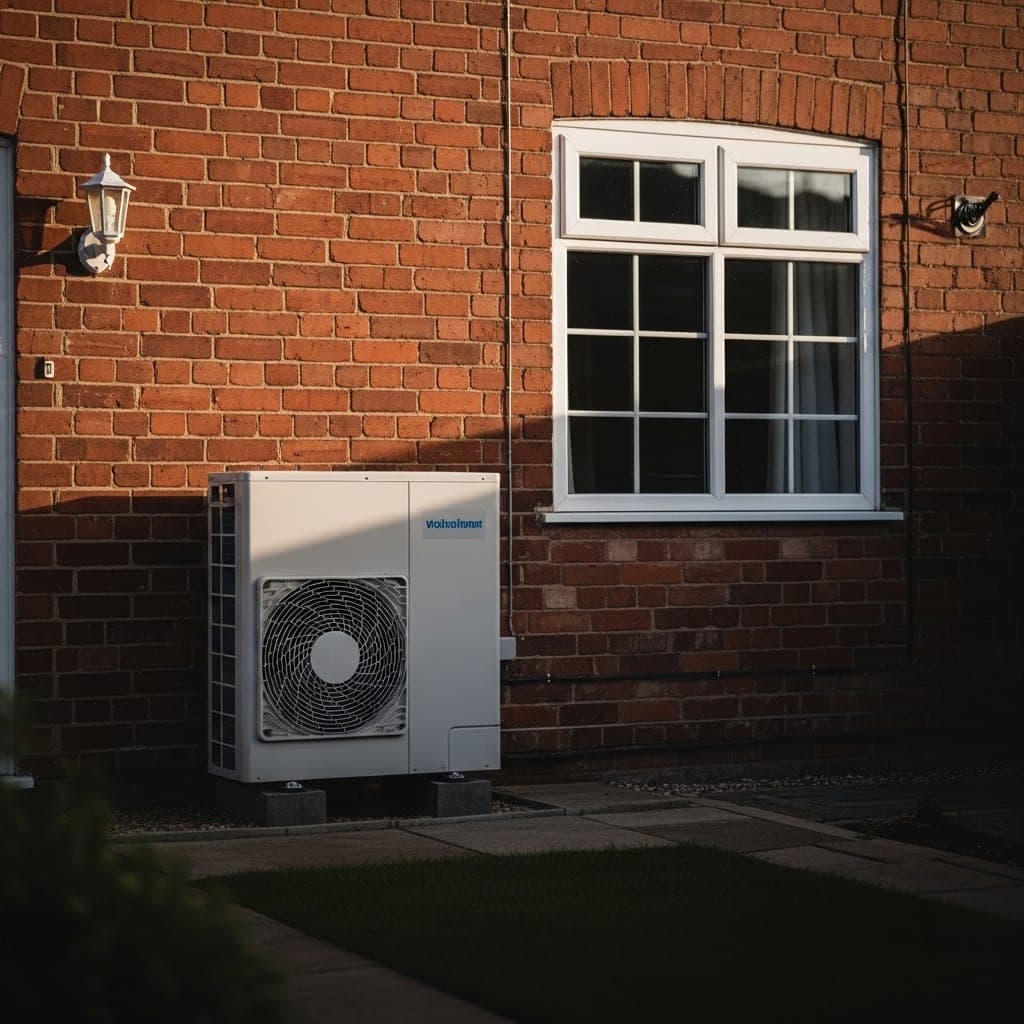
Boiler Upgrade Scheme Regulations 2026: 28 April Changes for Landlords
The Boiler Upgrade Scheme (England and Wales) (Amendment) Regulations 2026 came into force on 28 April 2026, making four substantive changes: the EPC requirement was removed, the scheme was extended to 2030, air-to-air heat pumps became eligible at £2,500, and the installer definition was tied to MCS certification. For landlords, the EPC change is the biggest practical shift, because it opens the scheme to properties that previously failed the eligibility test. All four are in force now.
Key Facts
- Statutory instrument: SI 2026/390, The Boiler Upgrade Scheme (England and Wales) (Amendment) Regulations 2026
- In force: 28 April 2026
- Applies to: Applications submitted on or after 28 April 2026
- Scheme end: Extended from 2028 to 2030
- Grant values: £7,500 air-to-water heat pump, £7,500 ground-source heat pump, £5,000 biomass boiler, £2,500 air-to-air heat pump (new)
- Geography: England and Wales only (Scotland and Northern Ireland run separate grant schemes)
- EPC requirement: Removed; installer must provide alternative evidence where no EPC exists
What is the Boiler Upgrade Scheme?
The Boiler Upgrade Scheme (BUS) is a UK government grant scheme administered by Ofgem that pays property owners to replace fossil fuel heating with low-carbon alternatives. Owner-occupiers, private landlords, and small non-domestic property owners in England and Wales can apply through an MCS-certified installer. According to Ofgem's Property Owner Guidance v5 (March 2026), the application is made by the installer on the property owner's behalf, the grant is paid directly to the installer, and the grant value is deducted from the quoted installation cost.
The 2026 Amendment Regulations are the fourth set of changes since BUS launched in May 2022, and the most significant to date in eligibility terms. For a step-by-step walkthrough of applying, see our Boiler Upgrade Scheme application guide for landlords.
What are the four main changes from 28 April 2026?
1. EPC requirement removed
The biggest change. Regulation 5 of the 2022 Regulations is amended to strike the requirement that a property must have a valid Energy Performance Certificate to be an "eligible property". Where a valid EPC exists, it remains the primary evidence. Where no EPC is available, the installer must provide alternative evidence, typically a recent utility bill showing the existing fuel type plus photographs of the current heating system.
For landlords, this matters in three scenarios:
- Property has an expired EPC and you want to install a heat pump before commissioning a new assessment
- Property has an EPC older than 10 years (it expires) and you have not yet switched tenancies
- Property has no EPC at all (a narrow set of exempt buildings, or a property type that has never required one)
The EPC recommendation for loft and cavity wall insulation, previously a mandatory precondition, is also loosened under the new guidance. Installers can now assess insulation adequacy themselves during the survey.
2. Scheme extended to 2030
Regulations 2, 15 and 30 of the 2022 Regulations are amended to push the scheme end date from 2028 to 2030. That lines the scheme up with the date government has proposed for a band C minimum in the private rented sector, though the band C requirement itself is a proposal and not law. What is concrete is the funding window: BUS money is available to 2030, and the scarcity pressure that had been building against the old 2028 date has gone.
3. Air-to-air heat pumps added
Schedule 1A introduces a new grant category for air-to-air heat pumps at £2,500 per installation. Previously the scheme covered only air-to-water heat pumps (which feed wet heating systems, that is radiators or underfloor heating) and ground-source heat pumps. Air-to-air heat pumps feed conditioned air directly into rooms, bypassing the need for a wet heating system, and are typically cheaper to install. The lower grant reflects the lower installation cost.
For landlords, air-to-air is most relevant for:
- Flats without existing wet central heating, for example electric storage heater properties
- Small HMOs where room-by-room heating control simplifies billing
- Properties where replacing the full wet system would be disproportionately expensive
See our dedicated guide on the air-to-air heat pump grant for landlords for property-type suitability and installer selection.
4. Installer definition formalised
Regulation 2 is amended to define "installer" explicitly as a person certified by the Microgeneration Certification Scheme. This was previously the practical standard but was not in the primary regulations. The change closes a legal ambiguity and puts MCS certification on a statutory footing. Non-MCS installers cannot apply for the grant, regardless of the quality of their work.
Does the timing still matter?
Not any more. The changeover date has passed, so every application now goes in under the new rules automatically. If you held off in early 2026 because your property lacked a valid EPC, that blocker is gone and you can proceed.
One practical point: MCS-certified installers are busy, and lead times of a few months between enquiry and installation are common. Ask your installer for their own current lead time rather than working to a published average, and book early if your planning depends on a specific date.
How does a landlord actually apply?
The application flow has not changed:
- Find an MCS-certified installer. Use the MCS installer database at mcscertified.com or the Ofgem installer finder.
- Installer surveys the property. They confirm the heating system to be replaced, assess required capacity, and check insulation adequacy.
- Installer applies to Ofgem on your behalf. You provide proof of ownership and, where required, the EPC or alternative evidence.
- Ofgem issues a voucher valid for redemption once the installation is complete.
- Installer completes the work. You pay the installation cost minus the grant.
- Installer redeems the voucher from Ofgem after commissioning.
You, the landlord, must inform the tenant in writing before the installation begins. The updated MCS guidance issued in March 2026 clarifies that the tenant's written consent is not required, but reasonable notice is, typically 28 days. For a deeper look at grant conditions generally, see our article on EPC grant conditions for landlords.
How does this interact with the proposed 2030 EPC C requirement?
The BUS extension to 2030 is a deliberate policy alignment with the band C date government has proposed for the private rented sector. Keep the two apart in your head: the grant is law and the money is there, while band C is a proposal that still needs an Act of Parliament and a statutory instrument. The legal minimum to let a property today is band E.
A heat pump can lift a rating materially where the fabric is already reasonable, and is sometimes enough on its own to take a D-rated property into C. It is not always the cheapest route there. For a well-insulated Victorian terrace, a condensing gas boiler plus extra loft insulation can reach C for under £3,000, while a full heat pump installation runs £8,000 to £12,000 after the BUS grant. The calculation depends on:
- Your property's current fabric (insulation levels, glazing, air tightness)
- Whether you plan to hold the property into the 2030s, when gas heating may face further restrictions
- Whether you can package the heat pump with other works inside a single capital project
For a property-by-property framework, see our guide on whether to upgrade EPC now or wait and how the cost cap works: £3,500 including VAT today, with £10,000 proposed.
What does this mean for landlord cashflow?
Three practical takeaways:
First, the EPC requirement removal unlocks a cohort of properties that could not previously access BUS. If you hold a portfolio with expired or missing EPCs, revisit the eligibility ledger after 28 April.
Second, the air-to-air grant creates a new path for electrically-heated flats. A £2,500 grant reduces a £4,000-£5,000 air-to-air installation to under £2,500 net, which is roughly in line with replacing storage heaters like-for-like but delivers far lower running costs for tenants and a meaningful EPC lift.
Third, the scheme extension to 2030 removes the time pressure for landlords who were uncertain whether to apply. There is now a funding runway that runs past the date government has proposed for band C in the private rented sector. Grant values are set by regulation and can be changed by a further statutory instrument at any time, so £7,500 is what is available today rather than a guaranteed figure for the rest of the scheme.
Common mistakes landlords make with BUS
- Assuming the grant covers the full cost. BUS reduces the installation cost, it does not cover it. Net landlord outlay on a heat pump is typically £5,000-£10,000 after the grant.
- Missing the property-type restrictions. BUS does not fund new-build properties (from the Building Regulations standpoint, new builds should already be low-carbon) or social housing except in specific circumstances.
- Confusing BUS with ECO4. ECO4 is the Energy Company Obligation, a separate scheme funded by energy suppliers and targeted at low-income households. BUS and ECO4 can sometimes stack for the same property but are administered separately. ECO4 ends in December 2026 and is replaced by the Warm Homes Plan from 2027; see our guide on ECO4 ending December 2026 for landlords and what replaces ECO4.
- Not informing the tenant. Failure to give written notice can constitute harassment under the Protection from Eviction Act 1977.
- Using a non-MCS installer. Only MCS-certified installers can apply. Using an uncertified installer voids eligibility regardless of the quality of the work.
Frequently Asked Questions
Does the new regulation change who is eligible to apply?
The eligibility categories are unchanged: owner-occupiers, private landlords, and small non-domestic property owners in England and Wales can still apply. What changes is the evidential requirement. Properties without a valid EPC can now qualify, using alternative evidence provided by the installer.
Do I need to time my application around the changeover?
No, the changeover date has passed. Any application submitted now goes in under the amended rules, including the removed EPC requirement and the air-to-air category.
Is the air-to-air heat pump grant available for owner-occupier homes too?
Yes. The eligibility categories are the same across all grant types. The £2,500 air-to-air grant is available to owner-occupiers, private landlords, and eligible small non-domestic property owners.
Does the scheme now cover Scotland or Northern Ireland?
No. BUS remains an England and Wales scheme. Scotland operates the Home Energy Scotland Grant (up to £7,500 plus a £7,500 interest-free loan). Northern Ireland does not operate a direct equivalent but has smaller grants via the NI Sustainable Energy Programme.
If my property has an expired EPC, do I need a new one before applying?
Not any more, from 28 April 2026. The installer can provide alternative evidence (utility bill plus photographs). That said, commissioning a new EPC is still cheap (£60-£120) relative to the time an installer may spend assembling alternatives, and gives you an updated rating to work with for MEES compliance.
Does installing a heat pump under BUS affect my Section 21 or possession rights?
Not directly. The installation counts as landlord works and does not affect tenancy status. Give the tenant written notice and reasonable warning before access. If the tenant refuses access, the works may need to wait until void or tenancy end.
Can I use BUS for a shared ground loop on a block of flats?
Yes. The 2024 Amendment Regulations added shared ground loop array installations as eligible. The 2026 amendments do not change this. Each dwelling connected to the shared loop qualifies for the ground-source grant of £7,500.
How does BUS interact with the MEES cost cap?
The cap in force is £3,500 including VAT; the £10,000 cap is proposed and not yet law. Under the rules in force, third-party grant funding sits outside the £3,500 cap: GOV.UK guidance says that where funding covers the full cost of the improvements, "the cost cap does not apply", and where it covers part of the cost, a landlord "may need to top up with your own funds to the value of the cost cap". So a BUS grant does not eat into your cap. Under the proposed £10,000 cap, BUS money would also not count, but other third-party funding, such as ECO4 or local grants, could.