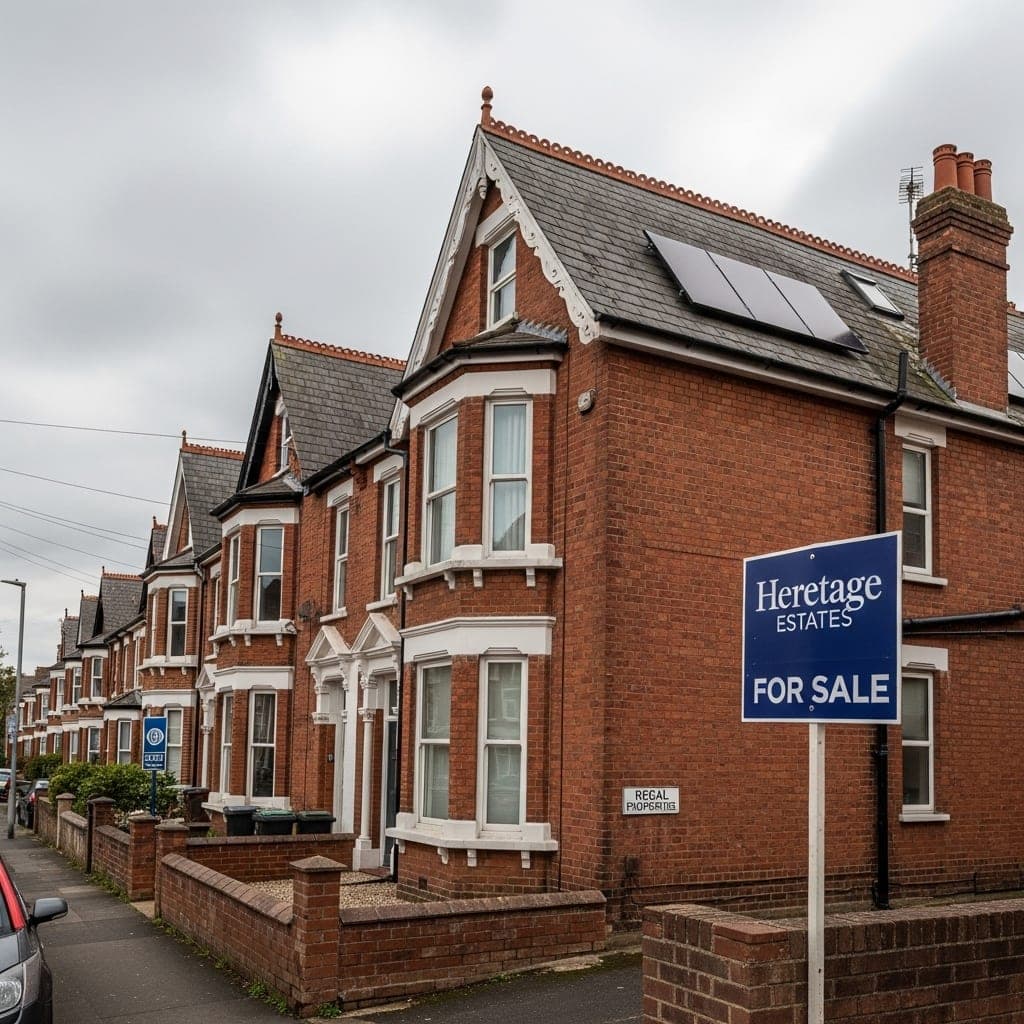
Yes, EPC rating affects house price, but by less than the headlines suggest, and by very different amounts depending on who is buying. Nationwide found that owner-occupiers pay a 1.6% premium for an A or B rated home compared with a similar D-rated one. Buy-to-let investors pay a 12.2% premium, according to The Mortgage Works. Band C and band E homes show little difference from band D for owner-occupiers.
For landlords the picture is wider than price. It also covers rent, mortgage options and the standard the government has decided to bring in for rented homes. This guide starts with the answer for buyers and sellers, then goes through the landlord sums.
Does EPC rating affect house price? The short answer
For owner-occupiers, slightly. Nationwide's June 2026 analysis of homes in England found that A or B rated homes sold for a 1.6% premium over similar D-rated homes, about £4,500. F or G rated homes sold for 1.4% less, about £4,000. C and E rated homes showed little difference from D. Nationwide's analysis allowed for other characteristics such as bedrooms, location and whether the home was newly built. Nationwide's report calls the A or B premium "modest".
For buy-to-let buyers, a lot more. The Mortgage Works, Nationwide's buy-to-let arm, found in its spring 2026 research that an A or B rated property attracts a 12.2% premium over a similar D-rated one, a C rated property attracts 3.7%, and an E rated property sells at a 1.7% discount. Those figures, reported by Landlord Today, are for buy-to-let purchases only, and The Mortgage Works allowed for observable characteristics such as bedrooms and location.
In older government research, the gaps look bigger. A study for the then Department of Energy and Climate Change looked at 325,950 English dwellings sold at least twice between 1995 and 2011. It estimated that, compared with G-rated dwellings, F and E rated homes sold for about 6% more, D for 8%, C for 10% and A or B for 14%. The baseline there is band G, not D, so the figures are not comparable with the newer ones. Measured against D, the same estimates imply about 2 percentage points for C and about 6 for A or B. That is our arithmetic on the report's figures, not a number the report states.
What a buyer or seller should take from this.
- If you are selling an owner-occupied home, the price effect of a better rating is small. Upgrading purely to sell rarely pays back, unless it lifts the home out of F or G.
- If you are buying, a poor rating is a reason to get quotes for the work. Our guide to EPC checks when buying a house covers what to look at and what to ask.
- If you are an investor, the premium is larger, and so is the penalty for low bands.
These studies show association, not proof of cause. The DECC report itself notes that energy efficiency is "undoubtedly a weaker determinant" of price than size, location and type, and that hedonic price modelling has a well-known limitation in obtaining data on all the things that set a price.
Key Facts
- Owner-occupier sale price: A or B rated homes sold for 1.6% more than D (about £4,500), F or G for 1.4% less (about £4,000), and C and E showed little difference (Nationwide, June 2026, homes in England)
- Buy-to-let purchase price: A or B rated properties attract a 12.2% premium over D, C attracts 3.7%, and E carries a 1.7% discount (The Mortgage Works, spring 2026, reported by Landlord Today)
- Rent: A or B rated properties attract an 8.1% rent premium over D, up from 7% in 2024. C attracts 1.8% and E carries a 1.7% discount (The Mortgage Works, reported by Property118 and Mortgage Solutions)
- Share of rented stock in bands A to C: 51% of private rented properties in England, up from 25% ten years ago (English Housing Survey data cited by The Mortgage Works, reported by Property118)
- Average spend to meet the new standard: £5,400 per property, allowing for the cost cap (DESNZ government response and impact assessment, January 2026)
- Standard for rented homes: decided policy, not yet law. The minimum in force is band E
How does EPC rating affect sale price?
Start with the buyer who will live in the home. For that buyer, the evidence says a better rating lifts the price a little at the top, lowers it a little at the bottom, and does almost nothing in the middle. That is the Nationwide pattern above.
The buy-to-let market is different because the investor is buying an income stream. The Mortgage Works found the premium for an A or B rated property rose from 10.9% in 2024 to 12.2% in 2026, as reported by Landlord Today. It also found large regional differences in the A or B premium for buy-to-let purchases: 19.1% in the North of England, 9.4% in the South and 6.9% in London. These are buy-to-let purchase figures, not figures for the whole market.
The older DECC research found something similar by region for the whole market. It reported that the percentage premium for above-average EPC ratings is higher in regions where house prices are low, and suggested this is because broadly similar energy savings have bigger relative effects on cheaper homes. The study was also published in Energy Economics (volume 48, 2015), using 333,095 dwellings sold at least twice between 1995 and 2012. That abstract states that energy efficiency labels have "a measurable and significant impact on house prices in England", and that the effects tend to be higher for terraced homes and flats than for detached and semi-detached ones.
The discount effect
At the bottom of the scale, the owner-occupier discount is 1.4% for F or G homes, according to Nationwide's June 2026 figures. The discount is small, but a buyer is likely to think about more than the percentage. An F or G home cannot be let without an upgrade or an exemption, and the average cost to bring an F or G home up to band C is £17,354, according to the English Housing Survey 2024-25. The survey gives £12,430 for an E-rated home and £6,002 for a D-rated home. These are averages for England, and an individual home can differ a lot.
Whether the discount widens as 2030 approaches depends on the rented-sector standard becoming law. Landlords weighing a sale can read our guide on whether to sell or upgrade your rental property.
How does EPC rating affect rental income?
Tenants do respond to energy efficiency, and the measured effect is modest at band C. The Mortgage Works found in May 2026 that an A or B rated property attracts an 8.1% rent premium over a similar D-rated one, about £85 a month on a typical rent of £1,075, reported by Mortgage Solutions. A C rated property attracts 1.8%, about £20 a month. An E rated property carries a 1.7% discount. Property118 reports that the 8.1% is up from 7% in 2024.
So the rent uplift from a D to C upgrade is real but small. The uplift from reaching A or B is about four times larger, and the penalty for sitting at E is about the same size as the reward for reaching C.
The likely mechanism is that tenants in efficient homes pay less for heating, so they can pay more rent for the same total housing cost. We have not found a published UK dataset on how EPC band affects void periods, so we do not quote a figure for that.
How does EPC rating affect mortgage rates?
Green mortgage products exist, but they usually reward the top two bands. NatWest's green mortgage range, including green buy-to-let, requires a valid EPC rating of A or B for its reduced-rate fixed products. A band C property would not qualify for those.
Barclays takes a different route. Its Greener Home Reward offers up to £1,000 towards selected energy efficiency improvements for customers who already have a residential mortgage with the bank, rather than a rate cut tied to the band.
Lenders do not publish a single discount and products change often. Ask a broker for the live gap between the green and standard product at your loan-to-value. Our green mortgages guide lists the lenders and their criteria, and our piece on buy-to-let mortgages and EPC ratings covers the landlord side.
What is the ROI of upgrading to EPC C?
The return depends on the upgrade cost, the rent effect and the holding period. The two examples below are illustrative, not typical returns. They apply The Mortgage Works rent premiums to a £1,000 a month property, and leave out mortgage savings and void reduction because we could not find published UK figures for either.
Example: EPC D to C upgrade
- Upgrade cost: £5,400, the government's estimate of the average spend per property to meet the new standard, allowing for the cost cap (DESNZ government response, January 2026)
- Annual rent increase: £216 (1.8% of £1,000 a month)
- Payback on rent alone: about 25 years
Example: EPC E to C upgrade with a Boiler Upgrade Scheme grant
- Upgrade cost: £12,430, the English Housing Survey average cost to bring an E-rated home to band C
- Boiler Upgrade Scheme grant: £7,500 towards a heat pump. This only applies if the works include an eligible heat pump
- Net cost: £4,930
- Annual rent increase: £420 (moving from a 1.7% discount to a 1.8% premium, a swing of 3.5% on £1,000 a month)
- Payback on rent alone: about 12 years
On rent alone, a D to C upgrade does not pay for itself over any normal holding period. The E to C case is stronger because the grant covers a large part of the cost and because moving off band E escapes a rent discount as well as gaining a premium.
The case for upgrading a band D property rests on other things: the risk that the rented-sector standard becomes law, the premium that buy-to-let buyers pay for higher bands, and the state of the market when you sell. Treat it as risk management with a modest yield.
For grants, see our Boiler Upgrade Scheme application guide.
What do EPC improvements cost?
The English Housing Survey 2024-25 gives the spread. It would cost between £1,000 and £4,999 to bring just over a quarter (27%) of eligible dwellings to band C, and £5,000 to £9,999 to do so for just under half (44%). About 5% of eligible dwellings would need less than £1,000. For cost-per-point rankings, see our guide to the cheapest ways to improve an EPC rating. For the path from D to C, see our EPC D to C upgrade guide.
What happens to property values if you do not upgrade?
Start from what is established. Band D and band E homes are legal to sell and to let today. The measured sale price gap between D and C is small for owner-occupiers. The properties carrying a measured discount for owner-occupiers are the F and G rated ones, at 1.4% below band D. The minimum standard for letting is band E, so an F or G rated home cannot be let without an exemption.
Beyond that, it depends on the rented-sector standard. The government's response of 21 January 2026 set 1 October 2030 as the date by which tenancies in scope must comply. This is decided policy, not yet law. It needs an Act of Parliament and then a statutory instrument. The standard is usually described as EPC C, but it is a dual-metric standard.
If it becomes law, three pressures could build. The pool of buyers for sub-C rented stock may narrow, because investors would price in the upgrade. Lenders may tighten criteria, though we found no lender that has said it will stop lending on sub-C homes, so check this with a broker rather than assuming it. And an exemption would protect you legally without changing how tenants and buyers see a home that costs more to heat.
If it does not become law, the current position holds. An earlier plan to require rented homes to be upgraded from 2025 was scrapped on 20 September 2023. Both outcomes are possible. Plan for the first, but do not spend against it as if it were certain.
Frequently Asked Questions
Does EPC rating affect house price? Yes, but modestly for owner-occupiers. Nationwide's June 2026 analysis of homes in England found A or B rated homes sold for a 1.6% premium over similar D-rated homes, and F or G rated homes sold for 1.4% less. C and E rated homes showed little difference from D. Buy-to-let purchases show a larger effect: The Mortgage Works found a 12.2% premium for A or B.
Does a better EPC rating increase the value of my home when I sell? Slightly, at the top end. The Nationwide figure for A or B is 1.6%, about £4,500 on its example. Moving from D to C shows little difference for owner-occupiers, so upgrading only to sell is rarely worth it. It is more likely to matter if the home is rated F or G.
Is it worth upgrading my EPC just to sell? Usually not on the price uplift alone if you are going from D to C. Upgrading makes more sense where it lifts the home out of F or G, or where you are selling to buy-to-let investors, who pay larger premiums for higher bands. Get a real quote before you decide.
Do tenants pay more for higher EPC ratings? Yes, but only modestly at band C. The Mortgage Works found an A or B rated property attracts an 8.1% rent premium over a similar D-rated one (about £85 a month), C attracts 1.8% (about £20 a month) and E carries a 1.7% discount.
What EPC rating do I need for a green mortgage? It depends on the lender. NatWest's green range, including green buy-to-let, requires EPC A or B. Barclays offers up to £1,000 towards selected energy efficiency improvements for existing residential mortgage customers. Confirm the current terms with a broker.
Will property values drop for non-compliant rental homes after 2030? No band C requirement is in force today. The government has decided that the standard will apply from 1 October 2030, but it needs an Act of Parliament and then a statutory instrument, and it is usually described as EPC C but is a dual-metric standard. If it becomes law, sub-C rented stock may be marked down as the date approaches. If it does not, the current position holds, in which band D and C show little price difference for owner-occupiers.
Does EPC rating affect home insurance? We could not find a UK insurer that publishes a discount tied to EPC band, so we do not quote a figure. If you improve your home, tell your insurer and ask whether it changes your premium.
Does the EPC premium differ by region? Yes. The DECC-commissioned research found the percentage premium for above-average EPC ratings was higher where house prices were low. The Mortgage Works found the A or B buy-to-let purchase premium was 19.1% in the North of England, 9.4% in the South and 6.9% in London. Those regional figures are for buy-to-let purchases only. To see where a specific home sits, read our guide on what a good EPC rating is.