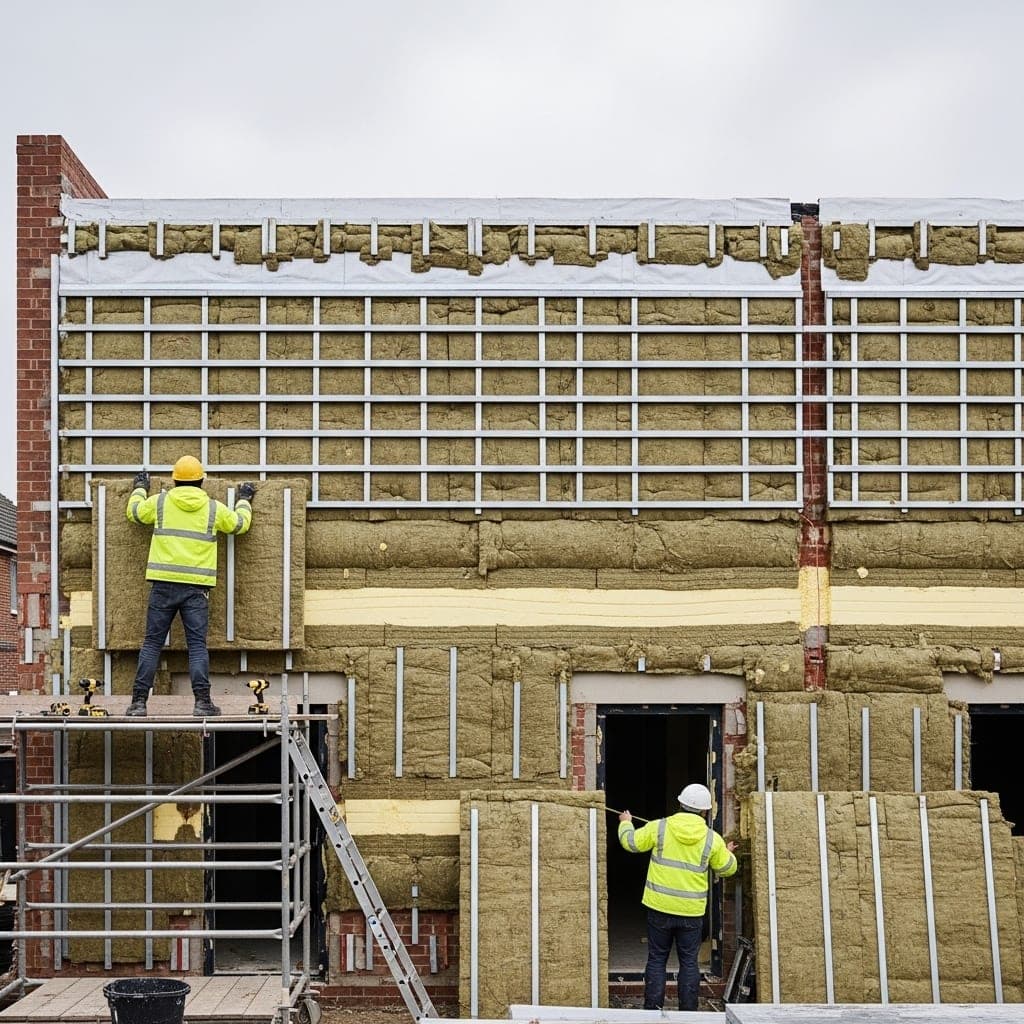
New EPC Metrics 2029: What Heat Retention Means for Landlords
The new EPC metrics, planned to launch in the second half of 2027, would replace the single energy cost score with four separate headline metrics led by fabric performance, which measures how well a building retains heat. Under the government's proposals, private landlords in England and Wales would need to hit EPC Band C on the Fabric Performance Metric plus one of the Heating System or Smart Readiness metrics from 1 October 2030. None of this is law yet. The single-letter rating most landlords know today would be rebuilt around insulation, not fuel bills.
Key Facts
- Launch of new-style EPCs: planned for the second half of 2027, with the launch date still to be agreed (already delayed once)
- New system name: Home Energy Model (HEM), proposed to replace SAP and RdSAP
- Proposed headline metrics: energy cost, fabric performance, heating system, smart readiness
- Approach: fabric first, insulation before heating tech
- Proposed MEES target: Band C on Fabric Performance + one secondary metric from 1 Oct 2030 (proposed)
- In force today: minimum band E to let in England and Wales, cost cap £3,500 including VAT
- EPC validity: unchanged at 10 years
- HEM software launch: indicated for the second half of 2027, having slipped from 2026
- Existing EPCs: remain valid until expiry
What is the new EPC metrics system?
The new EPC metrics system is a proposed multi-metric replacement for the current single-score Energy Performance Certificate, set out in the government's consultation response on reforms to the Energy Performance of Buildings regime. Under those proposals the existing single cost metric would be replaced with four headline metrics: energy cost, fabric performance, heating system and smart readiness. The proposals still need secondary legislation before any of it binds a landlord.
The core shift is philosophical. Today's EPC rating is driven by modelled energy cost, which fluctuates with gas and electricity prices. The proposed system measures the building itself, separating what you can change cheaply (the boiler, a smart meter) from what costs more and matters more long term (insulation, windows, airtightness). EPCGuide's analysis of the domestic EPC register for England and Wales puts 49.6% of homes below Band C today, and much of that shortfall sits in the building fabric.
If you are landing here for the first time, the broader MEES 2030 picture is covered in our EPC C deadline 2030 landlord guide.
When do the new EPC metrics take effect?
The government plans to launch new-style EPCs in the second half of 2027 and has said it will agree a launch date with industry. It has not published a date after which every EPC must use the new metrics. The 1 October 2029 date that gets quoted is the cut-off for the grandparenting rule, not a switch date, and the timetable has already slipped once. Any EPC lodged before launch remains valid for its full ten-year term.
That 2029 date matters because the proposed EPC C deadline of 1 October 2030 would sit only 12 months later. On the government's plans, a property rated C or above on the current Energy Efficiency Rating on an EPC issued before 1 October 2029 would count as compliant until that EPC expires or is replaced. A landlord whose property is below EER C by then would need to commission a new EPC with the new metrics before making improvements.
For more on the HEM timeline, see our Home Energy Model delayed 2027 landlords guide.
What are the four new EPC metrics?
The new EPC presents four distinct performance measures, each with its own band rating from A to G. Landlords will see a headline band plus four sub-bands on every certificate.
1. Energy Cost Metric
Energy Cost is the closest equivalent to the current EPC rating. It models annual energy spend for space heating, hot water, lighting and ventilation using current fuel prices. Useful for tenants, marginal for compliance, because it will swing with energy markets.
2. Fabric Performance Metric
Fabric Performance is the single most important proposed metric for landlords. As described in the government's consultation response, it measures the thermal performance of the building envelope independent of the heating system. Insulation levels, window U-values, airtightness, and thermal bridging all feed into one number. A property with thick loft insulation, double or triple glazing and filled cavity walls will score well here. A Victorian solid-wall terrace with original sash windows will not.
This is the metric the government has proposed landlords should hit Band C on from 1 October 2030. If the proposal becomes law, you will not be able to substitute a heat pump for a lack of insulation.
3. Heating System Metric
Heating System scores the efficiency and carbon intensity of the heating technology installed. Heat pumps rank top, modern condensing gas boilers mid-range, direct electric and oil lower. The metric recognises that a heat pump in a poorly insulated home is inefficient, so it interacts with fabric score when modelled.
4. Smart Readiness Metric
Smart Readiness covers the building's ability to respond to energy signals and tenant control. Smart meters, time-of-use heating controls, solar PV with battery storage, and EV chargers all add points here. This is the easiest metric to improve cheaply.
How does the Fabric Performance Metric work?
The Fabric Performance Metric rates buildings A to G based on a calculated heat transfer coefficient (HTC), which measures how quickly the building loses heat through its external envelope at a given temperature differential. Lower HTC equals better fabric performance equals a higher band.
The calculation inputs include:
- Insulation U-values for walls, roof, floor, windows and doors
- Thermal bridging losses at junctions (party walls, eaves, window reveals)
- Airtightness measured by blower door test or default assumed leakage rates
- Ventilation heat recovery if mechanical ventilation is present
Band C on Fabric Performance roughly corresponds to a home built or retrofitted to modern Building Regulations Part L standards. Band D is typical of post-2002 housing. Solid-wall Victorian stock without insulation retrofits typically falls into Band F or G on this metric, even if a new boiler lifts the overall rating.
For landlords with period properties, this is exactly where our Victorian terrace EPC guide becomes essential reading.
How to prepare your rental property for the new metrics
Start a fabric-first retrofit plan now. Here is the practical sequence:
- Get a current EPC and note the fabric-adjacent recommendations. Look at Recommended Improvements for insulation upgrades, not just boiler swaps.
- Prioritise the cheap-and-effective fabric wins. Loft top-up to 270mm, cavity wall insulation, draught proofing, hot water cylinder lagging. Often under £2,000 combined and moves fabric band by one to two letters.
- Plan the bigger fabric job. External or internal wall insulation for solid-wall properties. Double or triple glazing. Floor insulation. These are the jobs that push a Band F fabric to Band C.
- Layer in heating system upgrade. Once fabric is near target, a heat pump or efficient gas boiler completes the compliance picture. Our heat pump grant landlord guide walks through the current BUS subsidy.
- Add smart readiness last. Smart meter, smart thermostat, solar with battery. Cheapest way to meet the secondary metric once fabric is sorted.
- Keep your EPC timing strategic. If you can hit Band C under the current system before any switchover, that certificate runs for ten years. Under the proposed system, the same property might need further upgrades. See our landlord EPC action plan 2026 for timing scenarios.
Budget for the full plan. The cost cap in force today is £3,500 including VAT, and the government has proposed raising it to £10,000 (or 10% of property value where the property is worth under £100,000) alongside the EPC C standard. That higher cap is not law. Most Band F to Band C retrofits land between £5,000 and £12,000 depending on wall construction and window condition.
What are the common mistakes landlords make?
Waiting for the system to launch before acting. The hardware stays the same. Insulation that improves today's EPC also improves any future Fabric Performance score.
Buying a heat pump before fixing fabric. A heat pump in a leaky house runs at low efficiency, costs tenants more, and would still not deliver Band C on the proposed Fabric Performance Metric. Insulate first.
Assuming a current Band C certificate settles the question. It depends when you got it and on what the final rules say. A certificate issued under the single-score system is valid for ten years, but if the proposals are enacted as drafted the compliance check from October 2030 would look at the property against the new metrics.
Ignoring the smart readiness layer. Cheap points. Smart thermostats run £150 to £400, smart meters are free from the energy supplier. Two or three of these get you Band C on the secondary metric with minimal outlay.
Forgetting the secondary metric choice is yours. You can pick Heating System or Smart Readiness to pair with Fabric Performance. If your property already has a new boiler, go Heating System. If it does not, Smart Readiness is nearly always cheaper than replacing the boiler.
What does this mean for EPC valuations and mortgages?
Buy-to-let lenders are already pricing green mortgages off the current EPC rating. Expect the Fabric Performance Metric to become a lender data point from 2028, with preferential rates for Band C fabric performance and loadings on Band E or worse. Our green mortgage landlord guide covers the current rate picture.
The same applies to property valuations. Agents will use fabric band as a proxy for retrofit cost remaining. A buyer acquiring a Band D property under the new system can estimate the cost to reach Band C fabric from the HEM report itself, which will specify recommended measures and costs.
Frequently Asked Questions
When do the new EPC metrics start? The government plans to launch new-style EPCs with the four headline metrics in the second half of 2027, and the launch date is still to be agreed. It has not published a date after which every EPC must use them. The 1 October 2029 date is the cut-off for the grandparenting rule. None of this is law yet and the timetable has already moved. EPCs issued before launch remain valid under the current single-score SAP or RdSAP methodology for their full ten-year term.
What are the four new EPC metrics? Energy cost, fabric performance, heating system and smart readiness, each rated A to G. Under the proposals, landlords in England and Wales would need Band C on Fabric Performance plus either Heating System or Smart Readiness from 1 October 2030. The standard in force today is band E.
What is the Fabric Performance Metric? The Fabric Performance Metric measures how well a building retains heat through its walls, roof, floor, windows and doors, independent of the heating system. It is the most important new metric for landlords because it cannot be fixed cheaply with technology swaps. Insulation, glazing and airtightness drive the score.
Do I need to replace my current EPC? No. Existing EPCs remain valid for their full ten-year term. If your property already achieves Band C under the current system, the certificate is valid through to its expiry date. If the proposed standard is enacted, compliance from October 2030 would be judged against the new metrics at the point of enforcement.
Would a heat pump pass the proposed 2030 standard? Only if fabric performance also reaches Band C. Under the proposed two-metric test, a heat pump alone would not be enough, because it requires Fabric Performance Band C plus either Heating System or Smart Readiness Band C. Insulation has to come first.
Is the Home Energy Model still delayed? Yes, the HEM software launch moved from late 2026 to the second half of 2027. The launch date for new-style EPCs is still to be agreed, and 1 October 2029 is the grandparenting cut-off, not a switch date.
How much will it cost to hit Band C on Fabric Performance? For a typical Band D property, Band C fabric is often achievable for £3,000 to £7,000 through loft top-up, cavity wall insulation, draught proofing and secondary glazing. Solid-wall properties needing external or internal wall insulation typically run £8,000 to £12,000. The cost cap in force today is £3,500 including VAT; the £10,000 cap is proposed and not yet law.