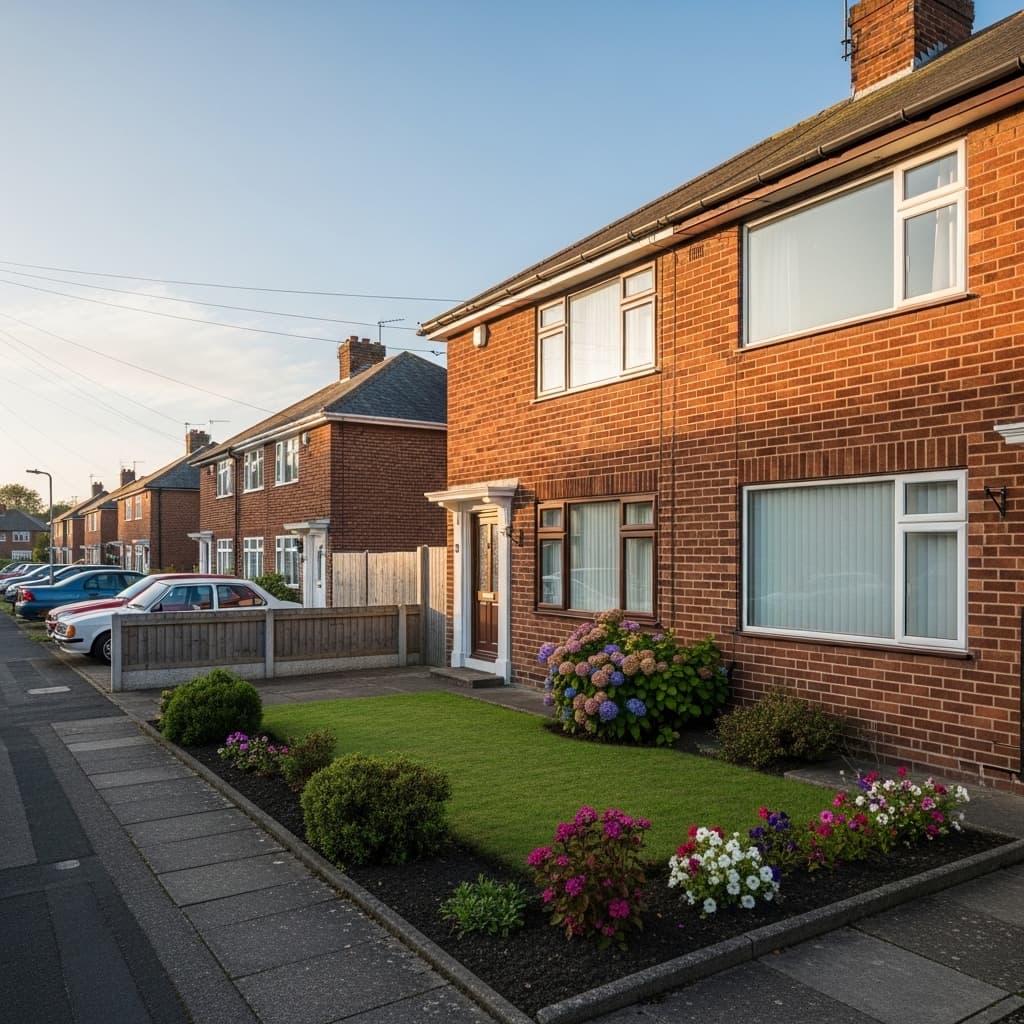
If you own a 1970s or 1980s rental property, you are probably closer to EPC C than you think. Homes of this era were built with wall cavities, which makes them among the cheapest stock in the country to improve. Many sit a handful of SAP points below the band C threshold of 69, and the right combination of cavity wall insulation and a heating controls upgrade can close that gap for between £1,500 and £4,000.
Worth being clear before you spend anything: the legal minimum to let a property in England and Wales is band E, and it has been since 1 April 2020. Band D is legal to let. Government has proposed raising the minimum to band C from 1 October 2030, but that is a proposal and no statutory instrument has been laid. Everything below is written on that basis.
The challenge is that this era of property has two traps landlords often miss: cavities that may have been filled with foam in the 1970s or 80s (which can degrade and cause damp), and EPC certificates that predate the June 2025 RdSAP 10 methodology change. Both can skew your starting position. This guide covers the exact upgrade path, the grants available before December 2026, and what to check first.
What EPC Rating Does a 1970s or 1980s House Typically Get?
Most privately rented properties from this era score in EPC band D, typically between 65 and 72 SAP points. That puts a good share of them either side of the band C boundary. For the national picture by construction age, drawn from the full England and Wales register rather than a sample, see our EPC key statistics.
The EPC C threshold is 69 SAP points. If your property scores between 65 and 68, you need one to four targeted improvements. If it scores 60 to 64, you are looking at a more substantial programme. Either way you are still legally compliant at band D today, so this is a planning exercise, not a scramble.
What RdSAP software assumes about this era by default:
- 1967 to 1975 builds: cavity walls but no fill, minimal loft insulation (25mm assumed), no double glazing unless evidenced
- 1976 to 1982 builds: cavity walls, partially filled cavities, some loft insulation
- 1983 to 1990 builds: fuller cavity fill, double glazing more common, condensing boilers appearing toward the end of the period
Providing documentary evidence of improvements you have already made (boiler model numbers, glazing specs, insulation certificates) can shift your score upward without any physical work.
How 1970s and 1980s Construction Affects Your Score
Cavity walls are the defining feature of this era. Unlike Victorian and Edwardian terraces, which have solid brick walls, properties built from the mid-1960s onward have a gap between the inner and outer brick leaf. That cavity can be filled with insulation. An uninsulated cavity wall has a U-value around 1.5 W/m²K. Filled, it drops to roughly 0.5 W/m²K, adding 6 to 10 SAP points to your rating. This is usually the single highest-impact, lowest-cost measure available.
Loft insulation is almost always undersized. Properties from this era often have 25 to 100mm of loft insulation, if any. Current recommendations are 270mm. Topping up to 270mm typically adds 2 to 4 SAP points and costs £400 to £800 for a standard semi-detached (Energy Saving Trust, 2026).
Heating systems age out. A non-condensing boiler installed before 2000 is assumed to run at around 70% efficiency in RdSAP. A modern condensing boiler operates at 90% or above. Replacing a pre-2000 boiler adds 5 to 12 SAP points, with installation costs of £1,500 to £3,500.
Glazing is largely updated. Most 1970s to 1980s properties have been updated to double glazing over the decades. If yours still has single glazing, replacing it adds 2 to 3 SAP points but costs £4,000 to £8,000, making it a poor-value improvement unless you need it for other reasons.
Did RdSAP 10 (June 2025) Change Your EPC?
A new methodology, RdSAP 10, came into effect on 15 June 2025. All EPCs lodged after that date use the updated model. If your certificate predates June 2025, it was assessed under the old method.
RdSAP 10 records insulation thickness separately by type, reads boiler efficiency from model number evidence, and captures heating controls and smart thermostats more precisely. For a 1970s property where the owner has made improvements but not formally documented them, the updated methodology can produce a materially higher score when evidence is presented at assessment.
If your EPC is more than two years old, or predates June 2025, booking a reassessment makes sense before committing to expensive works. You may find you are already closer to C than your certificate shows. Check your current certificate date for free at the EPC register.
The Proposed 2030 Change: What It Would Mean for 1970s and 1980s Properties
Government has proposed that privately rented homes in England and Wales reach EPC C from 1 October 2030, covering new and existing tenancies on one date after the January 2026 response dropped the earlier 2028 new-tenancy milestone. It has also proposed raising the cost cap from the £3,500 including VAT in force today to £10,000, or 10% of property value where that value is below £100,000, and raising the maximum civil penalty from £5,000 per property to £30,000.
None of that is law. Ministers need an Act of Parliament to take the powers, then a statutory instrument amending the 2015 Regulations, with the target being in force during 2027. Until then band E is the standard you are held to, and a near-identical band C proposal was abandoned in September 2023.
Our analysis of 27.6 million EPC certificates covering 19.7 million homes puts 49.6% of homes in England and Wales below EPC C. Properties from the 1970s and 1980s sit near the threshold, so a small number of targeted improvements typically closes the gap without going near any version of the cost cap.
The genuine urgency for this era is not regulatory, it is funding. Cavity wall insulation installed while ECO4 is open can cost nothing where the tenant is eligible, against £700 to £3,500 privately once the scheme closes in December 2026. That deadline is real and it is money, which is a better reason to act than a proposal that may move.
See our 2030 deadline guide for landlords for the full regulatory picture.
The Cheapest Upgrade Path from D to C
For a typical 1970s or 1980s semi-detached starting at D (SAP 60 to 68), this is the priority order by cost per SAP point gained:
| Measure | Typical 2026 Cost | SAP Uplift | Notes |
|---|---|---|---|
| Cavity wall insulation | £700 to £3,500 | +6 to +10 pts | Condition check first (see below) |
| Loft insulation top-up to 270mm | £400 to £800 | +2 to +4 pts | Fast, low disruption |
| Heating controls and TRVs | £150 to £400 | +1 to +3 pts | Often ignored; frequently enough to cross the threshold |
| Boiler replacement (pre-2000 non-condensing) | £1,500 to £3,500 | +5 to +12 pts | Most impactful for older heating systems |
| LED lighting throughout | £100 to £250 | +0.5 to +1 pt | Marginal alone but contributes |
Most 1970s to 1980s properties can reach EPC C for between £1,500 and £5,000 if the cavity is unfilled and in good condition. A property sitting at D69, just one point below C, may only need a heating controls upgrade.
Watch Out: Failed Cavity Wall Insulation
Some 1970s and early 1980s properties had urea-formaldehyde foam injected into their cavities under a government scheme at the time. This foam can degrade over decades, shrinking and cracking and allowing moisture to bridge the cavity. The result is damp patches on internal walls, typically after heavy rain.
Before booking a cavity wall insulation survey, check for:
- Damp patches on internal walls after rain, especially on north-facing elevations
- Cold spots on external-facing walls in areas that should be insulated
- Any documentation from previous owners or surveys mentioning foam injection
If you suspect failed foam fill, a specialist survey is needed before any new works. Installing new insulation over degraded foam compounds the problem. Our cavity wall insulation guide for landlords has the full pre-survey checklist.
Grants Available Right Now
ECO4 funds insulation and heating measures, provided tenants meet income or benefits eligibility criteria and the home is rated E, F or G. In a rented home the package must include solid wall insulation, first-time central heating, a district heating connection or renewable heating, so cavity wall and loft insulation qualify only alongside one of those. There is no set amount per property: the energy supplier decides how much to fund. You may be asked to contribute. ECO4 closes on 31 December 2026. After that, the Warm Homes Plan takes over from 2027, but the scheme terms are not yet confirmed. The practical advice: apply now through ECO4 while it is open. See our ECO4 landlord grants guide for eligibility criteria and how to apply.
Boiler Upgrade Scheme (BUS) offers £7,500 towards the installation of an air source or ground source heat pump. Landlords are eligible without means-testing. For a 1980s property that needs a new heating system anyway, BUS covers part of the heat pump cost, and any insulation funding is separate. Full details in our BUS application guide for landlords.
Warm Homes Local Grant provides up to £30,000 per property (up to £15,000 for energy-efficiency measures plus up to £15,000 for low-carbon heating) for households earning under approximately £36,000 per year who live in a property at EPC D or below. It covers insulation, windows, and heating upgrades. Availability varies by local authority.
The combination of ECO4 (before December 2026) and BUS means many landlords with 1970s to 1980s stock could complete the full upgrade for little or no out-of-pocket cost if they move this year.
Non-Standard Construction: Does This Apply?
Not all properties from this era have traditional cavity brick construction. Common system-built types include:
- Wimpey No-Fines: Poured concrete with no cavity. Common in council-built stock from the 1950s to 1970s, some now in private ownership.
- Laing Easiform: Precast concrete panel system. No cavity.
- Timber frame: Some 1970s to 1980s volume-built homes used timber frame with mineral wool already installed at build.
If your property is non-standard construction, cavity wall insulation quotes are irrelevant and potentially harmful. The upgrade path involves internal or external wall insulation instead. Your EPC assessor should record the wall construction type. If you are unsure, a RICS-qualified surveyor can confirm it before you commission any works.
When Exemptions Apply
Exemptions matter today only if a property is rated F or G, since band E is the standard in force. Under the current regulations the cost cap for a high-cost exemption is £3,500 including VAT, and you register an all-improvements-made exemption on the PRS Exemptions Register with evidence that everything within the cap has been done and the property still falls short. Grant money does not count against the cap: GOV.UK guidance says that where third-party funding covers the full cost of a measure the cap does not apply, and where it covers part, you may need to top up from your own funds to the value of the cap.
If the band C proposal becomes law, the same machinery would apply at the higher proposed cap of £10,000. Do not assume that figure yet.
Other exemptions relevant to this era:
- Wall insulation exemption: Available where a surveyor confirms insulation would damage the property's fabric, relevant for non-standard construction or where damp risk is evidenced
- Devaluation exemption: Available where a RICS surveyor confirms the works would reduce the property's value by more than 5%
Exemptions last five years and must be registered before renting the property. See our full EPC exemptions guide and how to register on the PRS Exemptions Register.
Frequently Asked Questions
What EPC rating does a 1970s house typically have? Most privately rented properties built between 1967 and 1975 sit in EPC band D, which is legal to let: the minimum in force in England and Wales is band E. The band C threshold is 69 SAP points and homes of this era often land within a few points of it, so cavity wall insulation alone is frequently enough to cross.
What is the cheapest way to improve a 1970s rental to EPC C? For most 1970s properties, cavity wall insulation (£700 to £3,500, adding 6 to 10 SAP points) combined with a loft insulation top-up to 270mm (£400 to £800, adding 2 to 4 points) is the most cost-effective route. If the cavity is already filled or failed, the next priority is heating controls and TRVs (£150 to £400). Most properties can reach C for under £5,000 without needing a boiler replacement.
Does RdSAP 10 affect 1970s and 1980s properties? Yes. RdSAP 10, which came into force on 15 June 2025, records insulation thickness and heating system efficiency differently. If your EPC was lodged before that date, it may understate your score, particularly if you have made improvements that were not formally documented at assessment. A reassessment with evidence of existing measures can lift your score at no installation cost.
Can I get a grant to upgrade my 1970s rental property? Yes, if your tenants are on qualifying benefits or have a household income below approximately £36,000, you may qualify for ECO4 funding, which covers cavity wall insulation, loft insulation, and sometimes solid wall insulation at no cost to you. ECO4 closes on 31 December 2026. The Boiler Upgrade Scheme (£7,500) is available to all landlords without means-testing.
Is cavity wall insulation safe in a 1970s property? It depends on the existing cavity condition. Some 1970s and early 1980s properties had urea-formaldehyde foam injected into their cavities under an older government scheme. If that foam has degraded, new insulation compounds any existing damp problems. Always get a pre-survey from a specialist installer before proceeding, and check for damp patches on internal walls after rain.
What if my 1970s rental cannot reach EPC C? Today, nothing needs to happen: band D is above the legal minimum of E, so no exemption is required. Exemptions currently apply to F and G properties, use a £3,500 including VAT cost cap, are registered on the PRS Exemptions Register and last five years. If the proposed band C requirement becomes law, the all-improvements-made route would be the one to use, at the proposed £10,000 cap. See our guide to registering an EPC exemption.