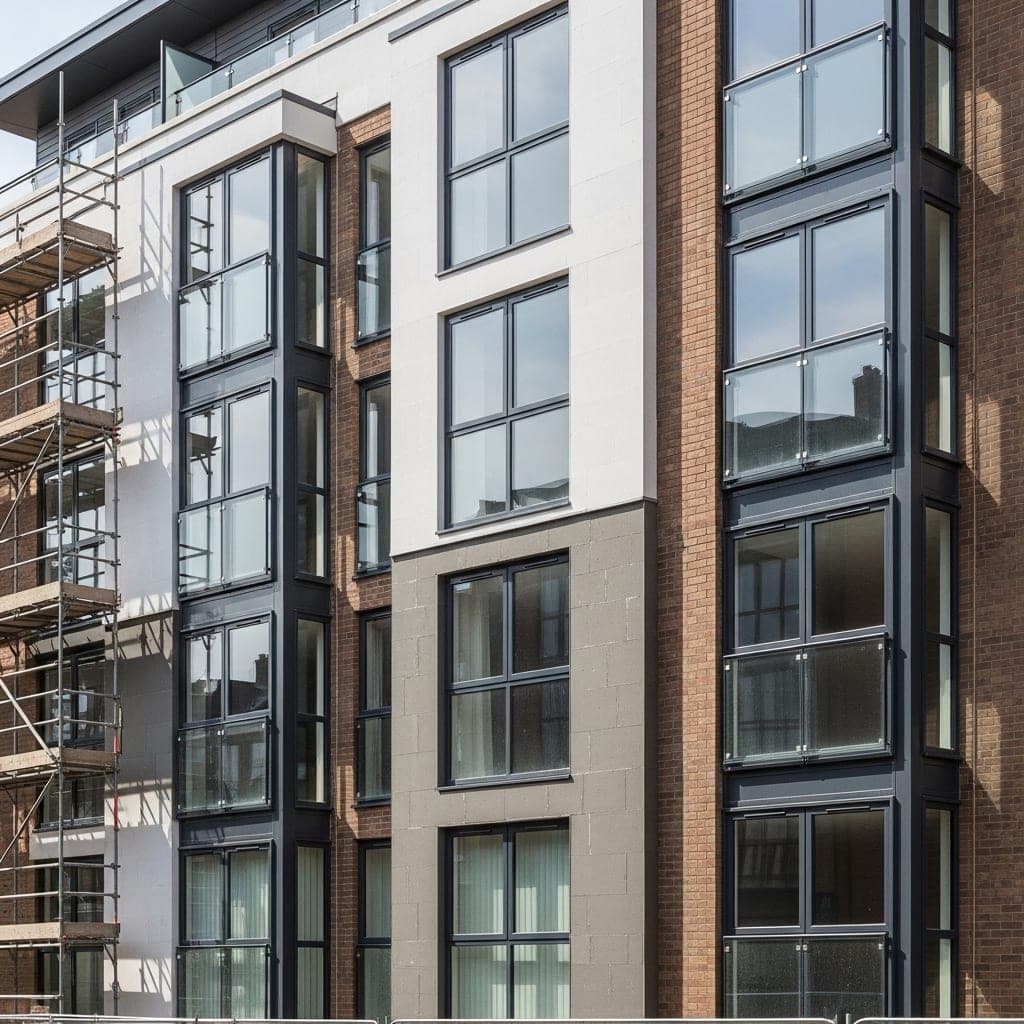
Upgrading a flat from its current rating to EPC C typically costs between £1,800 and £6,500 for most 1 to 2 bed leasehold properties in 2026. A flat moving from D to C averages around £3,653, while an E to C jump runs closer to £6,000. That's cheaper than the whole-market average of £5,387 the government uses in its impact assessment, because flats are smaller, share structural elements with neighbours, and need fewer measures than a detached house.
Here's the real 2026 breakdown for landlords, the measures that work in flats, and where leasehold rules change the maths.
What Does It Cost to Upgrade a Flat to EPC C?
The cost depends on three things: the starting EPC rating, the flat's tenure (freehold or leasehold), and which measures the assessor recommends. EPCGuide's analysis of 75,000 lodged certificates across 15 local authorities shows flats sit in a tighter cost band than houses because they benefit from shared heat loss with neighbouring units and rarely need external wall insulation on their own.
A word on the cost cap, because it is widely misreported. The cap in force today, under the Energy Efficiency (Private Rented Property) (England and Wales) Regulations 2015, is £3,500 including VAT per property, and it attaches to the current band E minimum. The £10,000 figure belongs to the government response of 21 January 2026, published alongside the Warm Homes Plan, and it is a proposal that would arrive with a band C standard. Neither the C standard nor the £10,000 cap is law: government must pass an Act and then lay a statutory instrument, and it has done neither. Under the rules in force, grant funding does not use up the £3,500 cap. Under the proposed £10,000 cap, Boiler Upgrade Scheme money would not count, but other third-party funding, such as ECO4 or local grants, could.
Typical 2026 costs by starting rating
| Current rating | Typical upgrade cost to C | Most common measures |
|---|---|---|
| D | £1,800 to £3,800 | Heating controls, LED lighting, cavity wall insulation |
| E | £3,500 to £6,500 | Boiler or heat pump, insulation, glazing |
| F | £6,000 to £9,500 | Full heating replacement, insulation, solar PV |
| G | £8,000 to £10,000+ | Multiple major measures, likely exemption territory |
The figures above assume a 1 to 2 bed flat with gas heating. Electrically heated flats and top-floor flats with solid roofs can sit at the upper end of each band. A full market overview sits in our EPC upgrade costs by region analysis.
Key Facts About Flat Upgrade Costs
In force today (England and Wales):
- Minimum band to let: E, since 1 April 2020. Band D is legal to let
- Cost cap: £3,500 including VAT per property
- Registered exemptions last 5 years, on the PRS Exemptions Register
- Maximum civil penalty: £5,000 in total per property, all breaches combined
Proposed, not law:
- Minimum band C from 1 October 2030 for all tenancies
- Cost cap £10,000, or 10% of property value where the value is under £100,000
- Qualifying landlord spend counting from 1 October 2025
- 10-year exemptions on three grounds
- Maximum penalty £30,000
Cost estimates from named sources:
- Government impact assessment (January 2026): £5,387 average landlord cost per property across all property types, under the preferred policy option
- Habito and Paragon analysis: D to C upgrade averages £3,653 for a 1-bed flat, £6,000+ for E to C
Which Upgrade Measures Work in Flats?
Flats behave differently from houses. Two of the four external walls are often internal party walls, which reduces heat loss for free. Loft insulation only helps top-floor flats. External wall insulation is rarely a single-flat decision. Here's what delivers the best cost-to-SAP-point ratio in a flat.
Measures a leaseholder can usually do without freeholder consent
- Smart heating controls: £200 to £400 installed, gains 2 to 4 SAP points, no structural work
- Low-energy lighting (LED across all fittings): £80 to £200, gains 1 to 3 SAP points
- Thermostatic radiator valves (TRVs): £120 to £250 across a flat, gains 1 to 2 SAP points
- Hot water cylinder insulation: £20 to £50 for a jacket, 1 to 2 SAP points
- Draught proofing on windows and doors: £150 to £400, gains 1 to 3 SAP points
- Modern condensing boiler replacement: £2,200 to £3,800 for a combi, major SAP uplift if replacing an old non-condensing unit
Measures that usually need freeholder consent
- Cavity wall insulation (external walls only): £350 to £500, gains 5 to 10 SAP points
- Window replacement or secondary glazing: £3,000 to £7,000 per flat
- Solar PV (top-floor flats with roof rights): £4,000 to £6,500 for a 3 to 4 kW array
- Air source heat pump: £12,908 median installed cost under the Boiler Upgrade Scheme (April to June 2026, before the grant), rarely practical in non-ground-floor flats
- External wall insulation (EWI): only viable as a whole-block programme, not per-flat
If your freeholder refuses consent for a measure recommended on the EPC, you may be eligible for a third-party consent exemption. Our EPC leasehold flat upgrade guide walks through the consent process and the exemption registration route.
Real Worked Example: 2 Bed Flat, EPC D to C
Here's what a typical 2030-compliance spend looks like on a 2 bed Victorian conversion flat in Manchester, starting at EPC D (score 62).
| Measure | Cost | SAP impact |
|---|---|---|
| Smart thermostat + TRVs | £320 | +3 points |
| Full LED lighting swap | £140 | +2 points |
| Cavity wall insulation (external walls) | £480 | +7 points |
| Loft insulation top-up (not applicable for mid-floor) | £0 | 0 |
| Draught-proofing package | £280 | +2 points |
| Hot water cylinder jacket | £40 | +1 point |
| Total spend | £1,260 | +15 points |
That takes a flat from 62 (D) to 77 (C), well inside band C (69 to 80), for around a third of the £3,500 cap that applies today. The remaining headroom is available for future Home Energy Model requirements or if a measure underperforms.
Whether a given D-rated flat clears the gap this cheaply depends on where it sits within band D. A flat at 67 needs two points. A flat at 56 needs thirteen. Read your own score before assuming which of those you are.
Why Flats Cost Less Than Houses
Three structural reasons keep flat upgrade costs lower than houses:
- Shared walls reduce heat loss. A mid-terrace or mid-block flat has two party walls that don't count as external. The SAP calculation reflects this, so fewer measures are needed to hit C.
- Smaller floor area. A typical UK 1 to 2 bed flat is 50 to 75 m² versus 90 to 120 m² for a 3 bed semi. Insulation, lighting, and heating costs scale with area.
- No roof responsibility in most cases. Ground and mid-floor flats don't carry roof heat loss in the SAP model. Top-floor flats are the exception and cost more.
The trade-off: flats have fewer upgrade options to choose from. If the cheap measures don't close the gap, the expensive ones (heat pump, full glazing replacement, EWI) are often blocked by leasehold rules. That's why the under-£2,500 upgrade is common for D-rated flats but F and G-rated flats often need exemptions.
Grants and Cost-Reducers for Flat Upgrades
Grants rarely fully fund flat upgrades, but they can shift the economics.
- ECO4 (ending December 2026): primarily for low-income tenants and specific measures. See our ECO4 ending analysis.
- Boiler Upgrade Scheme: £7,500 toward a heat pump, but rarely viable in flats without planning and freeholder consent.
- Warm Homes Local Grant: delivered via councils for eligible postcodes. Our Warm Homes Local Grant guide covers eligibility.
- Warm Homes Plan (2027 onward): expected to include block-level retrofit funding, particularly useful for leasehold flats.
- Tax relief: most energy improvement spend is capital expenditure, allowable against Capital Gains Tax on sale. See EPC upgrade tax relief for landlords.
What This Means for Flat Landlords in 2026
The picture is generally positive for flat landlords: the typical spend to reach EPC C is under £4,000 for most 1 to 2 bed flats starting at D. The exceptions are:
- Top-floor flats with poor roof insulation
- Electrically heated flats (F or G starting rating)
- Flats in listed buildings with restrictions
- Leasehold flats where the freeholder blocks consent
If your flat falls into any of these categories, the cost cap and exemption framework matter. Plan now. Document every quote and every refusal, because that paperwork is what a cost cap exemption stands on. The cost cap explainer covers documentation.
For flats comfortably inside the typical band, the biggest risk isn't cost. It's leaving it until 2029 when assessor availability and installer slots tighten. Our 2030 timeline guide shows the practical booking window.
Frequently Asked Questions
How much does it cost to upgrade a flat to EPC C?
For a typical 1 to 2 bed flat, upgrading to EPC C costs between £1,800 and £6,500 depending on the starting rating. A flat moving from D to C averages around £3,653 based on Habito's 2024 analysis, while E to C jobs sit closer to £6,000. The government's own January 2026 impact assessment puts the average landlord cost at £5,387 per property across all property types, with flats usually coming in under that figure.
What is the cost cap and how does it apply to flats?
The cost cap is the maximum a landlord has to spend per property before a high-cost exemption becomes available. In force today it is £3,500 including VAT, tied to the band E minimum, and a registered exemption lasts five years. Government has proposed replacing that with a £10,000 cap alongside a band C standard, falling to 10% of property value where the value is under £100,000, with 10-year exemptions and qualifying spend counting from 1 October 2025. Those figures are proposals: they need an Act of Parliament and then a statutory instrument, neither of which has happened. Under the rules in force, grant funding does not use up the £3,500 cap. Under the proposed £10,000 cap, Boiler Upgrade Scheme money would not count, but other third-party funding, such as ECO4 or local grants, could.
Do leasehold flats cost more to upgrade than freehold houses?
Usually less per unit for internal measures, but leasehold flats can hit a ceiling if freeholder consent is needed for external works. Internal measures (smart controls, LED lighting, TRVs, draught proofing) are typically leaseholder-controllable and cost £800 to £1,500 combined. External measures (cavity wall, external wall, window replacement, solar) depend on the freeholder. If consent is refused, you may register a third-party consent exemption instead of paying for works you cannot lawfully complete.
Which upgrades give the biggest EPC boost in a flat?
For flats, the highest SAP-point-per-pound measures are cavity wall insulation (if external walls have cavities), smart heating controls, LED lighting, and modern condensing boilers. Cavity wall insulation delivers 5 to 10 SAP points for £350 to £500. Smart thermostats add 2 to 4 points for around £300. A boiler replacement is the largest single-measure uplift if replacing an old non-condensing unit, typically pushing a flat up a whole letter band.
Can I claim grants to cover EPC upgrades on a flat?
Yes, in some cases. The Boiler Upgrade Scheme offers £7,500 for a heat pump but is rarely practical in flats. The Warm Homes Local Grant can cover insulation and heating measures in eligible low-income postcodes. ECO4 (ending December 2026) funds measures for eligible tenants. From 2027, the Warm Homes Plan is expected to include block-level retrofit funding, which is particularly useful for leasehold flats where whole-building programmes often unlock freeholder cooperation.
What if my flat cannot reach the required band even after spending up to the cap?
Register a cost cap exemption on the PRS Exemptions Register. Under the rules in force, the cap is £3,500 including VAT and the exemption lasts five years. Government has proposed a £10,000 cap with 10-year exemptions, which is not yet law. Either way you must document every quote, every installation, and (for leasehold flats) every freeholder refusal. See our EPC exemption register guide for the registration process.
What to Do Next
Get an up-to-date EPC assessment for every flat in your portfolio. The assessment costs £60 to £120 and tells you exactly which measures apply to your specific flat. Our EPC assessment cost guide covers what to expect.
Then rank your flats by current rating and upgrade complexity. Start with the D-rated flats, because those are the fast wins under £2,500. Leave E and F-rated flats until you have full quotes and freeholder responses documented. Use our cheapest ways to improve EPC rating guide to prioritise measures by SAP points per pound.
For the broader 2030 action plan across your whole portfolio, our landlord EPC action plan pulls compliance, cost, and timing into a single workflow.