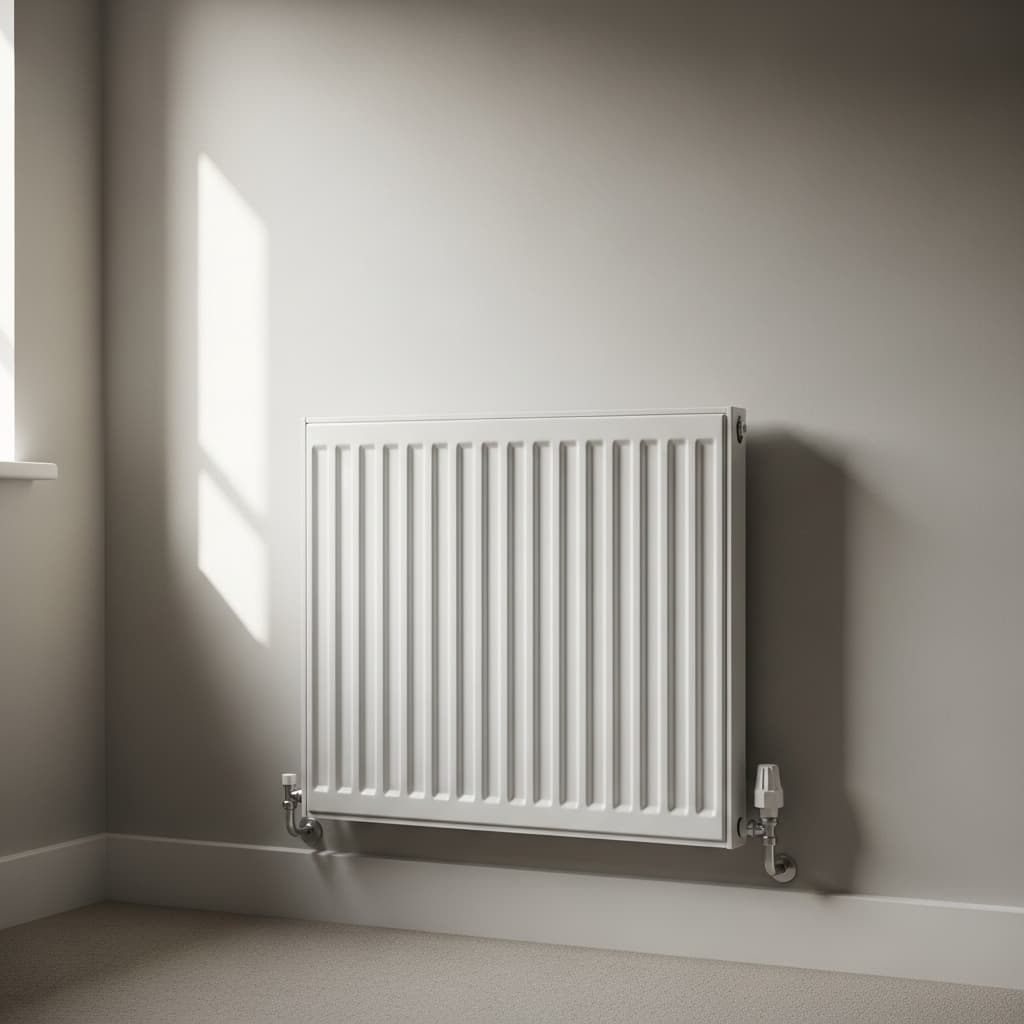
UK landlords must provide a fixed heating system capable of reaching 21°C in the main living room and 18°C in bedrooms. That is the widely used benchmark: no statute sets an exact temperature, and councils assess heating under the Housing Health and Safety Rating System (HHSRS). Separately, the government has proposed that from 1 October 2030 every private rental tenancy in England and Wales must also meet a higher standard, usually described as EPC band C, with no earlier compliance date for new tenancies. That proposal is not yet law: the minimum in force today is band E, so bands D and E are legal to let. For most landlords, the proposed standard still makes the type of heating system in the property a compliance question, not just a comfort one.
What Are Landlord Heating Requirements Under UK Law?
Landlords carry three overlapping legal duties on heating:
Landlord and Tenant Act 1985 (Section 11): Landlords must keep in repair the installations that provide heating and hot water. A broken boiler is a Section 11 disrepair and must be fixed promptly.
Homes (Fitness for Human Habitation) Act 2018: A property that cannot be kept adequately warm fails the fitness-for-habitation standard. Tenants can take landlords directly to court without waiting for council enforcement.
Housing Health and Safety Rating System (HHSRS): Excess cold is classified as a Category 1 hazard. When a council identifies one, it has a mandatory duty to act. Options include improvement notices, prohibition orders and emergency remedial action.
The temperature standard is specific: the property must be capable of reaching 21°C in the main living area and 18°C in bedrooms, with an external temperature of -1°C. Portable electric heaters do not meet this standard. The heating must be fixed and permanently installed.
Gas heating also requires an annual safety inspection under the Gas Safety (Installation and Use) Regulations 1998. The CP12 certificate must be given to tenants before they move in and within 28 days of each annual check. Failure to carry one out is a criminal offence.
For a full walkthrough of current heating law, penalties and repair timelines, see our landlord heating requirements guide.
How Does Your Heating System Affect Your EPC Rating?
Heating and hot water account for around 60 to 70 percent of a rental property's energy use, making the heating system the dominant variable in your EPC score. Insulation matters, but it is secondary.
Under the current RdSAP 10 assessment methodology, the ranking from best to worst EPC contribution runs roughly as follows:
| Heating System | EPC Band Contribution |
|---|---|
| Air source or ground source heat pump | Excellent (A/B range) |
| Modern condensing gas boiler with solar thermal | Good (B/C range) |
| Modern condensing gas boiler alone | Moderate (C/D, depending on property fabric) |
| Modern electric storage heaters | Below average (D/E) |
| Oil or LPG boiler | Poor (E/F) |
| Older electric storage heaters or panel heaters | Poor (E/F) |
| Solid fuel (coal/wood) | Worst (F/G) |
A property with excellent insulation but older electric storage heaters can still be stuck at band D or E. Conversely, a heat pump in an otherwise average property can pull it above the band C line.
What Is Changing for Landlord Heating Requirements by 2030?
The government set out its proposed MEES policy in January 2026 (GOV.UK, January 2026). None of it is law yet. To bring it in, government must first take powers through an Act of Parliament, then lay a statutory instrument amending the Energy Efficiency (Private Rented Property) (England and Wales) Regulations 2015, targeted to come into force during 2027. No such instrument has been laid. The proposal is:
- 1 October 2030, proposed: All tenancies in scope would have to be compliant with the new standard by that date. The proposed test is a fabric performance standard, then a smart readiness or heating system standard on new-style EPCs. A property with an energy efficiency rating of C or higher on an EPC issued before 1 October 2029 would be treated as compliant until that EPC expires or is replaced (government response). The response was explicit that there would not be an earlier compliance date for new tenancies, dropping the two-stage timeline floated at consultation.
Alongside that date, the government proposed a £10,000 cost cap per property, replacing the £3,500 cap in force. Under the proposal, landlords would spend up to £10,000 on qualifying improvements before registering a cost cap exemption, with spending counted from 1 October 2025. Until the legislation is made, the cap that binds you is £3,500 per property including VAT, set by regulation 24 of the 2015 Regulations.
Under the same proposal, for properties worth less than £100,000 the cap would adjust to 10 percent of the property's current market value. A property worth £80,000 would have an effective cap of £8,000.
Non-compliance under the MEES rules in force today carries civil penalties of up to £5,000 in total per property, across all breaches combined, under regulation 40 of the 2015 Regulations. The government has proposed raising that maximum to £30,000, but no legislation has been made to do so.
What Changes Under the New Home Energy Model?
The new Home Energy Model (HEM) will replace the current SAP/RdSAP methodology for producing domestic EPCs. The government announced on 9 March 2026 that its launch has moved to the second half of 2027. Under the government's decided approach, rented homes would be measured against new EPC metrics in two steps. Landlords would first invest towards a fabric performance standard. Once that is met, or an exemption is registered, they would invest towards a second standard set against either the smart readiness metric or the heating system metric (government response). The detailed scoring, including how different heating systems are rated, is still being set.
Some properties that currently hold an EPC C certificate may fall below C when re-assessed under HEM. Getting a fresh assessment under current methodology before the model launches may be worth considering for properties close to the band boundary.
Which Properties Are Most at Risk?
Based on heating system caps and fabric requirements under HEM, the properties most likely to need action are:
- Properties with old gas boilers and poor insulation (solid walls, no loft insulation) -- low scores on both Heating System and Fabric Performance
- Properties with electric storage heaters, particularly older models that perform poorly on energy efficiency metrics
- Properties with oil or LPG boilers -- high-carbon systems that typically score at band E or F
- Pre-1980s terraced and semi-detached homes -- often solid wall construction with limited insulation options
- Period cottages and stone-built properties -- frequently off-gas and difficult to retrofit
Properties with modern condensing boilers and good cavity wall and loft insulation may still reach band C under current and HEM metrics, but many will be marginal.
EPCGuide's own analysis of 27.6 million certificates on the domestic EPC register, covering 19.7 million homes (not an official statistic), shows 49.6 percent of all homes in England and Wales currently fall below band C. The private rented sector skews worse than the national average.
What Grants Are Available for Landlord Heating Upgrades?
Boiler Upgrade Scheme (BUS)
The Boiler Upgrade Scheme offers £7,500 toward a heat pump. Under the rules in force, if third-party funding covers the full cost of reaching the minimum, you do not need to invest your own money and the cost cap does not apply. Under the proposed £10,000 cap, BUS money would not count towards it, but other third-party funding could (government response).
ECO4
ECO4 is tenant-eligibility-gated. Tenants must be on qualifying benefits (Universal Credit, Housing Benefit, Employment and Support Allowance and others) for the landlord to access funding. Where tenants qualify, ECO4 can fund insulation and heating measures, and under the proposed £10,000 cap, ECO4 funding could be counted towards it.
ECO4 runs until 31 December 2026 (Ofgem). Landlords with benefit-claiming tenants should act before that date. See the full ECO4 grants guide for landlords for eligibility criteria and how to apply.
Warm Homes Plan
The government's successor to ECO4, expected from 2027. Details are still being set. Do not rely on it for properties that need to comply by October 2030.
Want the exact route from your current band to C for your specific property? Get your costed EPC C Action Plan (£29). In your inbox within the hour, then refined by a real person over the next 48. Get your EPC C Action Plan
Typical Costs for Landlord Heating Upgrades
Costs vary significantly by property type and existing system. These are indicative ranges for a standard 3-bedroom house:
| Upgrade | Typical Installed Cost | BUS Grant | Indicative Net Cost |
|---|---|---|---|
| Air source heat pump | £10,000-£14,000 | £7,500 | £2,500-£6,500 |
| Modern condensing gas boiler | £2,000-£4,000 | None | £2,000-£4,000 |
| Electric storage heater replacement (set) | £3,000-£6,000 | None | £3,000-£6,000 |
| Heat pump with additional fabric works | £15,000+ | £7,500 | £7,500+ |
Replacing a gas boiler with another gas boiler will not, on its own, solve a band D or E EPC under HEM. Combine any boiler work with insulation improvements for a better outcome.
For a detailed cost breakdown and how the proposed £10,000 cap would apply to different improvement types, read the EPC cost cap guide for landlords.
What Should Landlords Do in 2026?
Check your current EPC. If your certificate is valid (under 10 years old) and shows band E or above, you are compliant under the rules in force. Band C or above would also meet the proposed 2030 standard. Verify that the property state described still reflects reality.
Commission a new assessment if your EPC is old or does not reflect recent improvements. Assessments typically cost £60-£150. The new Home Energy Model is due in the second half of 2027 and may re-score many properties, so a fresh assessment under current methodology locks in where you stand.
Keep records of what you spend. Under the government's proposal, qualifying spend from 1 October 2025 would count towards the proposed £10,000 cap. That counting rule is not law yet, but the receipts cost nothing to keep.
Apply for BUS before installing any heat pump. The scheme is live; the £7,500 grant substantially reduces the cost and, as Boiler Upgrade Scheme money, does not reduce your cap headroom under either the rules in force or the proposed £10,000 cap.
Act on ECO4 before 31 December 2026. If any of your tenants receive qualifying benefits, explore ECO4 funding before ECO4 ends on 31 December 2026.
Register a cost cap exemption if you genuinely cannot reach the standard in force. Today that means band E: after spending £3,500 in qualifying improvements, a property that still cannot reach E is eligible for a high-cost exemption on the PRS Exemptions Register, and registered exemptions last five years. Under the government's proposal the equivalent exemption would run against band C after £10,000 and last ten years, but that is not law yet.
For the full compliance framework and how MEES enforcement works in practice, see the MEES regulations guide for landlords.
Frequently Asked Questions
Do landlords have to provide central heating by law? Landlords must provide a fixed heating system capable of reaching 21°C in living rooms and 18°C in bedrooms at -1°C external temperature under the HHSRS. Central heating is the most common way to meet it, but heat pumps, electric underfloor heating or storage heaters can also qualify, provided they reach the temperature standard. Portable heaters do not count.
What is the minimum temperature a landlord must provide? Under the HHSRS, the standard is 21°C in the main living area and 18°C in bedrooms when outside temperature is -1°C. Failure to heat a property adequately can constitute a fitness-for-habitation breach and expose landlords to rent repayment orders covering up to 12 months' rent paid.
Will landlords have to replace gas boilers by 2030? No. The proposed 2030 requirement is a higher standard, not a ban on any specific heating system, and it is not law yet. Properties relying on gas heating with poor insulation are likely to need additional measures. Properties with modern condensing boilers and strong insulation may still meet it, but many will need extra work.
What EPC rating do landlords need by 2030? The standard in force today is band E, and it does not change on its own. The government has decided on a new standard for all tenancies in scope from 1 October 2030, usually described as EPC C, with no earlier compliance date for new tenancies. The proposed test is a fabric performance standard, then a smart readiness or heating system standard on new-style EPCs. A property with an energy efficiency rating of C or higher on an EPC issued before 1 October 2029 would be treated as compliant until that EPC expires or is replaced (government response). That decision needs an Act of Parliament and a statutory instrument before it binds anyone.
What happens if a rental property has no fixed heating? Absent or inadequate heating is an HHSRS Category 1 hazard. The local council has a mandatory duty to act and cannot choose to ignore it. Tenants can also apply for rent repayment orders covering up to 12 months' rent. Portable heaters do not satisfy the legal requirement.
What is the £10,000 cost cap for MEES landlords? It is a proposal, not the cap in force. The cap in force is £3,500 per property including VAT. The government has proposed raising it to £10,000, with qualifying spend counted from 1 October 2025, alongside the band C standard. Under the rules in force, if third-party funding covers the full cost of reaching the minimum, the cost cap does not apply. Under the proposal, Boiler Upgrade Scheme money would not count towards the £10,000 cap, but other third-party funding could (government response).
How long does a landlord have to fix a broken boiler? There is no fixed statutory period, but Housing Ombudsman and case law guidance consistently expects landlords to respond within 24 hours and complete emergency heating repairs within 48-72 hours in cold weather. Heating is a Section 11 obligation and delays that leave tenants without heat in winter can constitute a fitness-for-habitation breach.
What exemptions exist if a property cannot reach the minimum? Against the band E standard in force, the grounds include high cost (the property cannot reach E after £3,500 spent), third-party consent where a freeholder, lender or tenant blocks the works, devaluation confirmed by a surveyor, property characteristics such as listing, and a 6-month grace period for landlords who have recently taken on a property. Exemptions are registered on the PRS Exemptions Register and last five years. The government has proposed three 10-year grounds for the band C standard: cost cap, property value adjustment, and negative impacts. Those are not available yet.