Leeds EPC Landlord Guide 2026: Compliance, Costs and Local Support
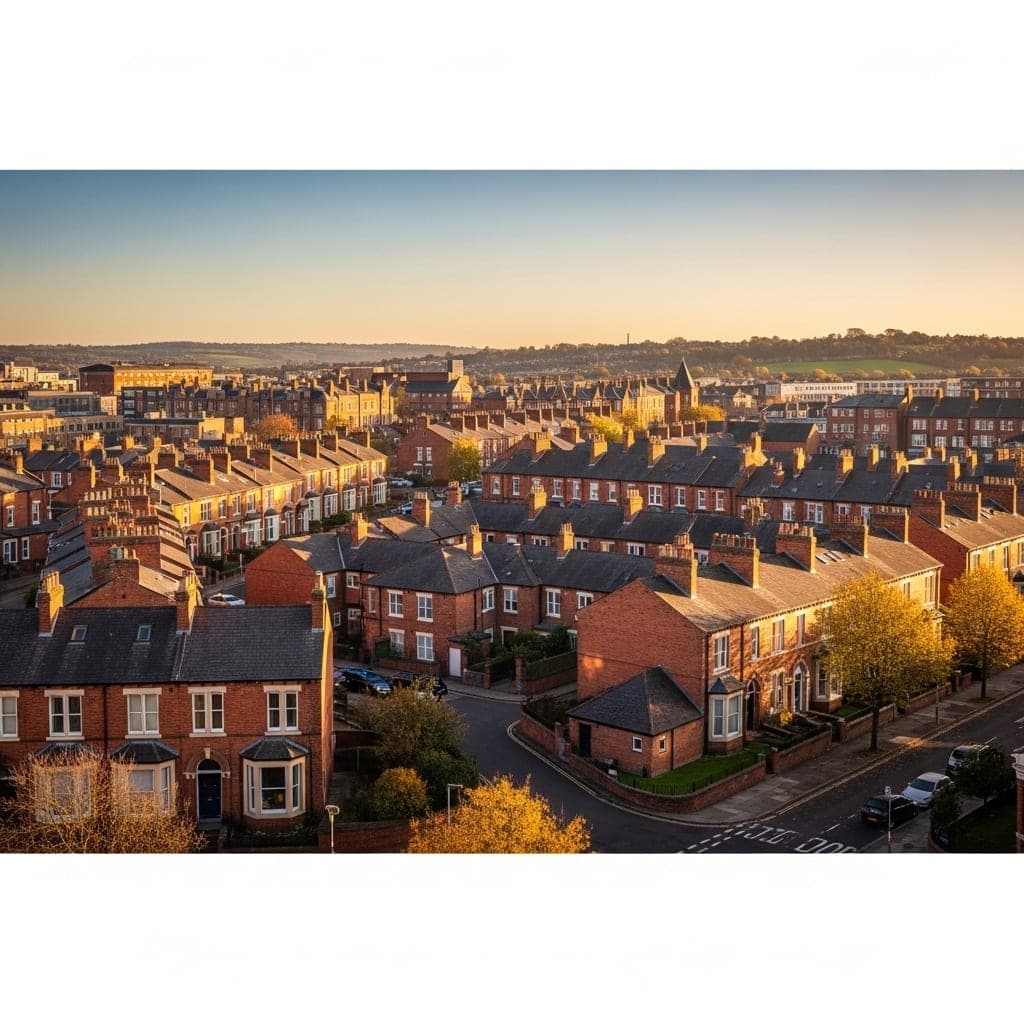
Leeds landlords face a compliance challenge shaped by the city's unusual housing stock. Only 11% of EPCs lodged in Leeds over the past year reached an A or B rating, and the average property sits in band D. The city's defining features, back-to-back terraces in the inner suburbs, Victorian through-terraces in Headingley and Hyde Park, and 1930s semis across the northern ring, all tend to land between 45 and 62 on the EPC scale. That puts most of the rental market one or two upgrades away from EPC C, the band the government has proposed for all private tenancies from 1 October 2030. That proposal is not yet law: the minimum in force is band E, so D and E are legal to let. This guide covers what Leeds landlords specifically need: local enforcement posture, realistic upgrade costs by property type, available funding, and a practical route to compliance.
Key Facts for Leeds Landlords
- Current MEES minimum: EPC E for all private tenancies in Leeds (and all of England and Wales).
- Proposed 2030 standard: EPC C for all private tenancies from 1 October 2030. Not yet law.
- Leeds below-C rate: Average EPC score sits in band D. Only 11% of certificates lodged in the past year reached A or B.
- Most common rental property types: Back-to-back terraces, Victorian through-terraces, 1930s semi-detached.
- Off-gas properties: Around 46,000 Leeds homes (13% of stock) are off the gas grid.
- Maximum penalty in force: £5,000 in total per property for MEES non-compliance. The government has proposed £30,000 alongside the band C standard.
- Cost cap: £3,500 per property including VAT in force, against band E. A £10,000 cap against band C is proposed.
- ECO4: Fully funded insulation for eligible properties. Scheme closes December 2026.
- BUS grant: £7,500 towards heat pump installation. Available to all Leeds landlords regardless of income.
- Better Homes Yorkshire: Regional retrofit programme for West Yorkshire homeowners and landlords.
What Leeds Landlords Face in 2026
Leeds is the third-largest city in England and has one of the country's most concentrated private rental markets. The PRS is particularly dense across inner-city postcodes: LS6 (Headingley, Hyde Park), LS8 (Harehills, Roundhay), LS9 (Burmantofts), LS11 (Beeston), and LS12 (Armley). These areas are dominated by older terraced housing that consistently scores in the D and E bands on EPC assessments.
The current legal minimum is EPC E. Any Leeds landlord letting a property rated F or G without a valid exemption is already breaking the law and faces a civil penalty of up to £5,000 in total per property. The government proposed in January 2026 that the minimum should rise to EPC C from 1 October 2030, with the maximum penalty increasing to £30,000 per property. That package is not law: it needs an Act of Parliament and then a statutory instrument amending the 2015 Regulations, and no instrument has been laid.
How Leeds City Council Enforces MEES
Leeds City Council has published a formal Statement of Principles setting out how it uses its enforcement powers under the MEES regulations. The council's Private Sector Housing team can serve compliance notices requesting information about a landlord's energy efficiency obligations. Where a breach is confirmed within the past 18 months, the council will consider issuing a financial penalty notice, a publication penalty (listing the landlord on the national register), or both.
Leeds also operates a broader Private Sector Housing Enforcement Policy that covers HHSRS hazards, licensing, and energy efficiency together. This integrated approach means a single inspection triggered by a tenant complaint can flag MEES non-compliance alongside other housing issues.
The council's stance is not passive. Leeds has a large student population, active tenant unions (particularly around the LS6 postcode), and established tenant advocacy routes. Post-Renters' Rights Act, tenant complaints are increasingly the trigger for enforcement action. Landlords who have been relying on the regulatory gap should not assume that will continue.
Section 21 Abolition Changes the Equation
Section 21 no-fault evictions were abolished on 1 May 2026. Leeds landlords who need vacant possession for disruptive upgrade works (solid wall insulation, heating system replacement, full rewires) can no longer simply end the tenancy. The only statutory route is now Ground 1A under Section 8, which requires a minimum four-month notice period and carries restrictions on re-letting. For landlords with back-to-back terraces where internal wall insulation is the only option, this makes planning around void periods critical.
Leeds EPC Upgrade Costs by Property Type
Leeds housing stock falls into four main categories for EPC purposes. Costs and strategies differ significantly between them.
Back-to-Back Terraces (Pre-1919)
Leeds has one of the largest surviving concentrations of back-to-back housing in England, particularly across Harehills (LS8), Beeston (LS11), Holbeck (LS11), Armley (LS12), and parts of Burley (LS4). These properties share walls on three sides, leaving only the front elevation exposed. That shared-wall construction actually helps thermal performance relative to a standard Victorian terrace, but the single exposed wall is typically solid brick with no cavity.
Typical EPC rating: D or E (score 42 to 58)
Common upgrade costs to reach EPC C:
- Internal wall insulation (front wall only): £2,500 to £5,000
- Loft insulation (where accessible): £300 to £600
- Condensing boiler replacement: £2,500 to £4,000
- Double glazing (front elevation): £1,500 to £3,000
- LED lighting and draught-proofing: £200 to £400
- Smart heating controls: £200 to £400
Realistic total to reach C: £5,000 to £10,000
The advantage of back-to-backs is that heat loss is concentrated on a single wall, making insulation projects smaller and cheaper than a full through-terrace. The disadvantage is limited internal space: adding 100mm of insulation to the front wall reduces already-small rooms noticeably. Use our cost calculator to model the specific figures for your property.
Victorian Through-Terraces (Pre-1919)
The long terraced streets of Headingley, Hyde Park, Burley, Meanwood, and Chapeltown are dominated by Victorian through-terraces. These properties have solid brick walls on front and rear elevations, bay windows, and often retain original single-glazed sash windows. The student rental market in LS6 is almost entirely this property type.
Typical EPC rating: D or E (score 40 to 55)
Common upgrade costs to reach EPC C:
- External wall insulation: £8,000 to £15,000
- Internal wall insulation: £4,000 to £8,000
- Secondary glazing or replacement sash windows: £3,000 to £6,000
- Loft insulation (top-up or new): £300 to £600
- LED lighting throughout: £100 to £200
- Smart heating controls: £200 to £400
Realistic total to reach C: £7,000 to £13,000
Victorian terraces are the most expensive property type to upgrade in Leeds. Solid walls on both front and rear mean double the insulation challenge compared to back-to-backs. For detailed guidance, see our Victorian terrace EPC guides. Many landlords in this category will exceed the £3,500 cap in force and the proposed £10,000 cap, making exemption registration a realistic outcome.
1930s Semi-Detached Houses
The outer ring of Leeds, covering Roundhay, Chapel Allerton, Moortown, Horsforth, and Pudsey, features extensive 1930s semi-detached housing. These properties almost always have unfilled cavity walls, making them strong candidates for cavity wall insulation under ECO4.
Typical EPC rating: D (score 50 to 62)
Common upgrade costs to reach EPC C:
- Cavity wall insulation: £800 to £1,500 (often free under ECO4)
- Loft insulation top-up: £300 to £600
- Condensing boiler replacement: £2,500 to £4,000
- Double glazing upgrade: £3,000 to £5,000
- Smart thermostat and TRVs: £300 to £500
Realistic total to reach C: £1,500 to £4,000 (with ECO4 cavity fill)
This is the lowest-cost category in Leeds. A 1930s semi with unfilled cavity walls and 100mm of loft insulation can often reach EPC C with just cavity wall insulation and a loft top-up, both of which may be fully funded through ECO4 if the tenant qualifies.
Purpose-Built Flats and Conversions
Leeds city centre has seen significant flat development since 2000, particularly around the waterfront, Holbeck Urban Village, and the LS1/LS2 postcodes. Newer flats (post-2012) typically already meet EPC C. Older conversions in Victorian and Edwardian buildings present different challenges.
Typical EPC rating: C to D (score 55 to 72 for purpose-built; 45 to 60 for conversions)
Common upgrade costs:
- Window upgrades (subject to freeholder consent): £2,000 to £4,000
- Heating system improvements: £1,500 to £3,000
- Insulation (where accessible): £500 to £1,500
Leasehold properties require freeholder consent for external works. This is a common blocker in Leeds flat conversions. See our flat compliance guide for the specific issues.
Grants Available to Leeds Landlords
Leeds landlords have access to several funding streams. Some are Leeds-specific through the West Yorkshire Combined Authority, others are national schemes.
ECO4 (Closes December 2026)
The Energy Company Obligation scheme provides fully funded insulation and heating upgrades for eligible properties. Leeds City Council participates in ECO4 Flex, which widens eligibility beyond standard benefit-based criteria. Eligible measures include loft insulation, cavity wall insulation, solid wall insulation, underfloor insulation, and heating upgrades.
Who qualifies: Properties with tenants on qualifying benefits, or properties that Leeds City Council has declared eligible under its ECO4 Flex Statement of Intent. The scheme closes in December 2026 with no confirmed successor. The practical deadline for getting works completed is closer to September 2026, as installer waiting lists will extend past the scheme closure after that point.
Boiler Upgrade Scheme (BUS)
The Boiler Upgrade Scheme provides £7,500 towards the cost of an air source heat pump, reducing the typical landlord cost from £10,000 to £13,000 down to roughly £3,000 to £6,000. The scheme runs until March 2030.
For Leeds properties off the gas grid (around 46,000 homes, concentrated in outer suburbs and rural fringes), this is particularly relevant. A heat pump installation with the BUS grant can lift an EPC by 10 to 15 points while future-proofing against the gas boiler phase-out. Check eligibility with our grant checker.
Better Homes Yorkshire
The Better Homes Yorkshire programme is managed by the West Yorkshire Combined Authority and provides subsidised retrofit measures for homeowners and landlords across the Leeds City Region. The programme has improved over 3,000 homes since launch and offers access to vetted installers, competitive pricing, and quality assurance.
Mayor Tracy Brabin's administration has set a 2038 net zero target for West Yorkshire and is investing in a retrofit one-stop-shop to help every household access energy efficiency improvements. This includes loan funding for landlords who do not qualify for grant-funded programmes.
Great British Insulation Scheme (GBIS): closed
GBIS closed to new applications in January 2026 and ended on 31 March 2026, so it is no longer available. It provided single-measure insulation upgrades (cavity wall, loft, or room-in-roof insulation) for properties in council tax bands A to D, and unlike ECO4 it did not require the tenant to be on benefits. Landlords should now look at ECO4, the Warm Homes: Local Grant, or the Boiler Upgrade Scheme instead.
Warm Homes Local Grant
The government's Warm Homes Local Grant provides funding for energy efficiency improvements to low-income households. Leeds City Council distributes this funding for eligible properties. Landlords can access it where tenants qualify, with measures including insulation, heating upgrades, and solar panels.
Step-by-Step Compliance Roadmap for Leeds Landlords
-
Check your current EPC rating. Search the EPC register or use our EPC predictor tool to estimate where your property sits. If your EPC is older than 10 years, it has expired and you need a new assessment. A domestic EPC in Leeds costs £60 to £120 depending on property size.
-
Assess the gap to EPC C. Review the assessor's recommendations report. For most Leeds properties, the biggest wins come from insulation (cavity wall for 1930s semis, internal wall for back-to-backs) and heating upgrades. Our cost calculator can model the specific improvements needed.
-
Apply for grants before they close. ECO4 closes December 2026. BUS funding is available now. Better Homes Yorkshire offers ongoing support. Apply for everything you qualify for before starting self-funded work. The order matters: grant-funded works do not count against your cost cap, so do those first.
-
Prioritise cost-effective measures. Loft insulation, cavity wall insulation, LED lighting, and draught-proofing deliver the best EPC points per pound. Start here before considering heat pumps or external wall insulation. For a typical Leeds back-to-back, loft insulation plus internal front-wall insulation is usually the optimal combination.
-
Track spend against the cost cap. The cap in force is £3,500 including VAT, measured against band E. The government has proposed a £10,000 cap against band C, counting qualifying spend from 1 October 2025, but that is not law. Keep every invoice and get before-and-after EPCs to document improvements. If you reach the cap without achieving the required band, you can register a cost cap exemption.
-
Plan works around tenancies. With Section 21 abolished, gaining vacant possession for major works requires Ground 1A with a four-month notice period. Where possible, schedule disruptive upgrades between tenancies. For back-to-backs where internal wall insulation is the only option, this is particularly important as the works reduce room sizes and generate significant dust.
-
Register an exemption if needed. If your property cannot reach the required band within the cost cap, register a cost cap exemption on the PRS Exemptions Register. Exemptions last five years under the rules in force and must be renewed. The council will check the register before enforcement.
-
Get a new EPC after works complete. A fresh assessment locks in your improved rating for 10 years. Aim to complete works and reassess by mid-2029 to avoid the rush if the proposed October 2030 standard is legislated. Assessor availability in Leeds is good now but will tighten as the deadline approaches.
Common Property Types in Leeds and Their EPC Challenges
Leeds has property challenges that differ from other major cities. Understanding these helps prioritise the right upgrades.
Back-to-back terraces (pre-1919): Found across Harehills, Beeston, Holbeck, and Armley. Three shared party walls mean only the front elevation loses heat, but that single wall is solid brick. Internal insulation is the only practical option and reduces already-compact room sizes. These properties also tend to have poor ventilation, so insulation works must include adequate mechanical ventilation to avoid damp and mould issues.
Victorian through-terraces (1860s to 1910s): Dominant in Headingley, Hyde Park, Burley, and Chapeltown. Solid walls front and rear, often with bay windows that are major sources of heat loss. The student rental market depends heavily on these properties, and many landlords run them as informal HMOs. If a property is let as a shared house, the HMO EPC rules may apply differently.
1930s semis (interwar): Spread across Roundhay, Chapel Allerton, Moortown, and Horsforth. Cavity walls (usually unfilled), suspended timber floors, and original single-glazed windows. The easiest and cheapest property type to upgrade in Leeds. Cavity wall insulation alone often lifts the rating by 5 to 10 points.
Off-grid properties: Around 13% of Leeds housing stock is not connected to the gas network, relying on electric storage heaters, oil, or LPG. These properties consistently score lower on EPC assessments due to higher carbon intensity of their heating. The Boiler Upgrade Scheme is particularly valuable here, with grants of £7,500 towards an air source heat pump.
Post-war council stock (1950s to 1970s): Found in estates across Seacroft, Gipton, Belle Isle, and Middleton. Many are now in private ownership through Right to Buy. Construction quality varies, but most have cavity walls (often already filled) and double glazing. These are mid-range for compliance: typically band D, needing a heating upgrade or additional insulation to reach C.
Frequently Asked Questions
What EPC rating do Leeds landlords need by 2030?
Band E, today and until the law changes. The government has proposed EPC C for all private tenancies from 1 October 2030, on a single implementation date covering new and existing tenancies, but that has not been legislated. Letting below band E without a registered exemption attracts a civil penalty of up to £5,000 in total per property; the proposed maximum under the band C regime is £30,000.
How much does an EPC assessment cost in Leeds?
A domestic EPC in Leeds typically costs £60 to £120 depending on property size. Larger properties and HMOs may cost more. The certificate is valid for 10 years. If your property does not have a current EPC, you cannot legally let it. Several Leeds-based assessors offer same-week appointments.
What happens if my Leeds property cannot reach EPC C?
If you have spent up to the cost cap on eligible improvements and the property still falls short of the required band, you can register a cost cap exemption on the PRS Exemptions Register. That is £3,500 including VAT against band E today, and a proposed £10,000 against band C. The exemption lets you keep letting at the improved rating for five years. Keep all invoices and get a fresh EPC assessment after works complete to document the improvement.
Is Leeds City Council actively fining landlords for EPC breaches?
Leeds City Council has published formal enforcement principles and can issue penalties for MEES breaches identified within the past 18 months. Enforcement is complaint-driven but increasingly proactive. The council's Private Sector Housing team integrates MEES checks with general housing inspections, meaning an investigation triggered by one issue can flag energy efficiency non-compliance.
When should I start EPC upgrade works?
Now. ECO4 grants close in December 2026 and practical installer availability will dry up from September. The Boiler Upgrade Scheme runs until 2030 but is first-come first-served within each budget year. Getting works done in 2026 or 2027 avoids the rush that will hit in 2029 when thousands of landlords realise they have left it too late.
Do I need to upgrade between tenancies?
Not necessarily, but it is strongly advisable for disruptive works. Internal wall insulation, heating system replacement, and window installation are all major disruptions to a occupied property. With Section 21 abolished, you cannot end a tenancy simply to carry out works. Ground 1A under Section 8 requires four months' notice and restrictions on re-letting within 12 months. Planning upgrades during natural void periods is the simplest approach.
Next Steps
Use our EPC predictor to estimate your current rating, then run the numbers through our cost calculator to see what it will take to reach C. Check grant eligibility before spending your own money. For the national picture on regulation changes and available grants, our main guides cover the detail.
Leeds landlords with back-to-backs and Victorian terraces face higher costs than the national average, but also have better-than-average grant access through ECO4 Flex and Better Homes Yorkshire. The window for funded upgrades is closing. Act before December 2026 or plan to fund the full cost privately.