Victorian Terrace Solid Wall Insulation: Costs, Options and Listed Building Rules
Internal vs external wall insulation explained for pre-1919 terraced properties, with realistic costs, EPC band improvements, and planning rules
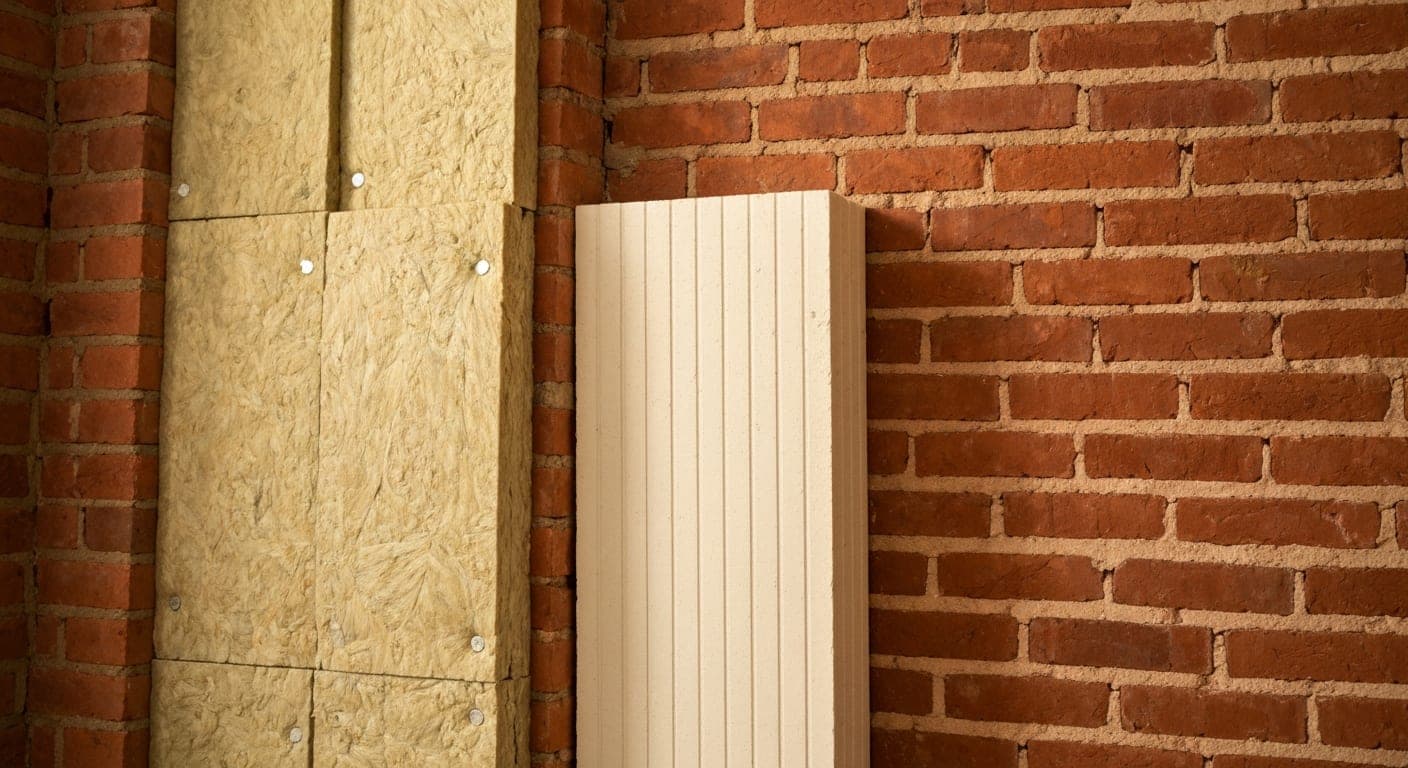
Solid wall insulation is one of the most significant and costly upgrades a landlord can make to a Victorian terrace. Unlike later properties with cavity walls, pre-1919 terraces have a single solid layer of brick -- typically 225mm to 340mm thick -- with no gap to fill with blown insulation. To reduce heat loss through the walls, you must apply insulation either to the inside or outside of the structure.
This guide covers both options in detail, including realistic costs, the EPC rating improvements you can expect (typically moving from band D to C or from C towards B), and the planning rules that apply to listed buildings and conservation areas. We also look at the grants available in 2026 that can significantly reduce the outlay.
Why Solid Walls Matter for EPC Ratings
The U-value of an uninsulated solid brick wall is around 2.1 W/m2K. This is roughly four times worse than a modern insulated cavity wall (0.45--0.60 W/m2K) and over seven times worse than a well-insulated wall (0.28 W/m2K). In practical terms, solid walls can account for 30 to 40 per cent of a Victorian terrace's total heat loss -- more than any other single element.
The RdSAP methodology (used for domestic Energy Performance Certificates) is highly sensitive to wall U-values. Improving the walls from 2.1 to 0.55 W/m2K with good quality insulation can add 10 to 18 EPC points depending on the property size, orientation, and heating system. For a property sitting at EPC D (55 to 68 points), that jump is often enough to reach C (69 points).
Internal vs External Insulation: Key Differences
Internal Wall Insulation
- No change to external appearance
- Permitted in conservation areas
- Lower cost (£5,000 to £10,000)
- Reduces floor area by 50 to 100mm per wall
- Skirting boards, electrical sockets, and radiators must be repositioned
- Cold bridges at floor and ceiling junctions are a risk if poorly designed
External Wall Insulation
- No disruption to interior or tenants during installation
- Eliminates cold bridges more completely
- Slightly higher EPC gain than internal in most assessments
- Changes building appearance -- may need planning consent
- Blocked in conservation areas for most terraces
- Higher cost (£10,000 to £15,000)
Internal Wall Insulation in Detail
The two most common internal approaches are rigid insulation boards fixed directly to the masonry (often phenolic or polyisocyanurate foam), and warm-wall systems that use a studwork frame filled with mineral wool. Board systems use less space (25 to 50mm thick) while studwork systems allow thicker insulation (50 to 100mm) for a better U-value but take more room.
For a Victorian terrace, most installers recommend the board approach on external walls to minimise the loss of floor area. The front bay, rear kitchen extension wall, and any exposed gable wall are the priority areas. Party walls between terraces are not external walls and do not need insulating.
A critical consideration is moisture management. Victorian brickwork is breathable, and sealing it from the inside with vapour-impermeable foam boards can drive moisture into the wall structure. Always use vapour-open boards (such as wood fibre) or ensure adequate ventilation detailing. A specialist in traditional buildings is strongly recommended.
External Wall Insulation in Detail
External wall insulation (EWI) involves fixing insulation boards -- typically mineral wool or EPS -- to the outside of the wall, then applying a reinforced render or cladding system. The insulation layer is usually 60 to 100mm thick, giving U-values of 0.25 to 0.35 W/m2K.
EWI is highly effective and avoids interior disruption, making it the preferred option where planning allows. For a Victorian terrace in an unrestricted area, it can transform the energy performance in a single installation without tenants needing to vacate. However, the render finish will look different from original Victorian brickwork, and in most terrace rows you would need cooperation from neighbours to insulate shared walls.
Cost Breakdown
Costs depend on the type of insulation, the area of wall to be treated, the specification, and the region. London and the South East tend to run 15 to 20 per cent higher than the national average. The figures below are for a mid-sized 3-bedroom Victorian terrace with approximately 70m2 of external wall area (excluding party walls).
| Improvement | Low Estimate | High Estimate |
|---|---|---|
| Internal wall insulation (boards, partial)Front bay and rear wall only | £2,000 | £5,000 |
| Internal wall insulation (full, 3-bed terrace)All external walls internally insulated | £5,000 | £10,000 |
| External wall insulation (render finish, 3-bed terrace)Full EWI with render; planning may be needed | £10,000 | £15,000 |
| Per m2 -- internal (board system)Excluding decoration and making good | £70 | £120 |
| Per m2 -- external (render system)Including scaffold, insulation, and render | £100 | £160 |
| Additional decoration and skirting (internal)Redecoration, new skirting boards, moving sockets | £800 | £2,500 |
EPC Band Improvement: What to Expect
Under the RdSAP methodology used for domestic EPC assessments, solid wall insulation is one of the highest-scoring single improvements. The actual improvement depends on the starting U-value, the achieved U-value after insulation, and the proportion of the building envelope that is insulated.
These figures assume the wall insulation achieves a post-insulation U-value of around 0.35 to 0.55 W/m2K. Higher-specification insulation achieving 0.28 W/m2K or better can push the improvement towards the top of these ranges. Combining solid wall insulation with a loft top-up and draught-proofing can move properties from EPC E all the way to C in a single programme of work.
For properties already at C and targeting B, solid wall insulation combined with a heat pump or solar panels will typically be needed. The new Home Energy Model (HEM) replacing RdSAP from 2027 may recalibrate these improvements, but the direction of travel -- wall insulation having a large positive impact -- is expected to remain the same.
Planning Permission
Planning requirements for solid wall insulation in Victorian terraces depend on the type of insulation, the designation of the property, and local council policy. The general rules are:
- Internal wall insulation -- almost never needs planning permission in England, as it makes no external change to the building.
- External wall insulation on a non-listed, non-conservation-area property -- usually permitted development under Class A of the General Permitted Development Order. No application required.
- External wall insulation in a conservation area -- permitted development rights are withdrawn for most materials that alter the appearance of the building. A householder planning application is typically required, and consent is often refused for the front elevation of a terrace.
- External wall insulation on a listed building -- listed building consent is always required, and it is rarely granted where it would significantly alter the external character of the structure.
Listed Buildings
If your Victorian terrace is listed -- typically Grade II or Grade II* -- you will need listed building consent before carrying out any work that affects the character of the building. This includes both internal and external wall insulation, as both can affect the fabric and moisture behaviour of historic masonry.
Historic England recommends breathable, vapour-open insulation systems for listed buildings: lime-based hemp or wood fibre boards internally, and lime-based render externally where permitted. Conventional synthetic insulation boards are generally not appropriate for Grade I or Grade II* buildings, and may be refused consent.
Listed building owners who cannot reach EPC C because of heritage restrictions can register a listed building exemption on the PRS Exemptions Register, allowing them to continue letting the property legally. This exemption does not expire as long as the listing status remains unchanged.
Conservation Areas
Most Victorian terraces in good condition fall within or near a local conservation area. In these areas, external wall insulation is almost always refused for the front elevation because it changes the appearance of the building and disrupts the uniformity of the terrace row.
However, internal wall insulation remains fully available and does not require planning consent. In some cases, external wall insulation to the rear elevation (not visible from the street) may be approved. Always check with your local planning department before starting work.
Conservation area properties that cannot install external insulation on the front elevation should focus on internal insulation and complement this with secondary glazing for sash windows and professional draught-proofing to maximise the EPC improvement from each pound spent.
Grants and Funding Available in 2026
Solid wall insulation is one of the highest-value measures supported by government funding. The main routes for landlords in 2026 are:
ECO4 (Energy Company Obligation)
ECO4 provides free solid wall insulation to landlords whose tenants are on qualifying benefits (such as Universal Credit, Pension Credit, or Child Tax Credit). There is no cost to the landlord. The scheme is administered by energy suppliers; contact your supplier or an ECO4 broker to check eligibility. ECO4 is expected to continue until 2026 and may be extended.
Warm Homes Local Grant
Administered by local authorities, this scheme provides grants of up to £15,000 per property for energy efficiency improvements including solid wall insulation. Eligibility criteria and funding availability vary by council. Search your local council website for "Warm Homes" or "energy efficiency grants" to find your local scheme.
Great British Insulation Scheme (GBIS, closed)
GBIS closed to new applications in January 2026 and ended on 31 March 2026, so it is no longer available. It previously provided partial subsidies for insulation to properties in EPC bands D to G in council tax bands A to D, regardless of the tenant's income, with solid wall insulation included. Landlords should now look at ECO4 or the Warm Homes: Local Grant instead.
Choosing an Installer
The quality of solid wall insulation installation is critical. Poor detailing around window reveals, floor junctions, and electrical fittings can create cold bridges and moisture problems that outweigh the thermal benefit. Key checks when appointing an installer:
- TrustMark registration -- required for any publicly funded work and a sign of quality assurance.
- CIGA or equivalent guarantee -- insist on a 25-year installer-backed guarantee registered with an industry body.
- Moisture risk assessment -- a reputable installer will carry out a condensation risk analysis before specifying the system, particularly important for Victorian brickwork.
- References from similar Victorian properties -- ask to see completed jobs on pre-1919 solid wall terraces, not just modern homes.
- Written EPC improvement estimate -- get the projected EPC score improvement in writing before signing a contract.
Frequently Asked Questions
What is the average cost of solid wall insulation for a Victorian terrace?
+
For a mid-size 3-bedroom Victorian terrace, internal wall insulation typically costs £5,000 to £10,000 for all external walls. External wall insulation costs £10,000 to £15,000. These figures include labour and materials but not interior redecoration, which adds £800 to £2,500 for internal insulation. Partial insulation (bay and rear wall only) can be done for £2,000 to £5,000.
How many EPC points does solid wall insulation add?
+
Full solid wall insulation typically adds 10 to 18 EPC points to a Victorian terrace. The improvement depends on the specification (U-value achieved), the proportion of external walls insulated, and the property's starting conditions. This is usually enough to move a property from EPC D to EPC C, or from a low C closer to B.
Do I need planning permission for internal wall insulation?
+
In almost all cases, no. Internal wall insulation makes no external change to the building and is therefore not subject to planning permission in England. However, if the property is listed, you will still need listed building consent before carrying out any work that affects the fabric of the building -- which includes internal insulation.
Can I get free solid wall insulation as a landlord?
+
Yes, if your tenant is on qualifying benefits such as Universal Credit, Pension Credit, or Child Tax Credit, you may be eligible for free solid wall insulation through the ECO4 scheme. Contact your energy supplier or an ECO4 broker to check. The Warm Homes Local Grant also provides substantial funding to landlords in many council areas, regardless of tenant income.
Is solid wall insulation worth it for EPC compliance?
+
It depends on your starting EPC rating and what other measures have already been done. For a Victorian terrace at EPC F or low E, solid wall insulation is often the only route to C. For a property at high D or low C, cheaper measures like loft insulation, draught-proofing, and window upgrades may be enough -- and far better value per point gained. Always get an EPC improvement report from a qualified assessor before committing to expensive works.
Related Articles
Victorian Sash Window EPC Upgrades
Secondary glazing vs replacement, draught proofing, and conservation area rules for sash windows.
Victorian Bay Window Draught Proofing
The cheapest EPC quick win for Victorian terraces -- what it costs and how many points it adds.
Victorian Terrace Loft Conversion and EPC
How a loft conversion affects your EPC rating and what insulation options you have.
Victorian Terrace EPC Guide
Complete landlord guide to improving EPC ratings in pre-1919 terraced properties.