Victorian Bay Window Draught Proofing: The Cheapest EPC Quick Win
DIY vs professional draught proofing for Victorian bay windows, costs from £50, and the best combination of quick wins
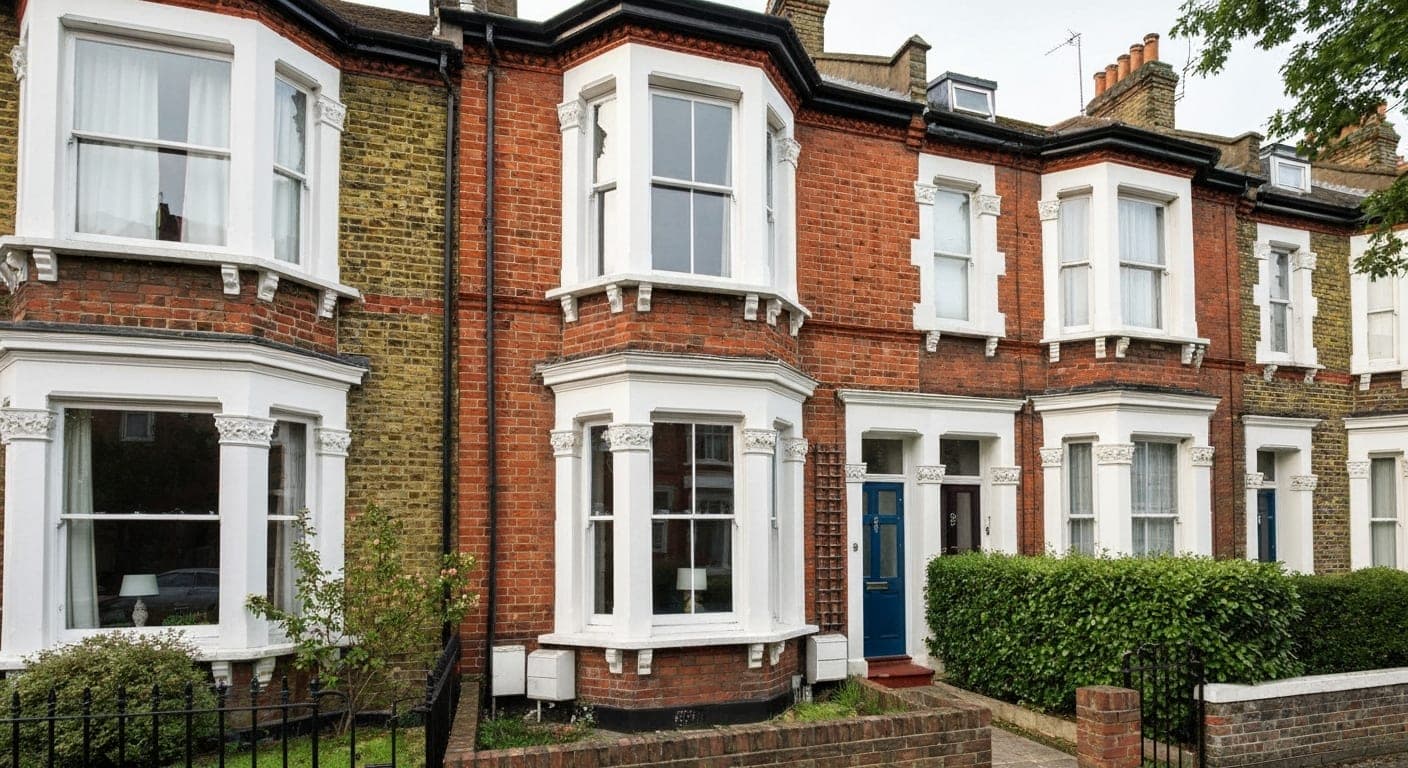
The bay window is one of the most distinctive features of a Victorian terrace, but it is also one of the most significant sources of heat loss. With three elevations, up to six sash windows, and a projecting timber floor, the typical Victorian bay window combines draughts, cold glass, and a thermal bridge at the floor junction -- all in one compact structure.
The good news is that bay window draught proofing is the cheapest EPC improvement available for most Victorian terraces. A competent DIYer can treat a full bay window for £50 to £150 in materials. A professional specialist costs £150 to £300 per bay. Neither requires planning permission, and both are permitted in conservation areas and on listed buildings.
Why Victorian Bay Windows Lose So Much Heat
A Victorian bay window is structurally separate from the main wall line. It projects outwards, exposing three sides to the cold. The bay floor is typically a suspended timber structure over an unheated void, which creates a significant cold bridge at floor level. Combined with single-glazed sash windows in all three elevations and timber frames that have dried and shrunk over 130 years, the bay window can account for 20 to 30 per cent of the heat loss of a typical Victorian ground floor.
The three main heat loss routes in a Victorian bay window are:
- Air infiltration through gaps in the sash window frames and sliding mechanism
- Conduction through single glazing (U-value 4.8 to 5.8 W/m2K)
- Cold bridge at the bay floor and soffit (unheated void below)
Draught proofing addresses the first of these three -- and it is the cheapest to fix. Addressing the glazing and the floor requires larger investment (secondary glazing or slim double glazing, and floor insulation). Draught proofing is always the right first step.
Where Draughts Come From in a Victorian Bay
Before spending money on draught proofing, it is worth identifying where the draughts are worst. The main locations in a Victorian bay window:
- Sash meeting rail -- where the top and bottom sashes meet in the middle. This gap widens as timber dries and shrinks.
- Sash sides (pulley stiles) -- the channels where the sashes slide up and down. Gaps here allow cold air to enter via the weight boxes.
- Bottom rail to sill -- the joint between the lower sash and the window sill. Often very draughty in older windows.
- Bay return corners -- the junction between the bay window frame and the main wall. Gaps here are often filled only with old putty or paint.
- Bay floor perimeter -- the gap between the bay floor boards and the skirting, allowing cold air from the void below to enter.
A simple way to find draughts: on a cold windy day, hold a lit candle or incense stick near each of these locations. Flickering flame indicates draughts that are worth addressing.
DIY Draught Proofing Options
DIY draught proofing is accessible to most homeowners with basic DIY skills and costs £50 to £150 for a full bay window. The main materials are:
Self-adhesive foam or rubber strips
Used on the meeting rail and bottom rail. Cost: £10 to £20 for enough strips to treat one bay window. Easy to fit but compress and degrade within 2 to 3 years. Not suitable for the pulley stiles.
Silicone sealant
Used to seal gaps at the bay return corners and the junction between frames and masonry. Cost: £5 to £15 per tube. Apply with a caulking gun on a dry day. Use a flexible exterior-grade silicone and overcoat with paint to protect. Lifespan 5 to 10 years.
Draught-excluding skirting tape or filler
The gap at the base of the skirting board in the bay (where the floor meets the external frame) allows cold air from the bay void below to enter. Flexible sealant or draught excluder tape seals this gap. Cost: £10 to £25.
Heavy curtains or thermal linings
Not technically draught proofing, but well-fitted floor-to-ceiling curtains with thermal linings significantly reduce cold air movement into the room from the bay. Cost: £100 to £300 for a bay. Not an EPC improvement (not recorded by assessors) but reduces tenant heating bills. Included here as a practical management option.
Professional Draught Proofing
Professional sash window draught proofing uses spring bronze strips or brush pile seals routed into the frame. This is a precision task that requires the sashes to be removed (or at least lowered fully) to access the pulley stiles, and a router to cut the seal channels. The result is a long-lasting, virtually invisible seal that still allows the windows to slide freely.
Professional draught proofing also includes:
- Overhauling the sash cords and pulleys (replacing broken cords)
- Re-painting or priming exposed timber
- Sealing the parting bead and staff bead with flexible sealant
- Fitting a bottom rail seal (brush pile or brush-on silicone)
Cost: £150 to £300 per bay window (3 sash windows in a typical bay). Lifespan: 10 to 15 years for spring bronze; 5 to 8 years for brush pile. Professional treatment is significantly more effective than DIY strips and is strongly recommended if the EPC improvement is the goal.
Cost Comparison
| Improvement | Low Estimate | High Estimate |
|---|---|---|
| DIY foam strips and sealant (per bay)2 to 3 year lifespan; basic effectiveness | £50 | £150 |
| Professional sash draught proofing (per bay)3 sash windows in a typical Victorian ground-floor bay | £150 | £300 |
| Professional draught proofing (full property, 8 windows)Including bay and other sash windows throughout property | £1,200 | £2,400 |
| Silicone sealing at return corners (DIY)Per bay; simple but very effective for corner draughts | £15 | £30 |
| Bay floor void insulation (if accessible)Separate measure -- see suspended floor insulation guide | £200 | £600 |
EPC Impact of Draught Proofing
Draught proofing is recorded in the RdSAP EPC methodology under the air infiltration rate. An assessor scores the property as "draughty" or "not draughty" based on visible evidence of draught-proofing measures on windows, doors, and other openings. Moving from "draughty" to "not draughty" typically adds 2 to 4 EPC points for a Victorian terrace.
The assessor will specifically look for evidence of:
- Draught-proofed sash windows (visible seals or brush strips)
- Draught-proofed external doors (letterbox, keyhole, and frame seals)
- Chimney balloons or draught excluders in unused fireplaces
Note that assessors are not permitted to assess air tightness themselves -- they rely on visible evidence. Ensure that draught-proofing work is visible (or recorded) at the time of the EPC assessment. Professional installations with a job completion certificate make it easy to demonstrate the work to the assessor.
Combining with Other Quick Wins
Draught proofing delivers the best EPC return when combined with the other low-cost measures on a Victorian terrace. Together, these four measures can add 10 to 17 EPC points for under £2,000 -- often enough to move a D-rated property into C:
Loft insulation top-up to 270mm
Cost: £300 to £600. EPC impact: +4 to +8 points. The single best-value measure for any Victorian terrace with an unconverted loft. See our loft insulation guide.
Full property draught proofing
Cost: £1,200 to £2,500. EPC impact: +2 to +4 points. Includes bay window, all sash windows, external doors, letterboxes, and keyholes.
Chimney balloons (if open fireplaces)
Cost: £20 to £40 per fireplace. EPC impact: +1 to +2 points. Victorian terraces typically have 2 to 4 original fireplaces, each with an open flue drawing cold air. Chimney balloons or Chimney Sheep block this air movement when the fireplace is not in use.
Smart thermostat and TRVs
Cost: £300 to £600 installed. EPC impact: +2 to +3 points. A new smart thermostat with thermostatic radiator valves improves heating controls to the specification required for EPC credit. See your current EPC certificate for the recommended heating controls upgrade.
If a more significant improvement is needed -- for example, to move from EPC E to C -- the quick win package can be combined with secondary glazing on sash windows (adding 3 to 5 more points) and eventually solid wall insulation (adding 10 to 18 points) for properties at EPC F or low E.
Frequently Asked Questions
How much does bay window draught proofing cost?
+
DIY draught proofing using foam strips and silicone sealant costs £50 to £150 for a full Victorian bay window (typically 3 sash windows). Professional draught proofing using spring bronze or brush pile seals costs £150 to £300 per bay. Professional treatment lasts 10 to 15 years compared to 2 to 3 years for DIY foam strips.
Does draught proofing improve the EPC rating?
+
Yes -- full property draught proofing (including windows, doors, and chimneys) typically adds 2 to 4 EPC points on a Victorian terrace. Assessors record the presence or absence of draught-proofing measures during the EPC assessment, so ensure the work is done and visible before your assessment takes place.
Is draught proofing allowed in a conservation area?
+
Yes -- all forms of draught proofing are permitted in conservation areas and on listed buildings. They make no external change to the building. Internal seals, brush pile strips, and silicone sealant on window frames are all acceptable under conservation area designation. No planning permission or listed building consent is needed.
Can I draught proof a bay window myself?
+
Yes, for the basic measures. Self-adhesive foam strips on the meeting rail and sill, silicone at the return corners, and skirting sealant at the bay floor are all accessible DIY tasks costing £50 to £100 in materials. Professional treatment of the pulley stiles and frame channels requires specialist tools (router or rebating plane) and is better left to a sash window specialist.
What is the cheapest way to improve EPC on a Victorian terrace?
+
The four cheapest measures, in order of EPC return per pound spent: (1) loft insulation top-up to 270mm (£300 to £600, adds 4 to 8 points); (2) chimney balloons in unused fireplaces (£20 to £40 each, adds 1 to 2 points each); (3) full property draught proofing (£1,200 to £2,500, adds 2 to 4 points); (4) smart thermostat and TRVs (£300 to £600, adds 2 to 3 points). Together these cost £2,000 to £3,500 and add 10 to 17 EPC points.
Related Articles
Victorian Sash Window EPC Upgrades
Secondary glazing vs replacement, draught proofing, and conservation area rules.
Victorian Solid Wall Insulation
Internal vs external insulation for Victorian terraces, costs from £5k to £15k.
Victorian Loft Conversion and EPC
Loft insulation options, conversion impact, and party wall rules for Victorian terraces.
Victorian Terrace EPC Guide
Complete landlord guide to improving EPC ratings in pre-1919 terraced properties.