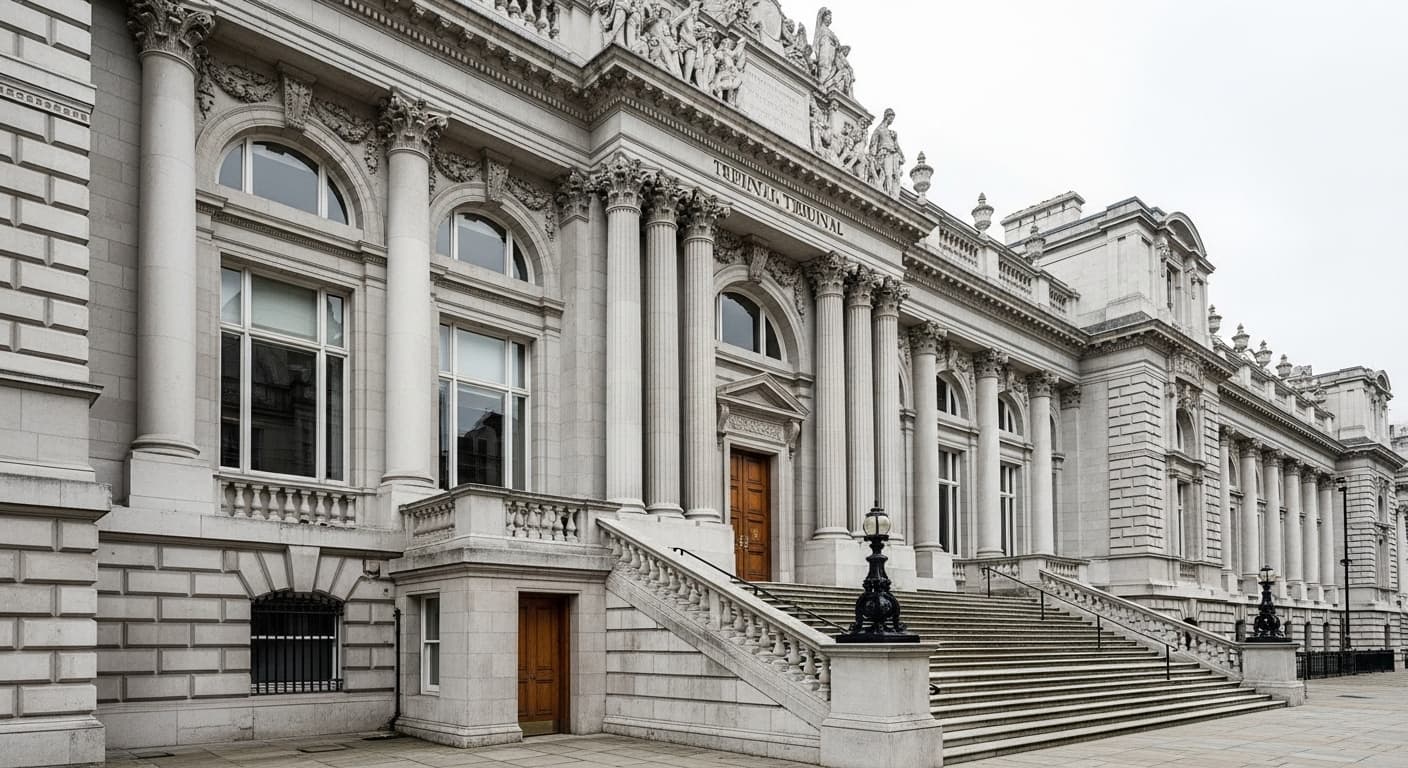
The Renters' Rights Act 2025 makes the First-tier Tribunal (Property Chamber) far more central to a landlord's life than it used to be. With Section 21 gone and rent increases now challengeable as standard, more disputes flow to the tribunal rather than being settled by a notice and a void period. If a tenant challenges a rent increase, if a council imposes a financial penalty, or if a tenant applies for a rent repayment order, the tribunal is where it gets decided. Landlords who understand the process, the fees, and the evidence expected will fare far better than those who ignore an application until a hearing looms.
This guide explains what the First-tier Tribunal does under the Renters' Rights Act, which disputes go there, and how to respond as a landlord.
What is the First-tier Tribunal and what does it do post-RRA?
The First-tier Tribunal (Property Chamber) is a specialist tribunal that handles residential property disputes in England. It is separate from the county court. It is designed to be more accessible and less formal than a court, though it is still a judicial body and its decisions are binding.
Under the Renters' Rights Act 2025, which took effect in Phase 1 on 1 May 2026, the tribunal's residential caseload expands. The main categories of dispute a landlord may face at the tribunal are:
- Rent increase challenges under Section 13, where a tenant disputes a proposed increase.
- Appeals against financial penalties imposed by local authorities for breaches under the Act.
- Rent repayment order (RRO) applications, where a tenant or council seeks repayment of rent for certain offences.
- Disputes connected to the new Private Rented Sector Database and related enforcement, as Phase 2 rolls out later in 2026.
One important boundary: possession is not decided by the tribunal. Evicting a tenant still goes through the county court on a Section 8 ground. The tribunal deals with rent, penalties, and standards disputes, not possession orders. We cover the split in more detail below.
Which disputes go to the tribunal rather than the court?
The distinction matters because sending an application to the wrong forum wastes time and money. Here is the rough split under the current framework.
| Goes to the First-tier Tribunal | Goes to the county court |
|---|---|
| Tenant challenge to a Section 13 rent increase | Possession claims on Section 8 grounds |
| Appeals against council financial penalties | Rent arrears money judgments (in some cases) |
| Rent repayment order applications | Enforcement of possession orders (bailiffs) |
| Certain database and standards enforcement disputes | Breach of contract claims |
If you are trying to recover your property, that is a possession matter for the court on a Section 8 ground. For how the grounds and notice periods work, see our Renters' Rights Act notice periods guide. If the dispute is about the rent, a penalty, or a standards issue, the tribunal is the venue.
How do rent increase challenges work at the tribunal?
This is the tribunal interaction most landlords will meet first, because rent increases are now tightly regulated.
Under the Act, a landlord can only increase the rent on a periodic tenancy once a year, using the statutory Section 13 procedure and the prescribed form (Form 4A), giving at least two months' notice before the new rent takes effect. The tenant can then challenge the proposed increase at the First-tier Tribunal.
Key features of the rent increase process:
- The tribunal assesses the open market rent. It decides what the property could reasonably command on the open market.
- The tribunal cannot set the rent higher than the landlord proposed. Under the Renters' Rights Act, the tribunal can match or reduce your proposed figure, but never exceed it. This removes the old deterrent where a tenant risked a higher rent by challenging.
- The application fee is modest. A tenant pays a small application fee to bring the challenge (around £47 at the time of writing), with no separate hearing fee for rent increase challenges.
For landlords, the practical consequence is that inflated or above-market increases are likely to be trimmed at the tribunal, and there is little downside for a tenant in challenging. Set increases at genuine market level and evidence them well. Our full breakdown is in the Section 13 rent increase guide.
What evidence do landlords need for a rent increase challenge?
The tribunal decides on market value, so you need comparable evidence:
- Recent lettings of similar properties in the same area (comparables).
- Evidence of the condition and features of your property.
- Any improvements you have funded that justify a higher rent.
- The current rent and the history of the tenancy.
A well-evidenced case, showing your proposed rent reflects genuine local market rates, is far more likely to be upheld than a bare assertion.
How do landlords appeal a council financial penalty?
Local authorities gained broader enforcement powers under the Renters' Rights Act, and one of their main tools is the civil financial penalty. If a council imposes a penalty on you, for example for a compliance breach, you can appeal to the First-tier Tribunal.
The appeal process, in outline:
- The council serves you with a notice of intent, then a final penalty notice.
- You have a defined window to appeal to the tribunal (stated on the penalty notice).
- You lodge your appeal with the tribunal and pay the fee.
- The tribunal can confirm, vary, or cancel the penalty.
Fees for penalty appeals are higher than for rent challenges (a standard application fee of around £200 plus a hearing fee of around £300 at the time of writing). Because the tribunal can look at the penalty afresh, a well-argued appeal with evidence that you took reasonable steps to comply, or that the council got the facts wrong, has a real prospect of reducing or cancelling the penalty.
This is where EPC compliance can intersect with the tribunal. If a penalty relates to an EPC or MEES breach, the appeal is heard in the same forum. For how EPC penalties and appeals work specifically, see our EPC tribunal appeals guide.
What is a rent repayment order and how does it reach the tribunal?
A rent repayment order (RRO) allows a tenant, or a local authority, to reclaim rent paid over a period where the landlord committed certain offences, such as letting an unlicensed HMO or breaching certain enforcement notices. The Renters' Rights Act expands the range of offences that can trigger an RRO.
RRO applications are made to the First-tier Tribunal. If granted, the order requires the landlord to repay rent (up to 12 months' worth for many offences). Fees for RRO applications are higher again (an application fee of around £114 and a hearing fee of around £227 at the time of writing).
For landlords, the defence is compliance. RROs target specific offences, so keeping your licensing, registration, and safety documentation in order removes the ground on which an RRO is built. As the Private Rented Sector Database comes online in Phase 2, the record of who is registered and compliant becomes easier to check, which raises the stakes for landlords who let non-compliant properties.
What does the tribunal process look like step by step?
While the detail varies by dispute type, the general shape of a First-tier Tribunal case is:
- Application. One party (often the tenant for rent challenges, the landlord for penalty appeals) lodges an application and pays the fee.
- Acknowledgement and directions. The tribunal acknowledges the application and issues directions: a timetable telling both sides what to submit and by when.
- Evidence exchange. Both sides file their evidence and written statements according to the directions. This is the most important stage for a landlord. Weak or late evidence loses cases.
- Hearing (or paper determination). Many cases have a hearing, which may be in person, by video, or on the papers alone. Hearings are less formal than court but still structured.
- Decision. The tribunal issues a written decision, usually with reasons. Decisions are binding.
- Appeal. In limited circumstances, with permission, a decision can be appealed to the Upper Tribunal, usually on a point of law rather than a re-run of the facts.
Timescales vary with the tribunal's workload and the complexity of the case. Simple paper determinations can be quick. Contested hearings with disputed evidence take longer, sometimes several months from application to decision.
How should a landlord respond to a tribunal application?
Do not ignore it. The single most common landlord mistake is treating a tribunal application as background noise until a hearing date appears. By then, the directions deadlines may have passed and your evidence is out of time.
A sensible response plan:
- Read the directions carefully and diary every deadline the moment you receive them.
- Gather evidence early. Comparables for rent cases, compliance records for penalty appeals, documentation for RRO defences.
- Put it in writing clearly. The tribunal values a well-organised, evidenced submission over volume.
- Consider advice. For higher-value penalty appeals or RROs, a solicitor or your landlord association's helpline is worth the cost.
- Attend the hearing if there is one, or make sure your paper submission is complete if the case is decided on the papers.
Prevention beats cure. Most tribunal exposure comes from either an above-market rent increase or a compliance gap. Keep rents at genuine market level, keep your paperwork current, and check your EPC status using the EPC predictor tool so that an EPC issue never becomes the reason you are in front of a tribunal in the first place. The band you must meet to let is E, and has been since 1 April 2020; band C from October 2030 is a government proposal that still needs legislation.
Where does possession fit? Court, not tribunal
To be clear, because this is a common point of confusion: you cannot use the First-tier Tribunal to evict a tenant. Since 1 May 2026, all possession is sought through the county court on a Section 8 ground. The tribunal handles rent, penalties, standards, and RROs. The court handles possession.
If your dispute is really about wanting your property back, you are looking at a Section 8 claim in the county court, not a tribunal application. For the grounds available and their notice periods, see our notice periods guide and the broader Renters' Rights Act EPC requirements guide.
Frequently asked questions
What disputes does the First-tier Tribunal handle for landlords under the Renters' Rights Act?
The tribunal handles rent increase challenges under Section 13, appeals against council financial penalties, rent repayment order applications, and certain standards and database enforcement disputes. It does not decide possession, which goes through the county court.
Can the tribunal set my rent higher than I proposed?
No. Under the Renters' Rights Act, the tribunal can match or reduce your proposed rent increase but cannot set it higher than the figure you proposed. This removes the old risk that deterred tenants from challenging.
How much does it cost to go to the First-tier Tribunal?
Fees depend on the case type. A rent increase challenge carries a modest application fee (around £47) with no hearing fee. Penalty appeals and rent repayment orders carry higher fees, in the region of £114 to £300 in application and hearing fees combined. Check current figures before applying, as fees are periodically updated.
Can I appeal a council financial penalty at the tribunal?
Yes. If a local authority imposes a financial penalty on you, you can appeal to the First-tier Tribunal within the window stated on the penalty notice. The tribunal can confirm, vary, or cancel the penalty.
What is a rent repayment order?
A rent repayment order requires a landlord to repay rent, often up to 12 months' worth, where the landlord committed certain offences such as letting an unlicensed HMO or breaching an enforcement notice. Tenants or councils apply for these at the First-tier Tribunal.
Does eviction go to the tribunal or the court?
The court. Since 1 May 2026, possession is sought through the county court on a Section 8 ground. The First-tier Tribunal does not make possession orders. Do not confuse the two forums.
What evidence do I need to defend a rent increase challenge?
You need evidence that your proposed rent reflects the open market: recent comparable lettings in the area, the condition and features of your property, and any improvements you have funded. A well-evidenced case is far more likely to be upheld than a bare assertion.
Can a tribunal decision be appealed?
In limited circumstances, and usually only with permission on a point of law, a First-tier Tribunal decision can be appealed to the Upper Tribunal. It is not a routine re-run of the facts, so getting your evidence right first time matters.
This article was last updated on 19 August 2026 and reflects the Renters' Rights Act 2025 as in force following Phase 1 on 1 May 2026. Tribunal fees and procedures are subject to change, and this is general information rather than legal advice. For property-specific matters, consult a solicitor or your landlord association. For more, visit the EPCGuide Research Hub.