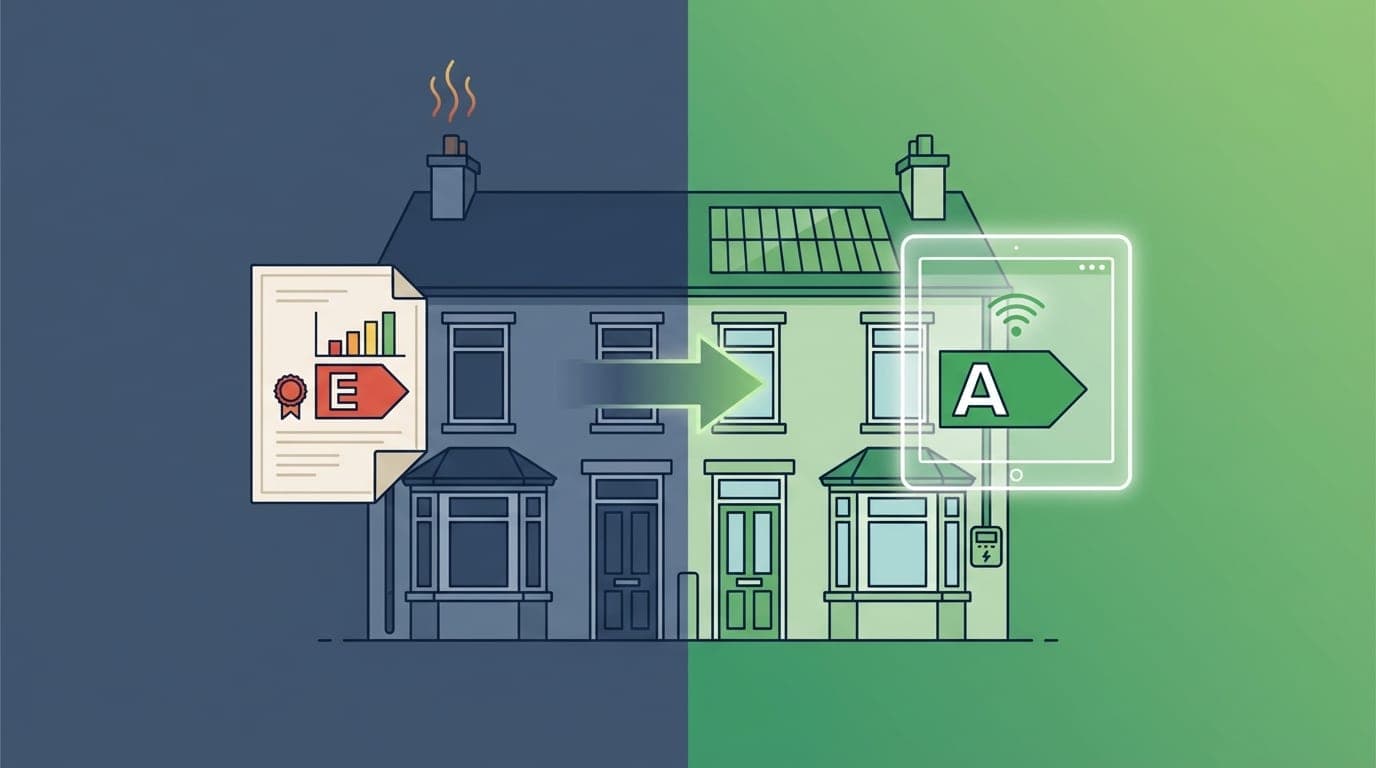
Your existing EPC is still valid. If that's all you needed to hear, you can stop reading. But if you want to understand what the Home Energy Model actually changes, when it kicks in, and whether you should be doing anything right now, keep going.
The HEM consultation closed on 18 March 2026, and landlords across the country are asking the same question: "Will my EPC still count?" The answer is yes, but there are some important nuances.
What Is the Home Energy Model (and Why Should Landlords Care)?
The Home Energy Model is the government's replacement for the current SAP/RdSAP methodology used to produce EPCs. It's a more detailed assessment system that measures four separate metrics instead of the single A-G energy efficiency rating you're used to.
Why does this matter? Because the way your property's energy performance is calculated will change. A property that currently scores a C under RdSAP might score differently under HEM. The methodology is more granular, factoring in real-world energy use more accurately.
The HEM has been delayed to H2 2027, pushed back from its original October 2026 launch date. The government cited the need for more industry engagement before rolling it out.
Will My Current EPC Still Be Valid?
Yes. The government confirmed in its partial consultation response (21 January 2026) that existing EPCs remain valid for 10 years from the date they were issued. This was supported by the majority of consultation respondents, and the government agreed.
This means:
- An EPC issued in 2024 is valid until 2034
- An EPC issued in 2026 under the current RdSAP system is valid until 2036
- You will not be forced to get a reassessment when HEM launches
There is no automatic expiry or forced migration. Your certificate stays on the register and retains its rating until its natural 10-year expiry date.
When Does HEM Become Compulsory?
The Timeline (Key Dates)
| Date | What Happens |
|---|---|
| 18 March 2026 | HEM consultation closed |
| H2 2027 | HEM launches, assessors can start using it (proposed, already delayed once) |
| 1 October 2029 | HEM becomes compulsory for all new EPCs (proposed) |
| 1 October 2030 | Proposed MEES band C standard for private rentals, not yet law |
Every date after the closed consultation is a proposal. The HEM launch has already slipped once, from October 2026 to H2 2027, so treat these as planning assumptions rather than fixed points. On the current plan, the A-G rating system would run alongside HEM between H2 2027 and October 2029, with assessors transitioning gradually, and all new EPCs would use the HEM methodology after 1 October 2029.
Will My EPC Rating Change Under HEM?
Your existing rating won't change on paper. But if you need a new EPC after October 2029, it will be assessed under HEM, and the result could be different.
What the New Four-Metric System Means
Instead of a single A-G band, the reformed EPC will show four separate metrics covering different aspects of energy performance. The exact banding thresholds haven't been finalised yet. The government consulted on proposals for how these metrics should be calculated and banded, but the details are expected later in 2026.
This uncertainty is precisely why some landlords are considering acting now, while the current system is still in play.
Should You Rush to Get an EPC Before HEM?
This is the question we get asked most. Here's a practical framework.
When Getting an EPC Now Makes Sense
- Your current EPC expires before October 2029 and you're at or near a C rating. Locking in a C under the current RdSAP system gives you a valid, compliant certificate until it expires (potentially 2035-2036).
- You've recently made improvements (insulation, boiler upgrade, double glazing) but haven't updated your EPC. Getting a fresh assessment now captures those improvements under the scoring system you understand.
- You want certainty. The HEM scoring thresholds aren't finalised. If you can hit C now, you know where you stand.
When It's Better to Wait
- Your current EPC is valid until after 2030 and already shows a C. You're compliant, and you would be under the proposed standard too. No action needed.
- Your property is currently a D or E and you're planning significant upgrades. It may be worth waiting to understand HEM scoring before investing, so your improvements are targeted at the right metrics.
- You're in no rush to let or sell. If you don't need an EPC for a transaction, there's no regulatory trigger forcing you to get one now.
What About the 2030 EPC C Deadline?
The proposed 2030 EPC C standard is separate from the HEM rollout, though the timing creates a squeeze.
What is actually in force in England and Wales today:
- The minimum band to let is E. Bands D and E are legal to let, and only F and G are barred without a registered exemption
- The cost cap is £3,500 including VAT per property
- MEES civil penalties are capped at £5,000 in total per property, across all breaches combined
What the government has proposed, none of which is law:
- Band C for all privately rented properties from 1 October 2030
- A £10,000 per-property cost cap, or 10% of property value where the property is worth under £100,000
- Qualifying spend from 1 October 2025 counting toward that higher cap
Those proposals would need an Act of Parliament and then a statutory instrument amending the 2015 Regulations, targeted to be in force during 2027. No such instrument has been laid. An identical EPC C proposal was scrapped in September 2023 without any repeal being needed, because it had never become law.
The overlap that worries landlords: if you get a C under the current system, but then need a new EPC after October 2029 (produced under HEM), your rating might change. The government has acknowledged this concern but hasn't published specific transitional rules yet.
Our advice: if you can achieve a C cheaply, it is a reasonable hedge. A valid EPC C certificate issued before October 2029 would remain valid for 10 years, giving you a buffer if the proposed 2030 standard does become law.
What We're Still Waiting to Find Out
Several key questions remain unanswered:
- Exact HEM banding thresholds, what score equals a "C" under the new system? Expected later in 2026.
- Whether EPCs will be required throughout tenancies, currently you only need one at the point of marketing. The government is considering requiring a valid EPC for the entire duration of a tenancy. Response expected 2026.
- How the transition from A-G to four metrics will work in practice, specifically for MEES compliance.
We'll update this article as these details are confirmed.
What You Should Do Right Now
- Check your current EPC rating, know where you stand and when it expires
- If you're near a C, consider getting a fresh assessment now to lock it in under the current system
- If you need upgrades, estimate your costs and start planning. The government has proposed that qualifying spend from October 2025 would count toward the proposed £10,000 cap, so keep your receipts even though the cap is not law
- Don't panic, the 10-year validity rule gives you a generous runway
Frequently Asked Questions
Do I need a reassessment when HEM launches?
No. Your existing EPC remains valid for 10 years from issue. HEM only applies to new EPCs produced after it becomes compulsory (1 October 2029).
Will my EPC C still count as a C under HEM?
If your current EPC shows a C and was issued under RdSAP, it remains a valid C until it expires. You won't be reassessed retroactively. However, if you need a new EPC after October 2029, the HEM assessment may produce a different result.
Can I still use RdSAP until 2029?
Yes. The current RdSAP system continues to run alongside HEM from H2 2027. From 1 October 2029, all new EPCs must use HEM. Until then, you can still get an EPC under the current methodology.
Should I wait for HEM before making improvements?
It depends on your timeline. If the proposed band C standard becomes law and your property is currently at D or below, waiting until 2027+ to understand HEM scoring risks leaving too little time for upgrades. Start with no-regret measures (loft insulation, draught proofing, LED lighting) that improve performance under any scoring system.